
WINNER, 2025 CENTER FOR HISTORIC PRESERVATION BOOK PRIZE
Chronicles grassroots efforts to recover, rebuild, and enjoy architecturally iconic but economically obsolete places in the American Rust Belt.
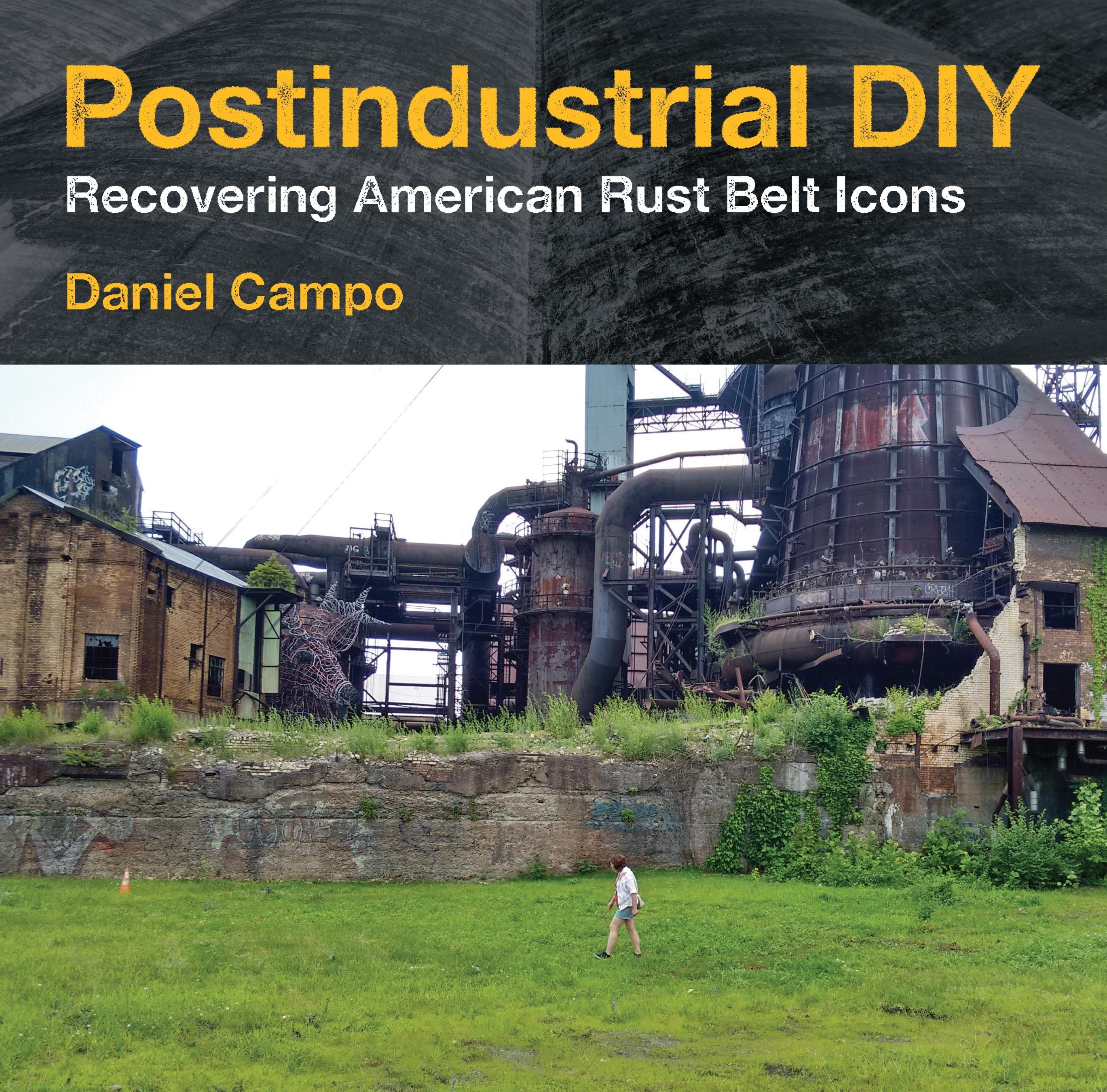
A pioneering Detroit automobile factory. A legendary iron mill at the edge of Pittsburgh. A campus of concrete grain elevators in Buffalo. Two monumental train stations, one in Buffalo, the other in Detroit. These once-noble sites have since fallen from their towering grace. As local elected leaders did everything they could to destroy what was left of these places, citizens saw beauty and utility in these industrial ruins and felt compelled to act. Postindustrial DIY tells their stories.
The culmination of more than a dozen years of on-the-ground investigation, ethnography, and historical analysis, author and urbanist Daniel Campo immerses the reader in this postindustrial landscape, weaving the perspectives of dozens of DIY protagonists as well as architects, planners, and preservationists. Working without capital, expertise, and sometimes permission in a milieu dominated by powerful political and economic interests, these do-it-yourself actors are driven by passion and a sense of civic duty rather than by profit or political expediency. They have craftily remade these sites into collective preservation projects and democratic grounds for arts and culture, environmental engagement, regional celebrations, itinerant play, and in-the-moment constructions. Their projects are generating excitement about the prospect of Rust Belt life, even as they often remain invisible to the uninformed passerby and fall short of professional preservation or environmental reclamation standards.
Demonstrating that there is no such thing as a site that is “too far gone” to save or reuse, Postindustrial DIY is rich with case studies that demonstrate how great architecture is not simply for the elites or the wealthy. The citizen preservationists and urbanists described in this book offer looser, more playful, and often more publicly satisfying alternatives to the development practices that have transformed iconic sites into expensive real estate or a clean slate for the next profitable endeavor. Transcending the disciplinary boundaries of architecture, historic preservation, city planning, and landscape architecture, Postindustrial DIY suggests new ways to engage, adapt, and preserve architecturally compelling sites and bottom-up strategies for Rust Belt revival.
Pay easily by card, Klarna, Apple Pay or Google Pay. Not happy? You always have a 14-day money-back guarantee. Read more in our terms. If you have any questions, email us at hello@memmo.org.
Memmo makes studying easier – wherever you are in the world. We bring your course books and smart study tools together in one place: summaries, quizzes, podcasts and flashcards. Plus Ted, your study buddy who answers anything you wonder. Over 75,000 students already study here – built to help you learn faster and stress less.