
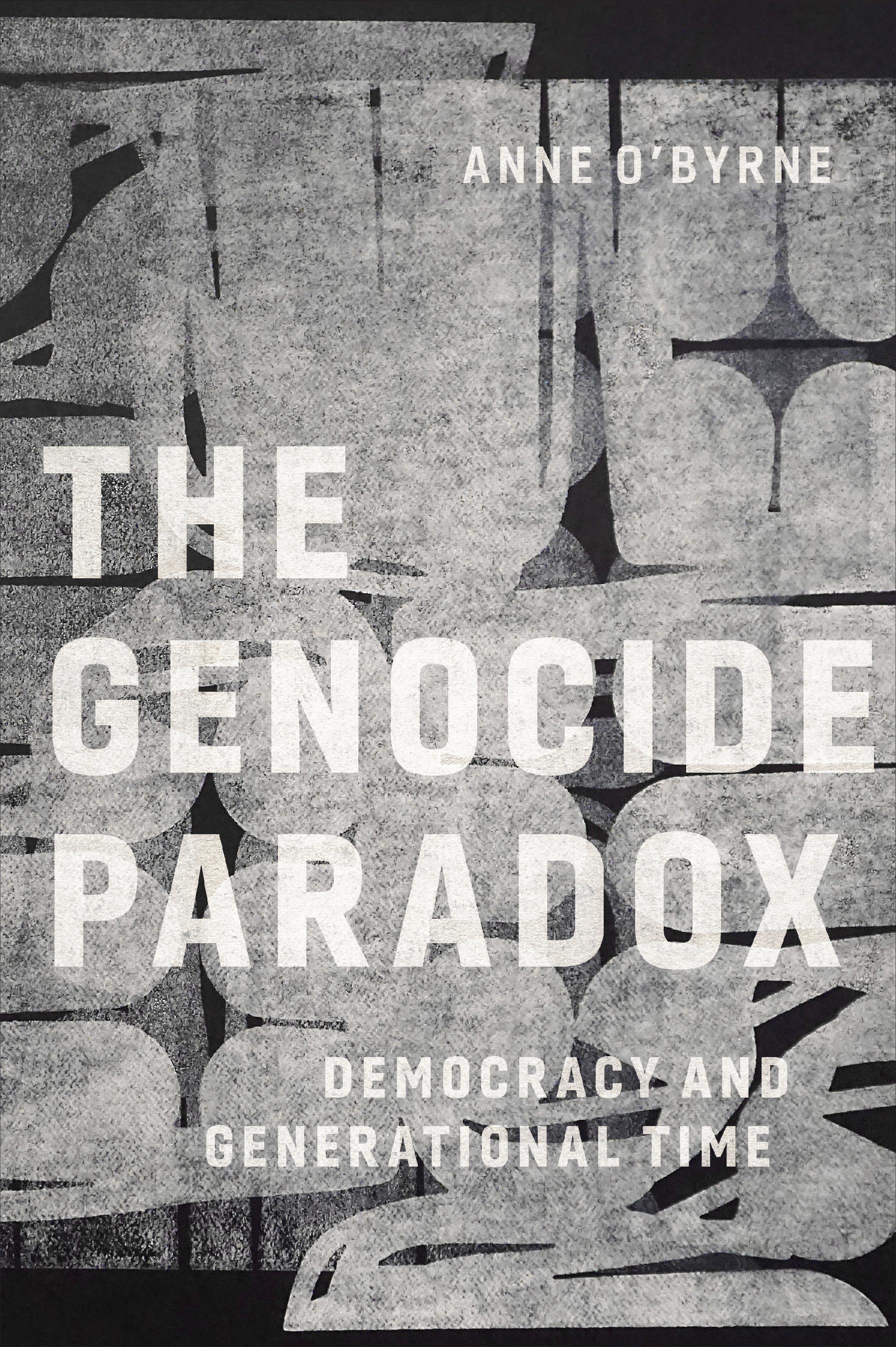
We regard genocidal violence as worse than other sorts of violence—perhaps the worst there is. But what does this say about what we value about the genos on which nations are said to be founded? This is an urgent question for democracies. We value the mode of being in time that anchors us in the past and in the future, that is, among those who have been and those who might yet be. If the genos is a group constituted by this generational time, the demos was invented as the anti-genos, with no criterion of inheritance and instead only occurring according to the interruption of revolutionary time. Insofar as the demos persists, we experience it as a sort of genos, for example, the democratic nation state. As a result, democracies are caught is a bind, disavowing genos-thinking while cherishing the temporal forms of genos-life; they abhor genocidal violence but perpetuate and disguise it. This is the genocide paradox.
O’Byrne traces the problem through our commitment to existential categories from Aristotle to the life taxonomies of Linneaus and Darwin, through anthropologies of kinship that tether us to the social world, the shortfalls of ethical theory, into the history of democratic theory and the defensive tactics used by real existing democracies when it came to defining genocide for the U.N. Genocide Convention. She argues that, although models of democracy all make room for contestation, they fail to grasp its generational structure or acknowledge the generational content of our lives. They cultivate ignorance of the contingency and precarity of the relations that create and sustain us. The danger of doing so is immense. It leaves us unprepared for confronting democracy’s deficits and its struggle to entertain multiple temporalities. In addition, it leaves us unprepared for understanding the relation between demos and violence, and the ability of good enough citizens to tolerate the slow-burning destruction of marginalized peoples. What will it take to envision an anti-genocidal democracy?
Pay easily by card, Klarna, Apple Pay or Google Pay. Not happy? You always have a 14-day money-back guarantee. Read more in our terms. If you have any questions, email us at hello@memmo.org.
Memmo makes studying easier – wherever you are in the world. We bring your course books and smart study tools together in one place: summaries, quizzes, podcasts and flashcards. Plus Ted, your study buddy who answers anything you wonder. Over 50,000 students already study here – built to help you learn faster and stress less.