
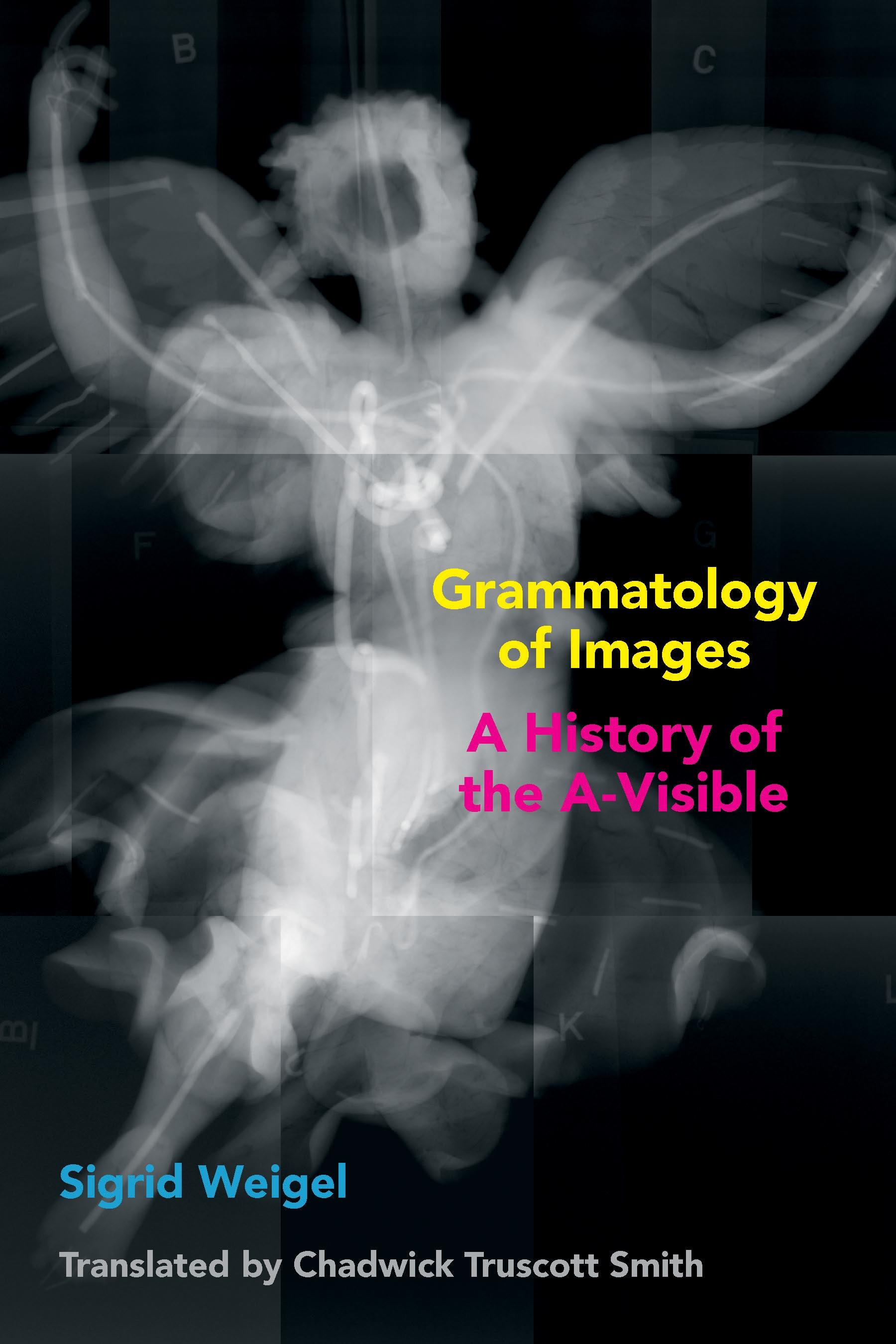
Grammatology of Images radically alters how we approach images. Instead of asking for the history, power, or essence of images, Sigrid Weigel addresses imaging as such. The book considers how something a-visible gets transformed into an image. Weigel scrutinizes the moment of mis-en-apparition, of making an appearance, and the process of concealment that accompanies any imaging.
Weigel reinterprets Derrida’s and Freud’s concept of the trace as that which must be thought before something exists. In doing so, she illuminates the threshold between traces and iconic images, between something immaterial and its pictorial representation. Chapters alternate between general accounts of the line, the index, the effigy, and the cult-image, and case studies from the history of science, art, politics, and religion, involving faces as indicators of emotion, caricatures as effigies of defamation, and angels as embodiments of transcendental ideas.
Weigel’s approach to images illuminates fascinating, unexpected correspondences between premodern and contemporary image-practices, between the history of religion and the modern sciences, and between things that are and are not understood as art.
Pay easily by card, Klarna, Apple Pay or Google Pay. Not happy? You always have a 14-day money-back guarantee. Read more in our terms. If you have any questions, email us at hello@memmo.org.
Memmo makes studying easier – wherever you are in the world. We bring your course books and smart study tools together in one place: summaries, quizzes, podcasts and flashcards. Plus Ted, your study buddy who answers anything you wonder. Over 50,000 students already study here – built to help you learn faster and stress less.