
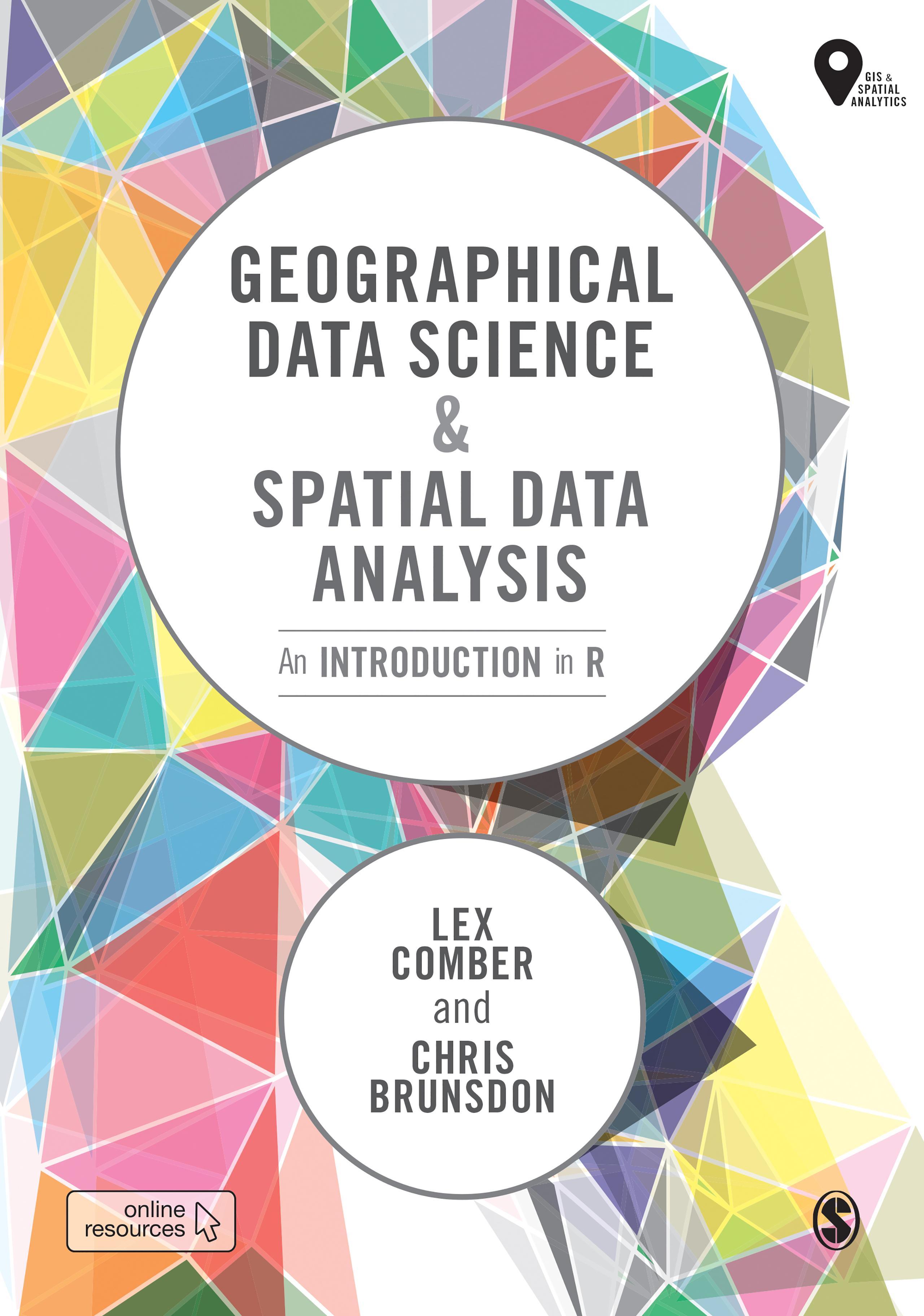
We are in an age of big data where all of our everyday interactions and transactions generate data. Much of this data is spatial – it is collected some-where – and identifying analytical insight from trends and patterns in these increasing rich digital footprints presents a number of challenges.
Whilst other books describe different flavours of Data Analytics in R and other programming languages, there are none that consider Spatial Data (i.e. the location attached to data), or that consider issues of inference, linking Big Data, Geography, GIS, Mapping and Spatial Analytics.
This is a ‘learning by doing’ textbook, building on the previous book by the same authors, An Introduction to R for Spatial Analysis and Mapping. It details the theoretical issues in analyses of Big Spatial Data and developing practical skills in the reader for addressing these with confidence.
Whilst other books describe different flavours of Data Analytics in R and other programming languages, there are none that consider Spatial Data (i.e. the location attached to data), or that consider issues of inference, linking Big Data, Geography, GIS, Mapping and Spatial Analytics.
This is a ‘learning by doing’ textbook, building on the previous book by the same authors, An Introduction to R for Spatial Analysis and Mapping. It details the theoretical issues in analyses of Big Spatial Data and developing practical skills in the reader for addressing these with confidence.
Pay easily by card, Klarna, Apple Pay or Google Pay. Not happy? You always have a 14-day money-back guarantee. Read more in our terms. If you have any questions, email us at hello@memmo.org.
Memmo makes studying easier – wherever you are in the world. We bring your course books and smart study tools together in one place: summaries, quizzes, podcasts and flashcards. Plus Ted, your study buddy who answers anything you wonder. Over 50,000 students already study here – built to help you learn faster and stress less.