
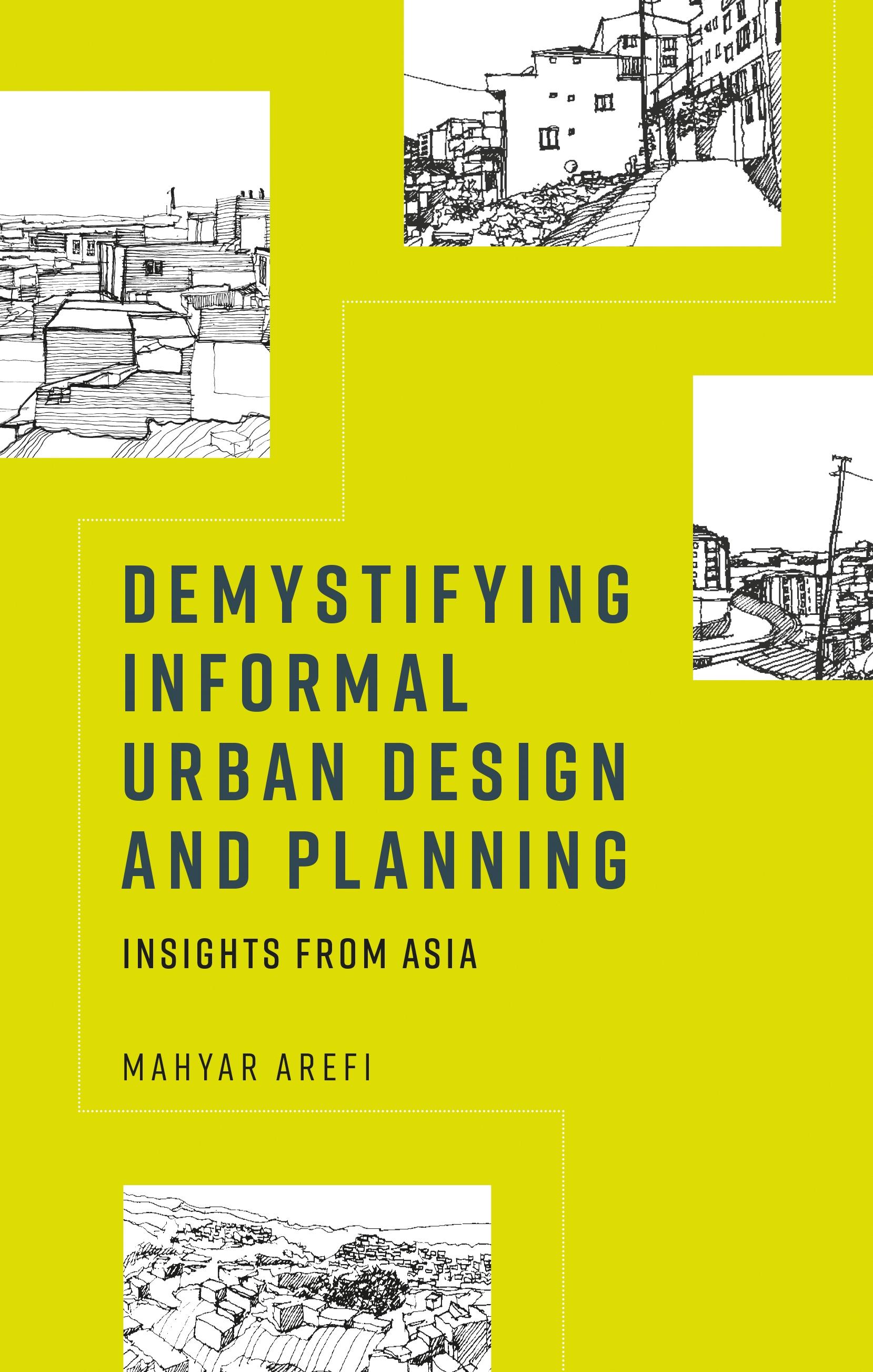
With more than half of the world’s population living in cities, informal settlements, or slums, continue to expand. This book explores the informality-urban design nexus, and asks why formal urban designers and planners have remained largely reluctant to address these challenges facing our cities.
What distinguishes the formal vs. informal urban design paradigm? While urban designers are able to identify and address specific problems like walkability, gentrification, or sense of place, informal settlement problems prove inexorably complex, and harder to fathom to begin with.
Therefore, seeking to demystify these epistemological ambiguities – while difficult – makes sense. The use of abductive reasoning, regulations, aesthetics, and design epitomise the formal, while informal urban planning and design is characterized by information, assets and adaptation. In support of these thematic differentiations, this book uses case studies to better contextualize and unpack the metaphorical distinctions of the two theoretical entities.
Conceptualizing these two schools of thought this way, the book engages urban designers with these debates, and explores how informal settlement residents see themselves, act collectively, care about their settlements, and leverage opportunities.
Pay easily by card, Klarna, Apple Pay or Google Pay. Not happy? You always have a 14-day money-back guarantee. Read more in our terms. If you have any questions, email us at hello@memmo.org.
Memmo makes studying easier – wherever you are in the world. We bring your course books and smart study tools together in one place: summaries, quizzes, podcasts and flashcards. Plus Ted, your study buddy who answers anything you wonder. Over 75,000 students already study here – built to help you learn faster and stress less.