
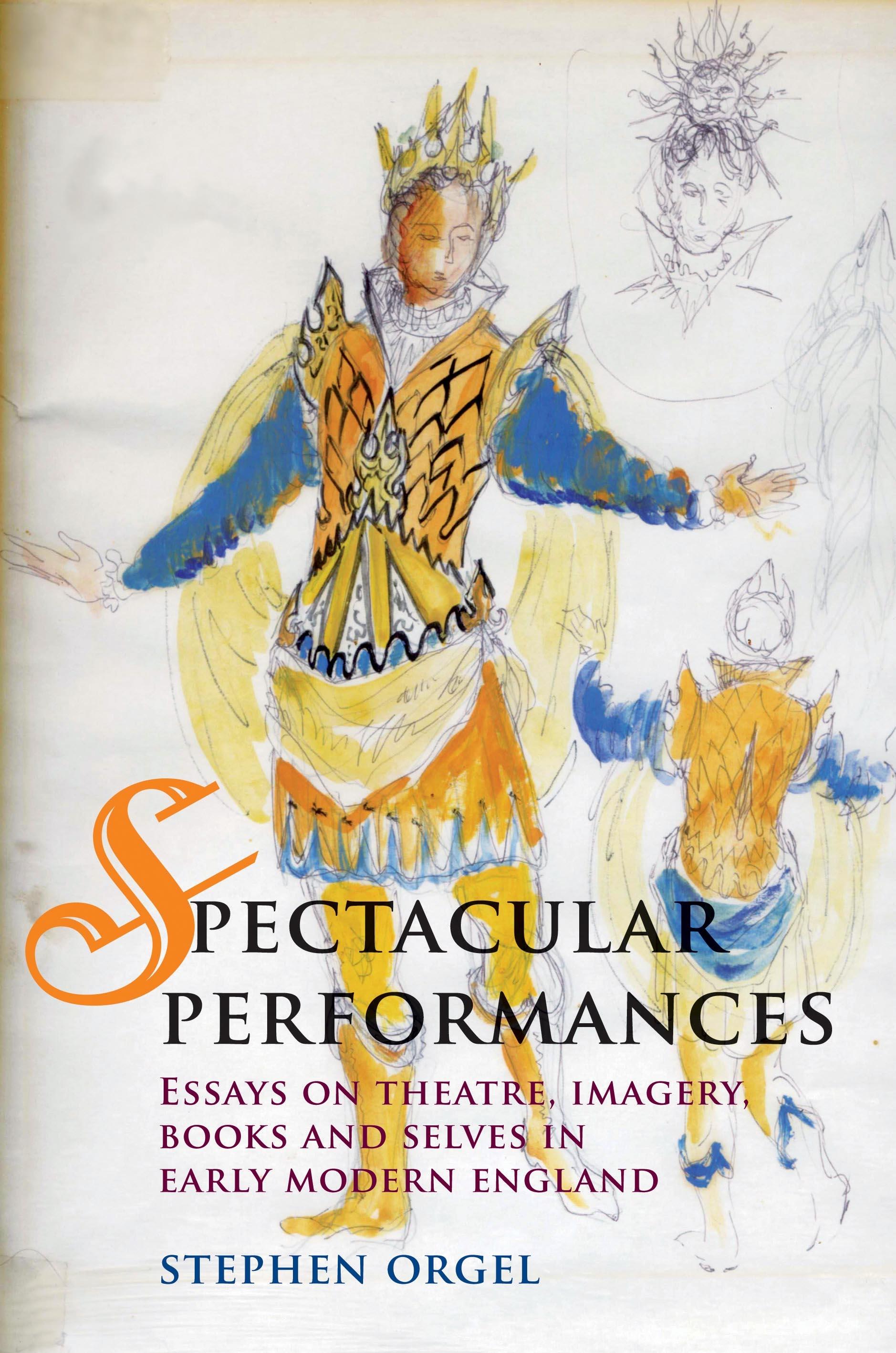
Why did Queen Elizabeth I compare herself with her disastrous ancestor Richard II? Why would Ben Jonson transform Queen Anne and her ladies into Amazons as entertainment for the pacifist King James? How do the concept of costume as high fashion and as self-fashioning, as disguise and as the very essence of theatre, relate to one other? How do portraits of poets help make the author readers want, and why should books, the embodiment of the word, be illustrated at all? What conventions connect image to text, and what impulses generated the great art collections of the early seventeenth century?
In this richly illustrated collection on theatre, books, art and personal style, the eminent literary critic and cultural historian Stephen Orgel addresses himself to such questions in order to reflect generally on early modern representation and, in the largest sense, early modern performance. As wide-ranging as they are perceptive, the essays deal with Shakespeare, Jonson and Milton, with Renaissance magic and Renaissance costume, with books and book illustration, art collecting and mythography. All are recent, and five are hitherto unpublished.
Pay easily by card, Klarna, Apple Pay or Google Pay. Not happy? You always have a 14-day money-back guarantee. Read more in our terms. If you have any questions, email us at hello@memmo.org.
Memmo makes studying easier – wherever you are in the world. We bring your course books and smart study tools together in one place: summaries, quizzes, podcasts and flashcards. Plus Ted, your study buddy who answers anything you wonder. Over 75,000 students already study here – built to help you learn faster and stress less.