
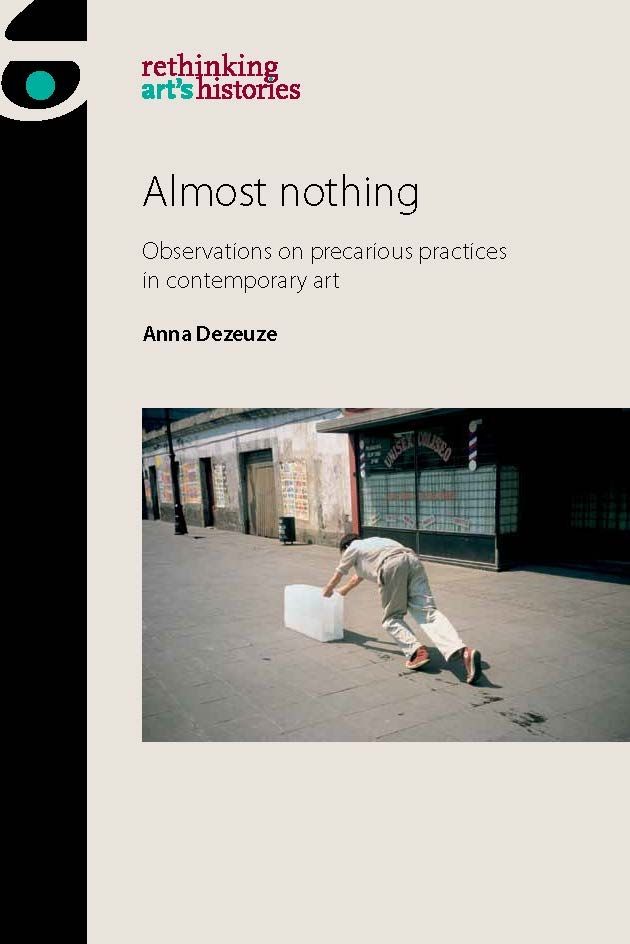
What does an assemblage made out of crumpled newspaper have in common with an empty room in which the lights go on and off every five seconds? This book argues that they are both examples of a 'precarious' art that flourished from the late 1950s to the first decade of the twenty-first century, in light of a growing awareness of the individual's fragile existence in capitalist society.
Focusing on comparative case studies drawn from European, North and South American practices, this study maps out a network of similar concerns and practices, while outlining its evolution from the 1960s to the beginning of the twenty-first century.
This book will provide students and amateurs of contemporary art and culture with new insights into contemporary art practices and the critical issues that they raise concerning the material status of the art object, the role of the artist in society, and the relation between art and everyday life.
Pay easily by card, Klarna, Apple Pay or Google Pay. Not happy? You always have a 14-day money-back guarantee. Read more in our terms. If you have any questions, email us at hello@memmo.org.
Memmo makes studying easier – wherever you are in the world. We bring your course books and smart study tools together in one place: summaries, quizzes, podcasts and flashcards. Plus Ted, your study buddy who answers anything you wonder. Over 50,000 students already study here – built to help you learn faster and stress less.