
How Uganda’s vibrant religious infrastructure supports local and interfaith community care efforts
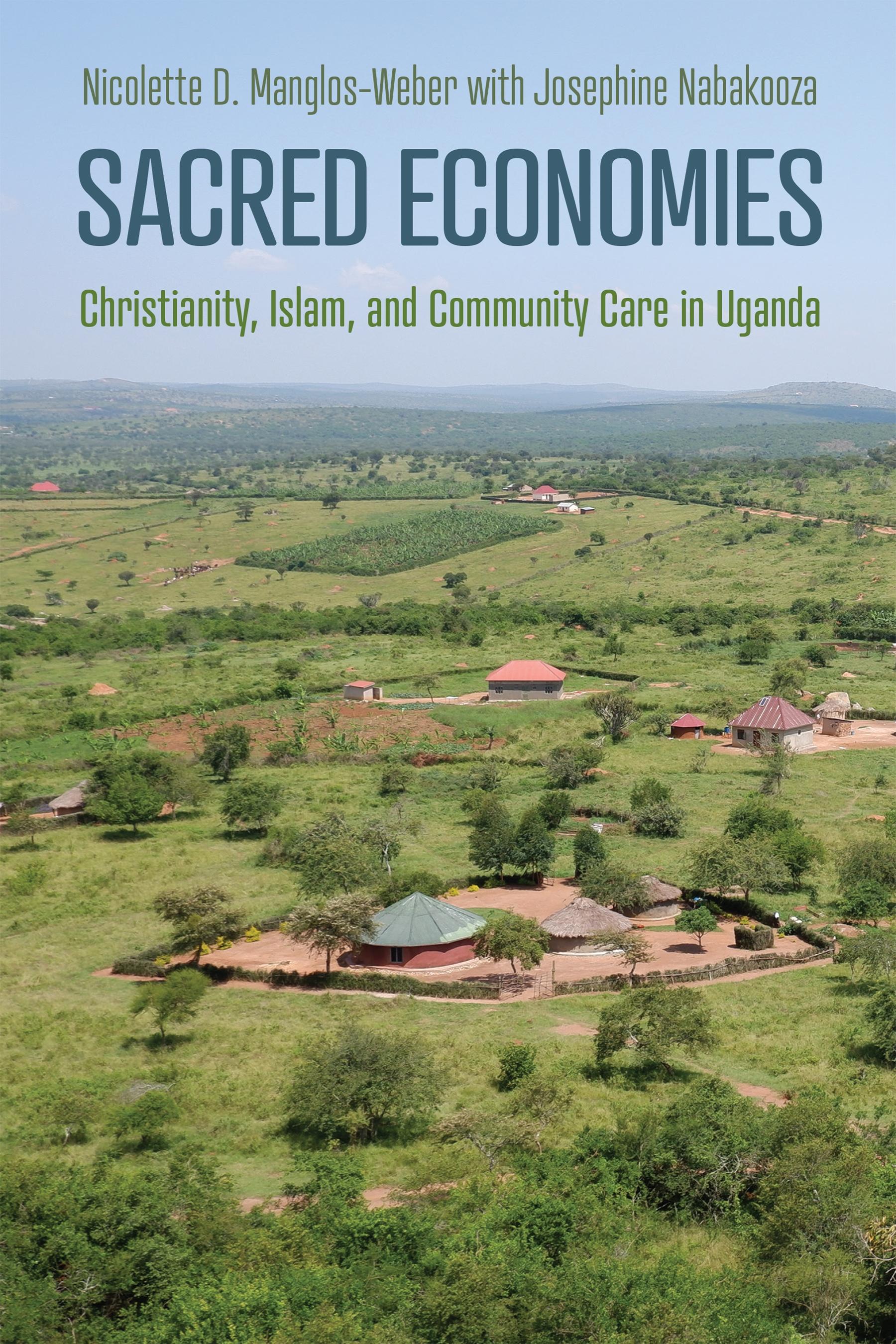
For millions living on the African continent, the experience of poverty is a facet of life. While many scholars, activists, and policy experts work in African communities to mitigate poverty, they often miss a crucial dimension of contemporary African life—religion and religious practice. In Sacred Economies, scholar Nicolette Manglos-Weber with her colleague Josephine Nabakooza investigate how and why religion matters to the ways in which people take care of their material needs. Using interviews, focus groups, and sociological portraits of four local leaders in Uganda, Manglos-Weber and Nabakooza show how Uganda’s vibrant religious infrastructure supports local and interfaith community care efforts. Manglos-Weber ultimately argues that participation in Christian and Islamic congregations, as a model of religious life, generates a robust infrastructure of economic patronage and support. She also finds that this shared dynamic drives interfaith cooperation between local faith groups.
In telling this story, Sacred Economies drives the study of congregations in new directions, demonstrating how religious congregations function differently around the world. Manglos-Weber’s analysis prompts a closer look at the grassroots and unofficial religious aspects that emerge from congregational life and are often missed in scholarly studies of global religion and politics. She also challenges the de facto secularism of neoliberal development—revealing how economic activity and faith are intertwined in a postcolonial context. Sacred Economies challenges both scholars and development practitioners to understand the sacred dimensions of community care as a force for social good.
Pay easily by card, Klarna, Apple Pay or Google Pay. Not happy? You always have a 14-day money-back guarantee. Read more in our terms. If you have any questions, email us at hello@memmo.org.
Memmo makes studying easier – wherever you are in the world. We bring your course books and smart study tools together in one place: summaries, quizzes, podcasts and flashcards. Plus Ted, your study buddy who answers anything you wonder. Over 50,000 students already study here – built to help you learn faster and stress less.