
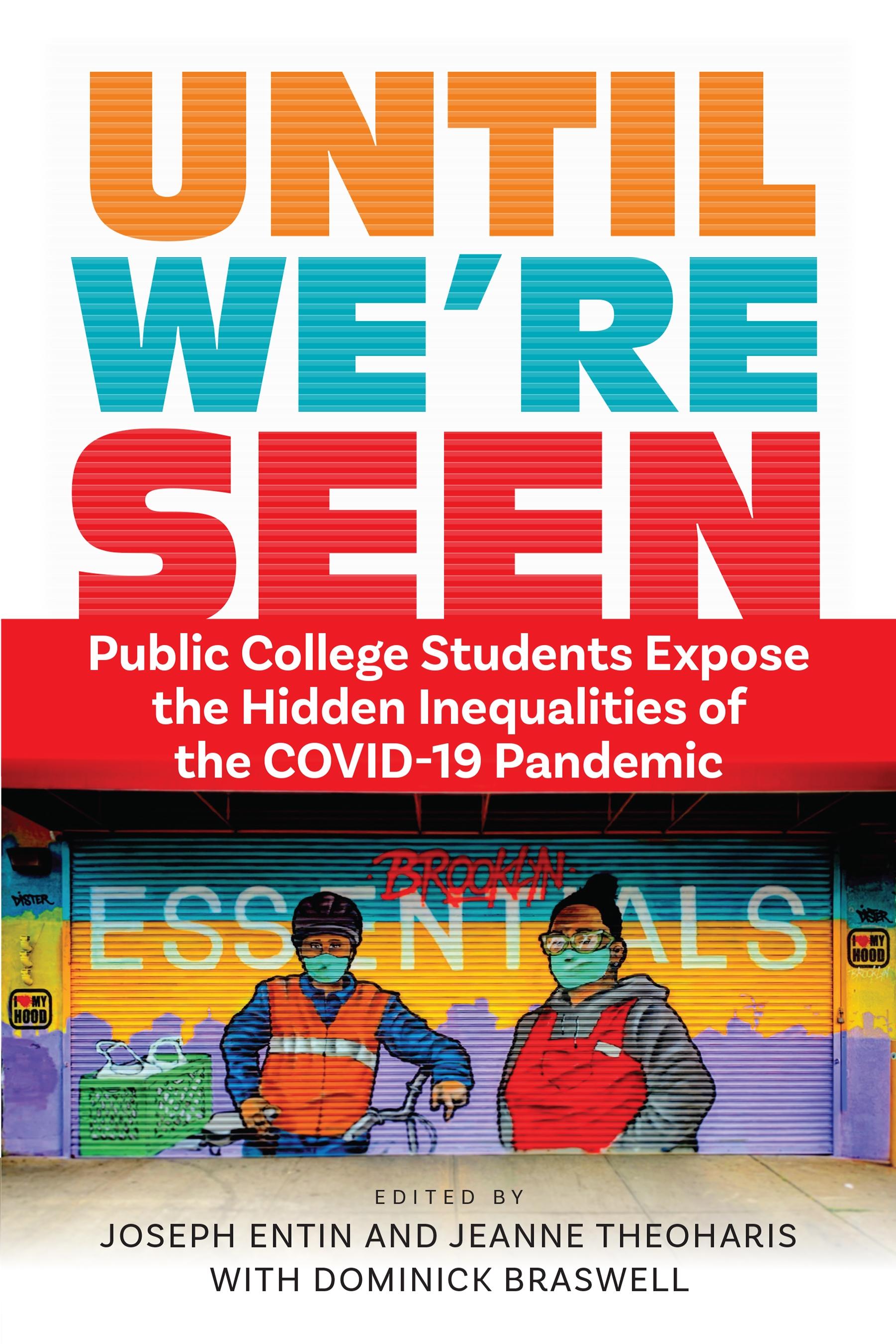
Firsthand accounts of COVID-19’s devastating effects on working-class communities of color
The first months of the COVID-19 pandemic were filled with talk of heroes, the frontline workers who kept the country functioning. “And when they write those history books, the heroes of the battle will be the hardworking families of New York,” Governor Andrew Cuomo trumpeted on Labor Day 2020. But what if those heroes, those essential workers and their families, wrote the book themselves?
In Until We’re Seen, the heroes write their own stories. Through firsthand accounts by college students at Brooklyn College and California State University Los Angeles, Until We’re Seen chronicles COVID-19’s devastating, disproportionate effects on working-class communities of color, even as the United States has declared the pandemic over and looks away from its impacts.
Very few of these students and their families had the luxury of laboring from home; if they were able to keep their jobs, they took subways and buses, and they worked. They drove delivery trucks, worked in private homes, cooked food in restaurants for people to pick up, worked as EMTs, and did construction. They couldn’t escape to second homes; if anything, more people moved in, as families were forced to consolidate to save money. Together, the accounts in this book show that the COVID-19 pandemic did discriminate, following the race and class fissures endemic to US society. But if these are tales of hardship, they are also love stories—of students’ families, biological and chosen—and of the deep resolve, mundane carework, and herculean efforts such love entails.
Recounting 2020–2022 through the experiences of predominantly young, working-class immigrants and people of color living in the first two major US COVID-19 epicenters, Until We’re Seen spotlights previously untold stories of the pandemic in New York, Los Angeles, and the nation as a whole.
Pay easily by card, Klarna, Apple Pay or Google Pay. Not happy? You always have a 14-day money-back guarantee. Read more in our terms. If you have any questions, email us at hello@memmo.org.
Memmo makes studying easier – wherever you are in the world. We bring your course books and smart study tools together in one place: summaries, quizzes, podcasts and flashcards. Plus Ted, your study buddy who answers anything you wonder. Over 50,000 students already study here – built to help you learn faster and stress less.