
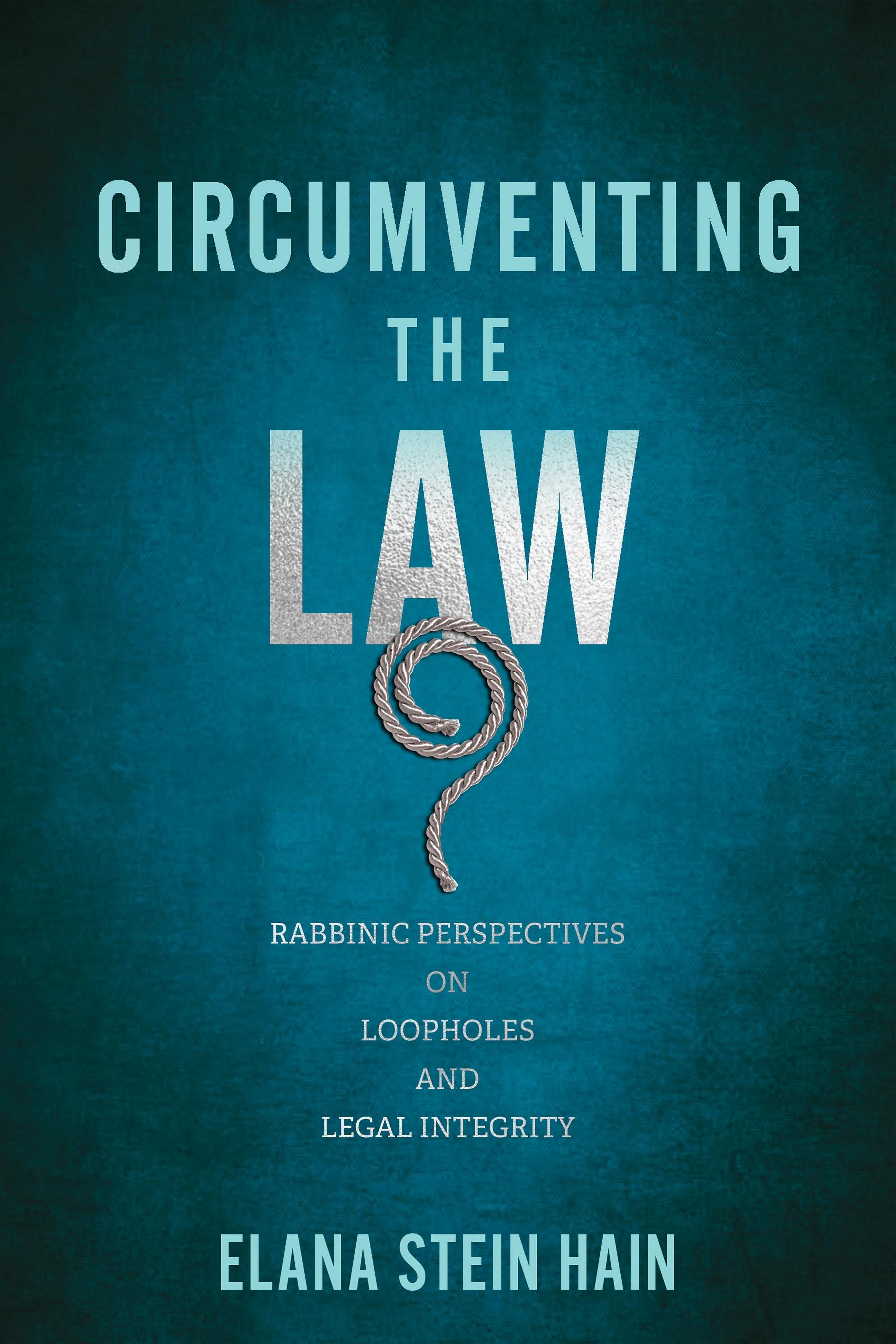
Circumventing the Law probes the rabbinic logic behind the use of loopholes, the legal phenomenon of finding and using gaps within law to achieve otherwise illegal outcomes. The logic of ha’aramah, a subset of rabbinic legal circumventions mostly defined as a tool for private life, underpins both well-known circumventions, such as selling leaven before Passover, and lesser-known mechanisms, such as designating an animal intended for sacrifice “blemished” before birth to allow it to be slaughtered for food instead. Elana Stein Hain traces the development of these loopholes over time, revealing that rabbinic literature does not consistently accept or reject loopholes. Instead, rabbinic Judaism applies categories of evasion (prohibited), avoidance (permitted), and avoision (contested) to loopholes on a case-by-case basis. The intended outcome of a given loophole determines its classification, as does the legal integrity of the circumventive process in question.
Yet these understandings of loopholes are not static—instead, rabbinic attitudes toward loopholing change over time. Early works display an objective, performative understanding of the self and of intention, but evolve over time to reflect more subjective and intimate understanding of the self and intention. This evolution redefines what legal integrity means in Jewish legal philosophy.
Circumventing the Law brings readers through the Second Temple period to the modern era to see how loopholing has evolved over millennia. With a focus on late antiquity, Stein Hain explores tannaitic literature, the Palestinian Talmud, and contemporaneous Greco-Roman and Persian thought to show that when warranted, Jewish rhetoric and philosophy around understandings of loopholes was a unique phenomenon that relied on changes in understanding the definition of integrity itself, a key finding for scholars of Jewish Studies and of religious and of secular law writ large.
Pay easily by card, Klarna, Apple Pay or Google Pay. Not happy? You always have a 14-day money-back guarantee. Read more in our terms. If you have any questions, email us at hello@memmo.org.
Memmo makes studying easier – wherever you are in the world. We bring your course books and smart study tools together in one place: summaries, quizzes, podcasts and flashcards. Plus Ted, your study buddy who answers anything you wonder. Over 50,000 students already study here – built to help you learn faster and stress less.