
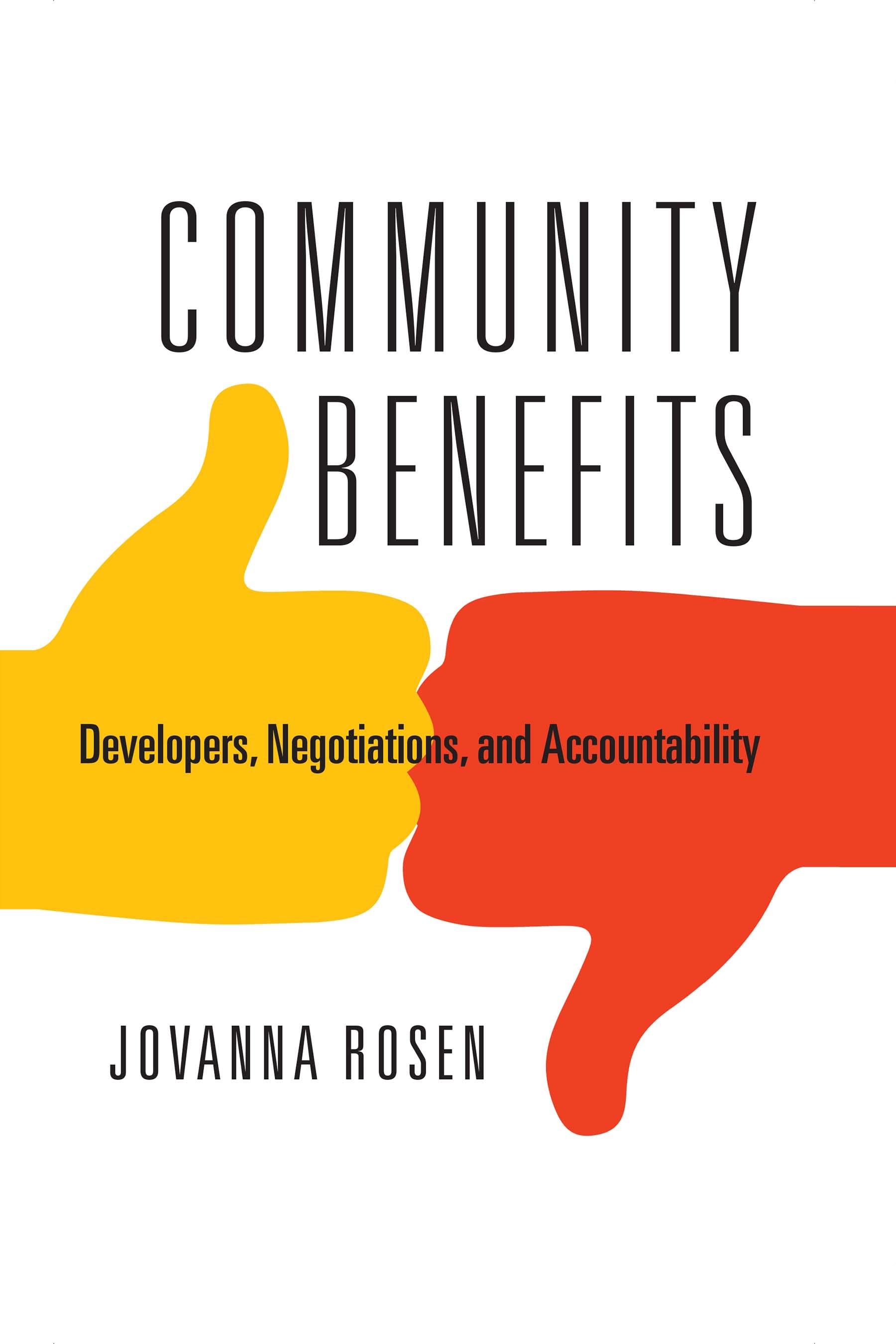
In Community Benefits, Jovanna P. Rosen explores a new pattern in urban development: local residents and community representatives leveraging large-scale development projects for agreements that promise dedicated local benefits, such as parks and jobs. In general, such development projects have not produced impactful benefits for local residents, and often have contributed to significant community harm, including gentrification and displacement. In response, community activists have launched a fight to control development, using benefits-sharing agreements to ensure that projects produced better outcomes for local residents. While such agreements now exist across the nation, the process of negotiating and enforcing them remains challenging. This book dives deep into four case studies—in Los Angeles, Atlanta, Seattle, and Milwaukee—to answer the following questions: Who ultimately benefits from both the agreements and the projects in question? How do benefits get delivered, and who controls this process? What works for these agreements to successfully produce community outcomes?
Rosen shows that, without agreements that promote accountability, developers and other project proponents can walk away from the negotiating table once the agreement is signed and the development moves forward. This disregard for community benefits and priorities can leave community residents solely responsible for benefits delivery during implementation, but with few viable avenues to ensure that outcomes materialize. The cases reveal specific elements that agreements require to achieve success during implementation: community participation, managerial connections, effective partnerships, responsiveness, and vigorous oversight with accountability mechanisms. Although creating these conditions is difficult, sometimes impossible, and contingent on fragile processes, Rosen concludes the book with recommendations for both the agreement negotiation and implementation phases to ensure success.
Pay easily by card, Klarna, Apple Pay or Google Pay. Not happy? You always have a 14-day money-back guarantee. Read more in our terms. If you have any questions, email us at hello@memmo.org.
Memmo makes studying easier – wherever you are in the world. We bring your course books and smart study tools together in one place: summaries, quizzes, podcasts and flashcards. Plus Ted, your study buddy who answers anything you wonder. Over 75,000 students already study here – built to help you learn faster and stress less.