
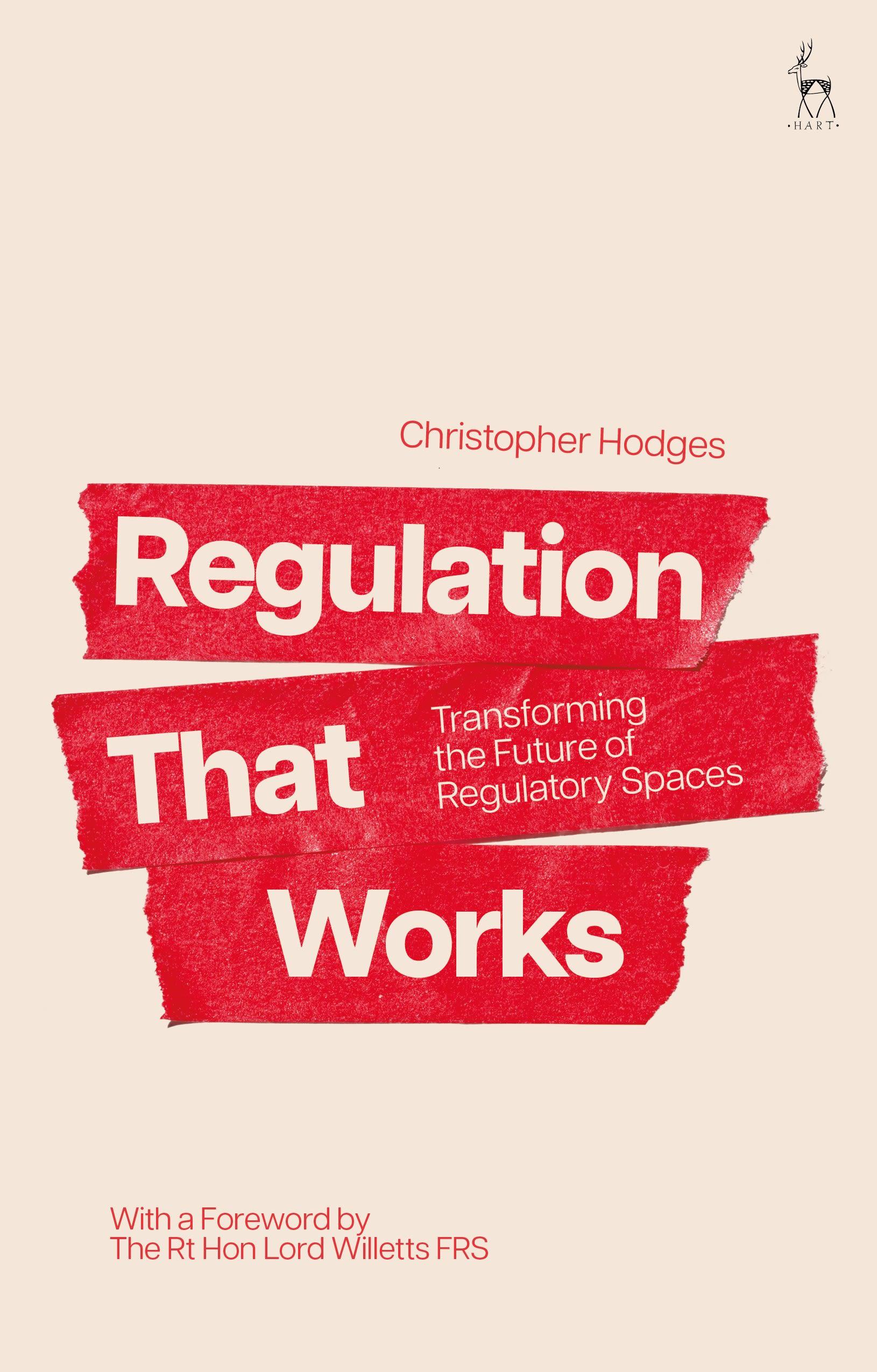
This book explains what regulation is – and is not.
It clarifies how regulation actually works, and how it can be made better. It also sets out how regulation should be done given fundamental challenges and changes to how we have done it. What is regulation trying to achieve? Is there too much red tape? Does regulation impede growth and innovation? Does regulation provide protection, and stability, and fair behaviours? Is it effective? How do we know if it succeeds?
The book illustrates competing regulatory models, and how multiple tools work – but also how things need to work differently in the future.
Given the pace of change in new technologies, creating unknown and uncontrollable risks, and the global nature of these technologies, we can only keep ourselves safe if we modernise how we 'do' regulation and work in collaborative ecosystems in which everyone works together to identify and control new harms. We should be aiming to achieve multiple outcomes, including protection as well as fair markets, facilitating innovation, and economic growth and social cohesion.
The book elucidates how this is all possible – if we organise ourselves and behave in new ways. Examples show sectors where all of this is already being applied – in Australia, Canada, New Zealand, and the UK.
This is a revolutionary book, and a must-read for anyone who wants to effect change in their regulatory spaces.
It clarifies how regulation actually works, and how it can be made better. It also sets out how regulation should be done given fundamental challenges and changes to how we have done it. What is regulation trying to achieve? Is there too much red tape? Does regulation impede growth and innovation? Does regulation provide protection, and stability, and fair behaviours? Is it effective? How do we know if it succeeds?
The book illustrates competing regulatory models, and how multiple tools work – but also how things need to work differently in the future.
Given the pace of change in new technologies, creating unknown and uncontrollable risks, and the global nature of these technologies, we can only keep ourselves safe if we modernise how we 'do' regulation and work in collaborative ecosystems in which everyone works together to identify and control new harms. We should be aiming to achieve multiple outcomes, including protection as well as fair markets, facilitating innovation, and economic growth and social cohesion.
The book elucidates how this is all possible – if we organise ourselves and behave in new ways. Examples show sectors where all of this is already being applied – in Australia, Canada, New Zealand, and the UK.
This is a revolutionary book, and a must-read for anyone who wants to effect change in their regulatory spaces.
Pay easily by card, Klarna, Apple Pay or Google Pay. Not happy? You always have a 14-day money-back guarantee. Read more in our terms. If you have any questions, email us at hello@memmo.org.
Memmo makes studying easier – wherever you are in the world. We bring your course books and smart study tools together in one place: summaries, quizzes, podcasts and flashcards. Plus Ted, your study buddy who answers anything you wonder. Over 50,000 students already study here – built to help you learn faster and stress less.