
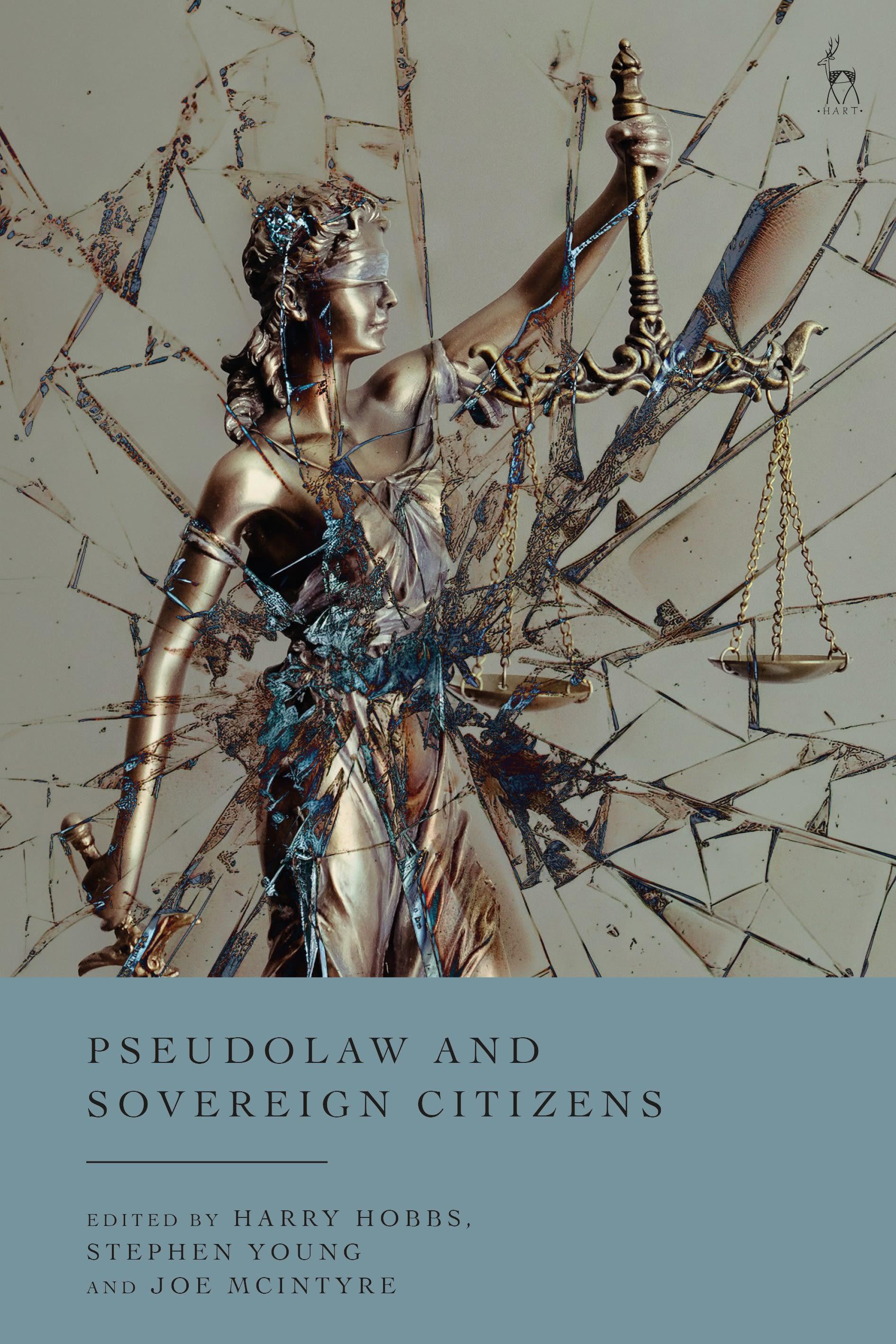
Can you avoid any law you do not consent to? Can you avoid paying taxes by declaring yourself sovereign? Do courts operate under admiralty or maritime law? No. But welcome to the strange world of pseudolaw.
This is the first-ever edited volume solely dedicated to examining pseudolaw and its most prominent adherents, sovereign citizens. Drawing on the expertise of judges, criminologists, legal theorists and political sociologists, this collection offers insights into the global growth and alarming adaptability of pseudolaw. While it might be tempting to laugh at the ridiculousness of pseudolaw, it is a serious matter. People who make these claims rob themselves of meaningful legal opportunities and impose great costs to themselves, the administration of justice, and the community. Pseudolaw is also linked to violent extremism and indicative of growing social insecurity.
Part I offers ways to analyse and differentiate pseudolaw from other forms of conspiracy ideation and fringe legal interpretation. Part II examines the rise of sovereign citizens and the global spread of pseudolaw. Part III explores contemporary issues arising from pseudolaw, including the rise of far-right extremism, lay-persons in judicial proceedings, fake claims of indigeneity, and fraudulent 'get out of jail' schemes. It concludes by considering how we can respond to this phenomenon.
This is the first-ever edited volume solely dedicated to examining pseudolaw and its most prominent adherents, sovereign citizens. Drawing on the expertise of judges, criminologists, legal theorists and political sociologists, this collection offers insights into the global growth and alarming adaptability of pseudolaw. While it might be tempting to laugh at the ridiculousness of pseudolaw, it is a serious matter. People who make these claims rob themselves of meaningful legal opportunities and impose great costs to themselves, the administration of justice, and the community. Pseudolaw is also linked to violent extremism and indicative of growing social insecurity.
Part I offers ways to analyse and differentiate pseudolaw from other forms of conspiracy ideation and fringe legal interpretation. Part II examines the rise of sovereign citizens and the global spread of pseudolaw. Part III explores contemporary issues arising from pseudolaw, including the rise of far-right extremism, lay-persons in judicial proceedings, fake claims of indigeneity, and fraudulent 'get out of jail' schemes. It concludes by considering how we can respond to this phenomenon.
Pay easily by card, Klarna, Apple Pay or Google Pay. Not happy? You always have a 14-day money-back guarantee. Read more in our terms. If you have any questions, email us at hello@memmo.org.
Memmo makes studying easier – wherever you are in the world. We bring your course books and smart study tools together in one place: summaries, quizzes, podcasts and flashcards. Plus Ted, your study buddy who answers anything you wonder. Over 50,000 students already study here – built to help you learn faster and stress less.