
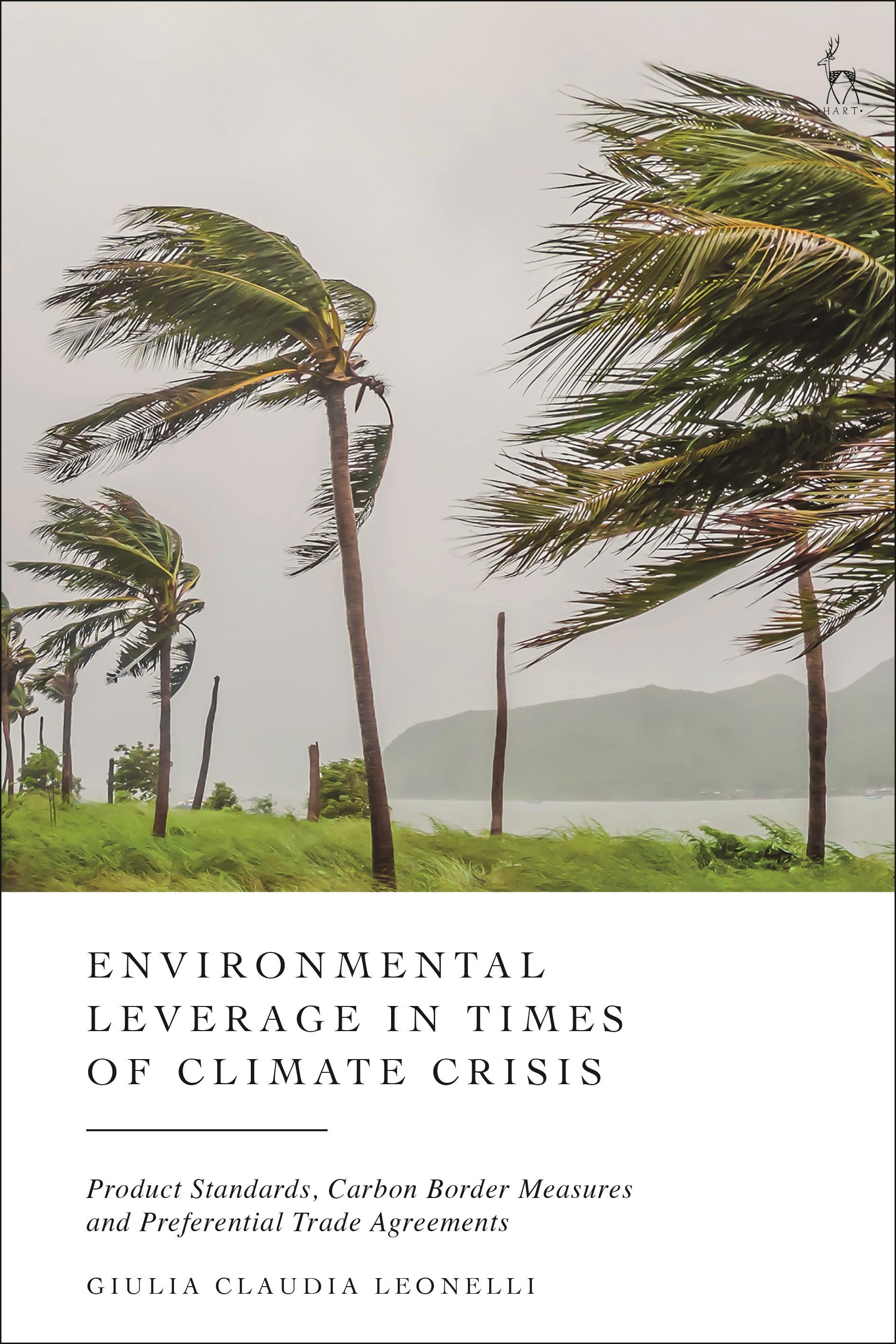
This book offers a conceptually informed insight into the rise of 'environmental leverage' in times of climate crisis.
The world is fast approaching a two degree Celsius increase in average global temperatures. Against this troubling background, trade-related environmental leverage aims to promote the uptake of more ambitious environmental standards by third countries and market actors involved in transnational supply chains.
Trade-related environmental leverage can help to remedy the failures of environmental multilateralism, reshape the trade agenda to cater to the demands of our time, and entrench greener forms of development and more sustainable production and consumption patterns. Nonetheless, its boundaries must be appropriately circumscribed.
The book assesses different forms of environmental leverage against the normative yardsticks of 'environmental integrity' and 'environmental legitimacy'. Environmental integrity targets 'green protectionism' and 'green discrimination', drawing a line between the promotion of environmental values and the protection of economic interests. Environmental legitimacy captures 'eco-imperialism', addressing the question of the treatment of differently situated countries and developing and least developed countries in particular. The book employs an in-depth analysis of three case studies to operationalise this conceptual framework, articulating the limits to environmental leverage in legal terms.
Combining a close focus on environmental regulations with a rigorous assessment of trade law questions, the book is relevant to anybody working in the fields of environmental law and policy, climate change law, and international trade law.
The world is fast approaching a two degree Celsius increase in average global temperatures. Against this troubling background, trade-related environmental leverage aims to promote the uptake of more ambitious environmental standards by third countries and market actors involved in transnational supply chains.
Trade-related environmental leverage can help to remedy the failures of environmental multilateralism, reshape the trade agenda to cater to the demands of our time, and entrench greener forms of development and more sustainable production and consumption patterns. Nonetheless, its boundaries must be appropriately circumscribed.
The book assesses different forms of environmental leverage against the normative yardsticks of 'environmental integrity' and 'environmental legitimacy'. Environmental integrity targets 'green protectionism' and 'green discrimination', drawing a line between the promotion of environmental values and the protection of economic interests. Environmental legitimacy captures 'eco-imperialism', addressing the question of the treatment of differently situated countries and developing and least developed countries in particular. The book employs an in-depth analysis of three case studies to operationalise this conceptual framework, articulating the limits to environmental leverage in legal terms.
Combining a close focus on environmental regulations with a rigorous assessment of trade law questions, the book is relevant to anybody working in the fields of environmental law and policy, climate change law, and international trade law.
Pages: 248
Category: Miljövetenskap & Klimat
e-ISBN: 9781509978311
Shipping weight: 1.2 kg
Ships in: 1-2 days
Pay easily by card, Klarna, Apple Pay or Google Pay. Not happy? You always have a 14-day money-back guarantee. Read more in our terms. If you have any questions, email us at hello@memmo.org.
Memmo makes studying easier – wherever you are in the world. We bring your course books and smart study tools together in one place: summaries, quizzes, podcasts and flashcards. Plus Ted, your study buddy who answers anything you wonder. Over 50,000 students already study here – built to help you learn faster and stress less.