
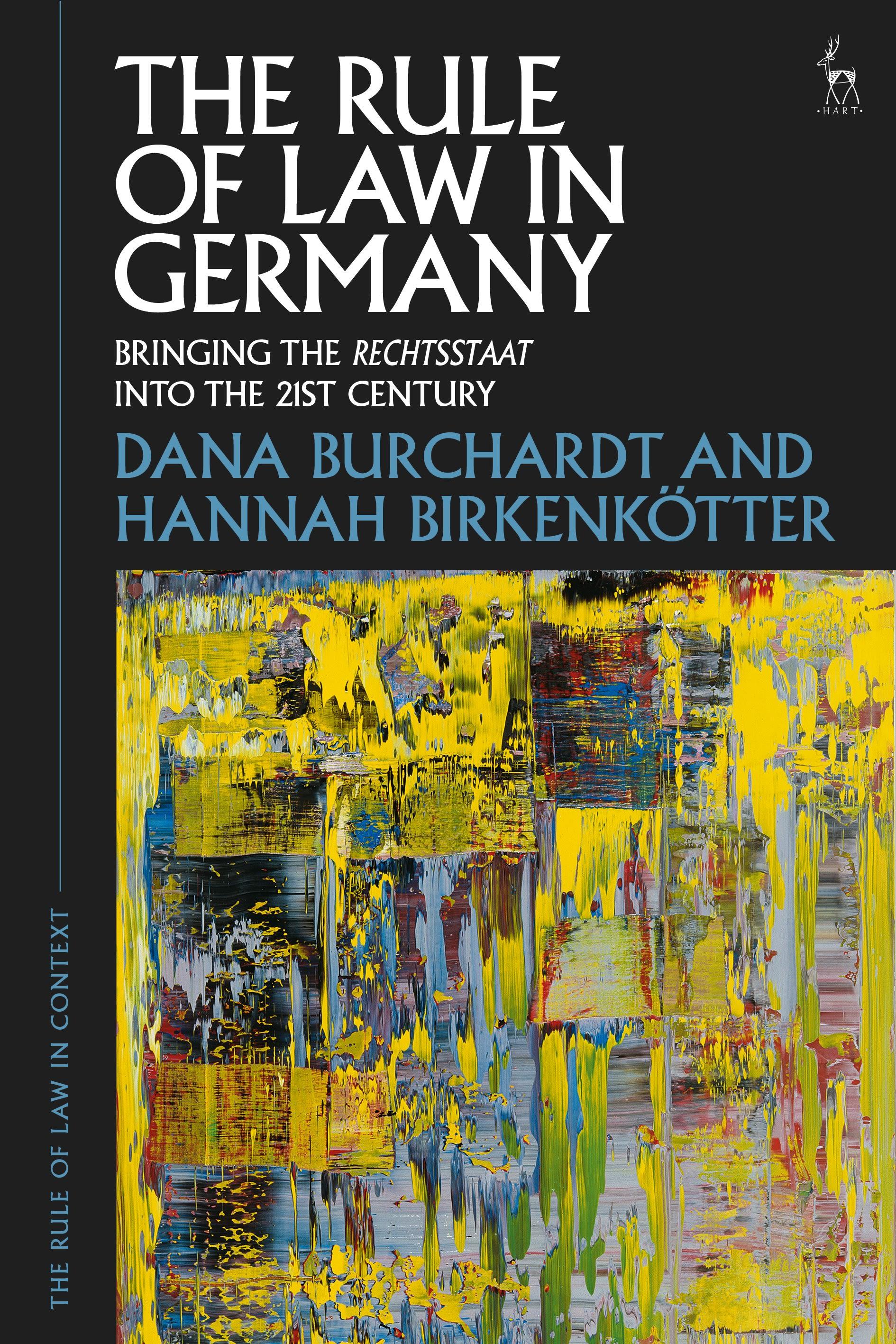
The rule of law, or Rechtsstaatsprinzip, is one of Germany's oldest constitutional principles and forms part of Germany's constitutional self-understanding. This book critically examines to what extent this key constitutional principle has translated into a reality for all.
The book provides a comprehensive insight into rule of law experiences and discourses in Germany. It explores Germany's long rule of law tradition and highlights where the German state has fallen short of its rule of law promise, using historical and contemporary examples. It also shows that Germany's rule of law experience is tightly interwoven with European and international rule of law debates. By integrating historical, socio-legal and doctrinal perspectives, the book provides a nuanced account of a foundational principle in German constitutional thought.
Dedicated chapters explore the history and doctrine of the rule of law, challenges to the rule of law in today's Germany, the rule of law experience in the former German Democratic Republic and in the context of reunification, the relationship of the German rule of law practice with the rule of law on the European and international level, and the rule of law in times of crisis. This includes challenges to the rule of law through anti-terrorism measures, as well as the more recent COVID-19 pandemic and the so-called migration crisis, but also how the rule of law has been discursively (mis-)used in those situations. In concluding, the book highlights digitalisation as a challenge to the future of the rule of law in Germany.
The book provides a comprehensive insight into rule of law experiences and discourses in Germany. It explores Germany's long rule of law tradition and highlights where the German state has fallen short of its rule of law promise, using historical and contemporary examples. It also shows that Germany's rule of law experience is tightly interwoven with European and international rule of law debates. By integrating historical, socio-legal and doctrinal perspectives, the book provides a nuanced account of a foundational principle in German constitutional thought.
Dedicated chapters explore the history and doctrine of the rule of law, challenges to the rule of law in today's Germany, the rule of law experience in the former German Democratic Republic and in the context of reunification, the relationship of the German rule of law practice with the rule of law on the European and international level, and the rule of law in times of crisis. This includes challenges to the rule of law through anti-terrorism measures, as well as the more recent COVID-19 pandemic and the so-called migration crisis, but also how the rule of law has been discursively (mis-)used in those situations. In concluding, the book highlights digitalisation as a challenge to the future of the rule of law in Germany.
Pay easily by card, Klarna, Apple Pay or Google Pay. Not happy? You always have a 14-day money-back guarantee. Read more in our terms. If you have any questions, email us at hello@memmo.org.
Memmo makes studying easier – wherever you are in the world. We bring your course books and smart study tools together in one place: summaries, quizzes, podcasts and flashcards. Plus Ted, your study buddy who answers anything you wonder. Over 50,000 students already study here – built to help you learn faster and stress less.