
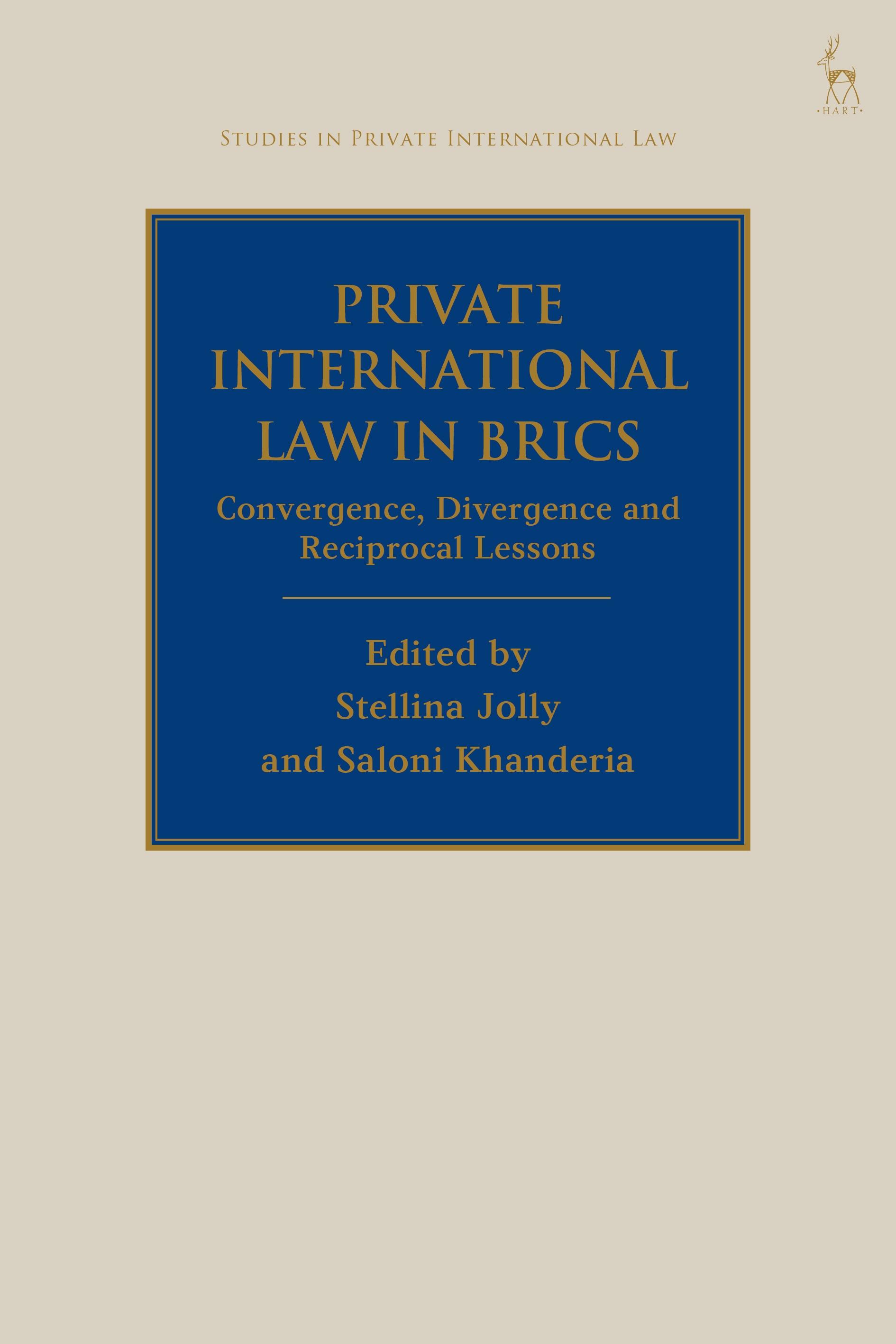
This book examines the convergences, divergences and reciprocal lessons that the BRICS countries (Brazil, Russia, India, China and South Africa) share with one another in developing the principles of private international law.
The chapters provide a thematic understanding of the cornerstones of private international law in each of the BRICS countries: namely, (1) the procedure to initiate claims in civil and commercial matters, (2) the law that would govern such matters in litigation and arbitration, as well as (3) the mechanism to recognise and enforce foreign judgments and arbitral awards.
Written by leading private international law scholars and practitioners, the chapters draw on domestic legislation and its interpretation through cases decided by the courts in each of these emerging economies, and explicitly cover the rules applicable in contractual and non-contractual concerns and issues of choice of court agreements. Issues around marriage, divorce, matrimonial property, succession and surrogacy are also addressed, considering the implication of such aspects through the increased movement of persons.
The book is a useful comparative resource for the governments of the BRICS countries, legislators, traders, academics, researchers and students looking for an in-depth discussion of the reciprocal lessons that these countries may have to offer one another on these issues.
The chapters provide a thematic understanding of the cornerstones of private international law in each of the BRICS countries: namely, (1) the procedure to initiate claims in civil and commercial matters, (2) the law that would govern such matters in litigation and arbitration, as well as (3) the mechanism to recognise and enforce foreign judgments and arbitral awards.
Written by leading private international law scholars and practitioners, the chapters draw on domestic legislation and its interpretation through cases decided by the courts in each of these emerging economies, and explicitly cover the rules applicable in contractual and non-contractual concerns and issues of choice of court agreements. Issues around marriage, divorce, matrimonial property, succession and surrogacy are also addressed, considering the implication of such aspects through the increased movement of persons.
The book is a useful comparative resource for the governments of the BRICS countries, legislators, traders, academics, researchers and students looking for an in-depth discussion of the reciprocal lessons that these countries may have to offer one another on these issues.
Pay easily by card, Klarna, Apple Pay or Google Pay. Not happy? You always have a 14-day money-back guarantee. Read more in our terms. If you have any questions, email us at hello@memmo.org.
Memmo makes studying easier – wherever you are in the world. We bring your course books and smart study tools together in one place: summaries, quizzes, podcasts and flashcards. Plus Ted, your study buddy who answers anything you wonder. Over 50,000 students already study here – built to help you learn faster and stress less.