
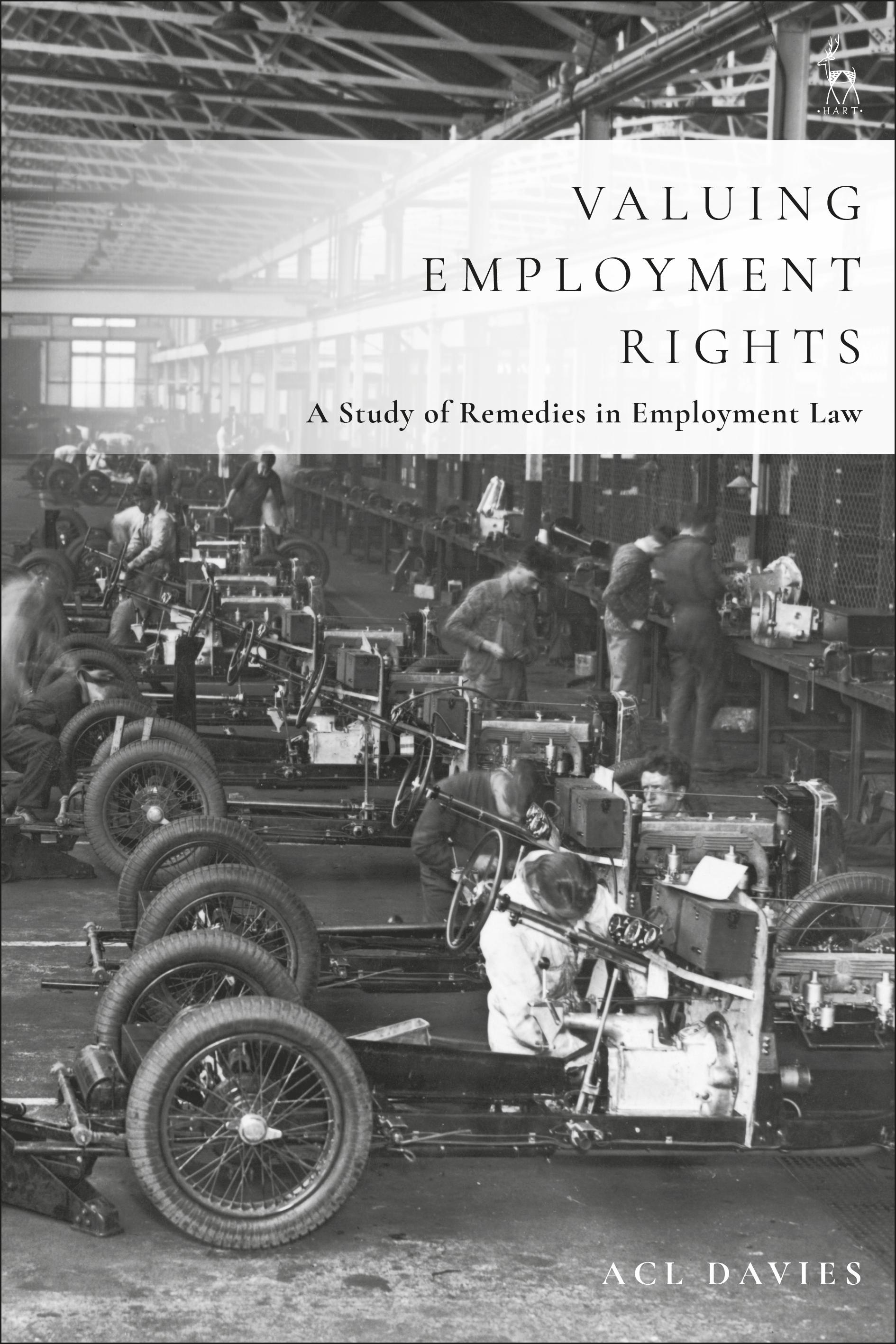
This book gives new insights into employment law by analysing a neglected topic: remedies for breaches of employment rights. It explores remedies in the wider context of compliance with, and enforcement of, employment law through criminal law and other regulatory techniques.
The book argues that some of the remedies set out in statute or at common law for working people are a poor 'fit' for the employment rights they are supposed to protect. Employment rights are often undervalued in the legal system, because remedies for their infringement are subject to limitations not applicable to rights in other settings. This limits their ability both to uphold the dignity of working people and to deter breaches. Moreover, the remedies on offer do not always suggest a sensible ranking of employment rights in which fundamental rights attract stronger remedies than other kinds of rights and interests.
The book suggests why some of these problems might have arisen and makes proposals for reform. It also considers the wider implications for a system of employment law that depends so heavily for its enforcement on working people litigating to enforce their rights. Ranging widely across theory and doctrine, and analysing criminal law, contract and tort as well as statutory employment law, this book will be of interest to academics and researchers seeking a deeper understanding of the subject.
The book argues that some of the remedies set out in statute or at common law for working people are a poor 'fit' for the employment rights they are supposed to protect. Employment rights are often undervalued in the legal system, because remedies for their infringement are subject to limitations not applicable to rights in other settings. This limits their ability both to uphold the dignity of working people and to deter breaches. Moreover, the remedies on offer do not always suggest a sensible ranking of employment rights in which fundamental rights attract stronger remedies than other kinds of rights and interests.
The book suggests why some of these problems might have arisen and makes proposals for reform. It also considers the wider implications for a system of employment law that depends so heavily for its enforcement on working people litigating to enforce their rights. Ranging widely across theory and doctrine, and analysing criminal law, contract and tort as well as statutory employment law, this book will be of interest to academics and researchers seeking a deeper understanding of the subject.
Pay easily by card, Klarna, Apple Pay or Google Pay. Not happy? You always have a 14-day money-back guarantee. Read more in our terms. If you have any questions, email us at hello@memmo.org.
Memmo makes studying easier – wherever you are in the world. We bring your course books and smart study tools together in one place: summaries, quizzes, podcasts and flashcards. Plus Ted, your study buddy who answers anything you wonder. Over 50,000 students already study here – built to help you learn faster and stress less.