
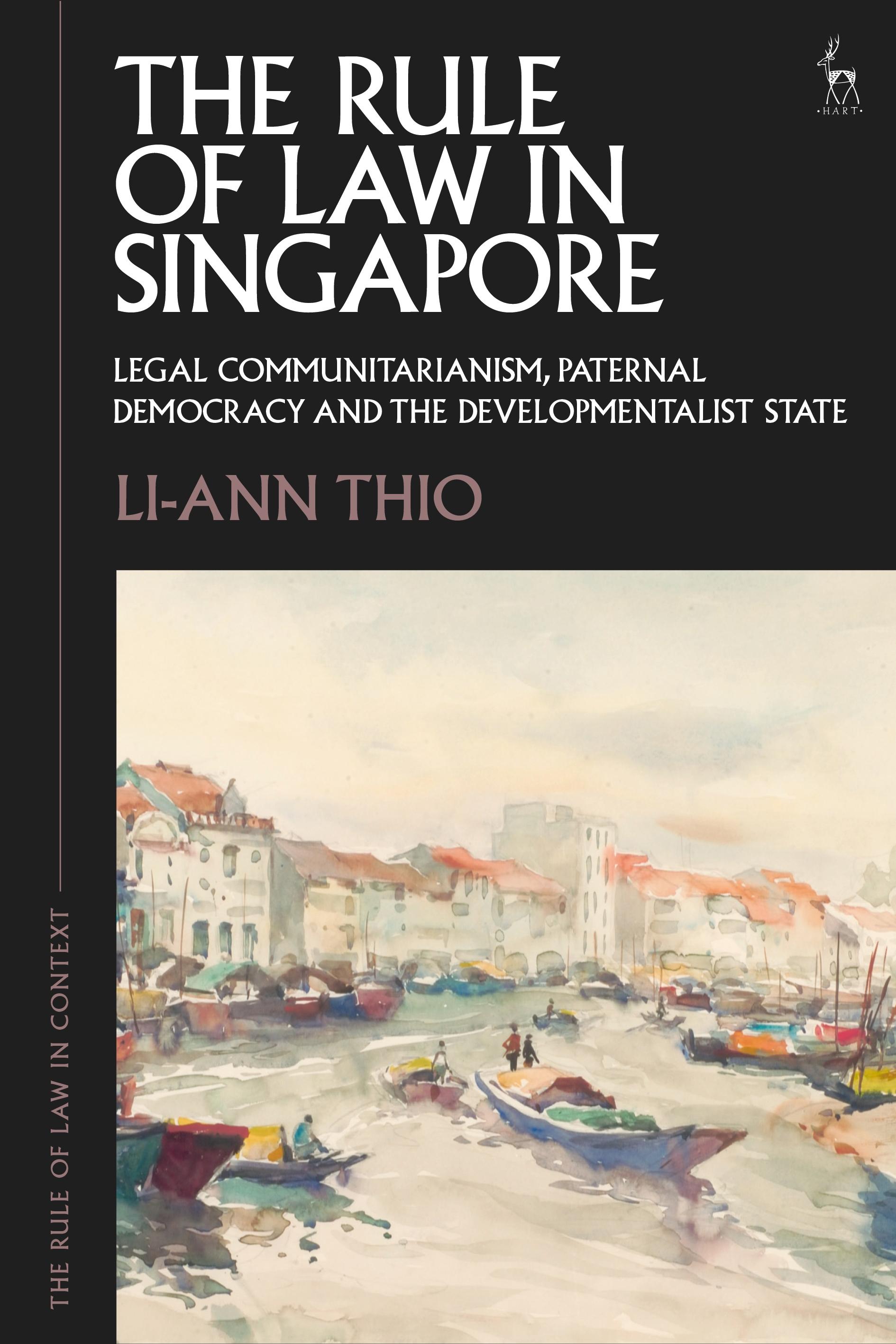
This book examines the operation of the rule of law in the non-liberal democracy of Singapore.
The rule of law in Singapore has been both lauded for anchoring efficient and effective government and lambasted for being procedural and statist. 21st-century Singapore has experienced modest political liberalisation, manifesting a paternal democracy where the governor-governed relationship is evolving, from a 'father knows best' paternalistic mindset to a more consultative approach to governance, where dialogue rather than diktat is the norm in a post-deferential era.
The Singapore case study helps pluralise the rule of law as a universal principle which moderates power, and may be variously implemented. The book examines the reception of the rule of law within the Singapore legal order, and how it interacts with constitutional principles like the separation of powers and democracy in the design of constitutional institutions and forging of structural and rights-oriented judicial review. It considers how the rule of law, contoured by legal communitarianism, sustains a managed democracy in relation to legislation governing internal security, public assemblies, religious harmony and online falsehoods. It questions whether the chilling of political speech by strict laws on political defamation and contempt of court has been significantly defrosted by important developments which seek ordered liberty through a more calibrated form of review.
Lucid and engaging, this book will be of interest to researchers working in constitutional law.
The rule of law in Singapore has been both lauded for anchoring efficient and effective government and lambasted for being procedural and statist. 21st-century Singapore has experienced modest political liberalisation, manifesting a paternal democracy where the governor-governed relationship is evolving, from a 'father knows best' paternalistic mindset to a more consultative approach to governance, where dialogue rather than diktat is the norm in a post-deferential era.
The Singapore case study helps pluralise the rule of law as a universal principle which moderates power, and may be variously implemented. The book examines the reception of the rule of law within the Singapore legal order, and how it interacts with constitutional principles like the separation of powers and democracy in the design of constitutional institutions and forging of structural and rights-oriented judicial review. It considers how the rule of law, contoured by legal communitarianism, sustains a managed democracy in relation to legislation governing internal security, public assemblies, religious harmony and online falsehoods. It questions whether the chilling of political speech by strict laws on political defamation and contempt of court has been significantly defrosted by important developments which seek ordered liberty through a more calibrated form of review.
Lucid and engaging, this book will be of interest to researchers working in constitutional law.
Pay easily by card, Klarna, Apple Pay or Google Pay. Not happy? You always have a 14-day money-back guarantee. Read more in our terms. If you have any questions, email us at hello@memmo.org.
Memmo makes studying easier – wherever you are in the world. We bring your course books and smart study tools together in one place: summaries, quizzes, podcasts and flashcards. Plus Ted, your study buddy who answers anything you wonder. Over 50,000 students already study here – built to help you learn faster and stress less.