
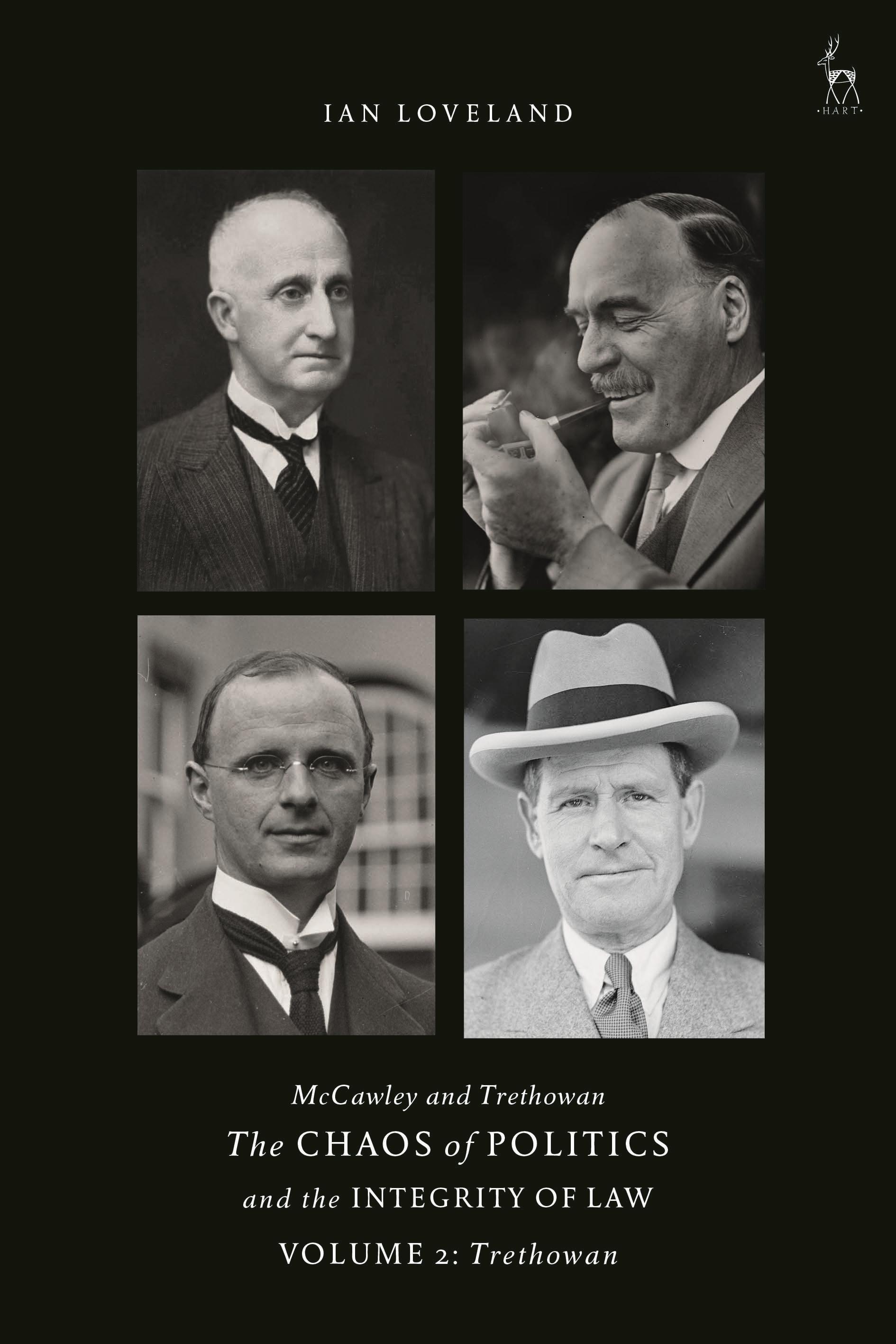
In the second part of this two-volume study, Ian Loveland delves deeply into the immediate historical and political context of the Trethowan litigation which began in New South Wales in 1930 and reached the Privy Council two years later. The litigation centred on the efforts of a conservatively-inclined government to prevent a future Labour administration led by the then radical politician Jack Lang abolishing the upper house of the State's legislature by entrenching the existence of the upper house through the legal device of requiring that its abolition be approved by a state-wide referendum.
The book carefully examines the immediate political and legal routes of the entrenchment device fashioned by the State's Premier Sir Thomas Bavin and his former law student, colleague and then Dean of the Sydney University law school Sir John Peden, and places the doctrinal arguments advanced in subsequent litigation in the State courts, before the High Court and finally in the Privy Council in the multiple contexts of the personal and policy based disputes which pervaded both the State and national political arenas.
In its final chapter, the book draws on insights provided by the detailed study of McCawley (in volume one) and Trethowan to revisit and re-evaluate the respective positions adopted by William Wade and Ivor Jennings as to the capacity of the United Kingdom's Parliament to introduce entrenching legislation which would be upheld by the courts.
The book carefully examines the immediate political and legal routes of the entrenchment device fashioned by the State's Premier Sir Thomas Bavin and his former law student, colleague and then Dean of the Sydney University law school Sir John Peden, and places the doctrinal arguments advanced in subsequent litigation in the State courts, before the High Court and finally in the Privy Council in the multiple contexts of the personal and policy based disputes which pervaded both the State and national political arenas.
In its final chapter, the book draws on insights provided by the detailed study of McCawley (in volume one) and Trethowan to revisit and re-evaluate the respective positions adopted by William Wade and Ivor Jennings as to the capacity of the United Kingdom's Parliament to introduce entrenching legislation which would be upheld by the courts.
Pay easily by card, Klarna, Apple Pay or Google Pay. Not happy? You always have a 14-day money-back guarantee. Read more in our terms. If you have any questions, email us at hello@memmo.org.
Memmo makes studying easier – wherever you are in the world. We bring your course books and smart study tools together in one place: summaries, quizzes, podcasts and flashcards. Plus Ted, your study buddy who answers anything you wonder. Over 50,000 students already study here – built to help you learn faster and stress less.