
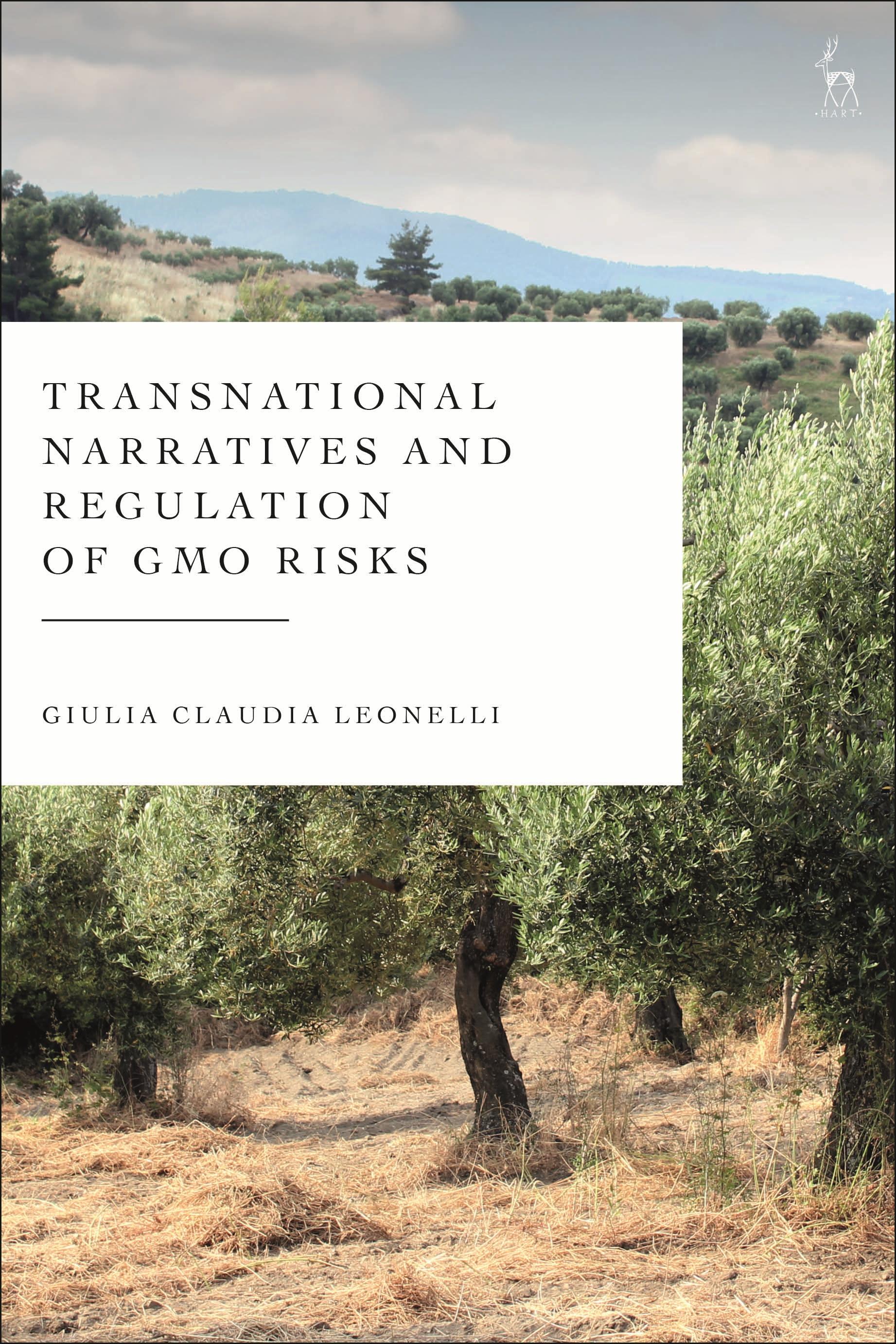
This book provides an innovative insight into the regulatory conundrum of genetically modified organisms (GMOs), deploying transnational legal analysis as a methodological framework to explore the most controversial area of risk governance.
The book deconstructs hegemonic and counter-hegemonic transnational narratives on the governance of GMO risks, cutting across US law, EU law, the WTO Agreement on Sanitary and Phytosanitary Measures, and hybrid standard-setting regimes. Should uncertain risks be run unless adverse effects have been conclusively established, and should regulators only act where this is cost-benefit effective? Should risk managers make a convincing case that a product or process is safe enough for the relevant uncertain risks to be socially acceptable? How can intractable transnational regulatory conflicts be solved?
The book complements a close analysis of regulatory frameworks and case law with a more encompassing perspective on the political, socio-economic and distributional implications of different approaches to the regulation of health and environmental risks at times of globalisation.
The GMO deadlock thus becomes a lens through which to investigate the underlying value systems, goals, and impacts of transnational discourses on risk governance. Against this backdrop, the normative strand of analysis points to the limited ability of science and procedural deliberation to generate authentic agreement and to identify normatively legitimate solutions, in the absence of pre-existing shared perspectives.
The book deconstructs hegemonic and counter-hegemonic transnational narratives on the governance of GMO risks, cutting across US law, EU law, the WTO Agreement on Sanitary and Phytosanitary Measures, and hybrid standard-setting regimes. Should uncertain risks be run unless adverse effects have been conclusively established, and should regulators only act where this is cost-benefit effective? Should risk managers make a convincing case that a product or process is safe enough for the relevant uncertain risks to be socially acceptable? How can intractable transnational regulatory conflicts be solved?
The book complements a close analysis of regulatory frameworks and case law with a more encompassing perspective on the political, socio-economic and distributional implications of different approaches to the regulation of health and environmental risks at times of globalisation.
The GMO deadlock thus becomes a lens through which to investigate the underlying value systems, goals, and impacts of transnational discourses on risk governance. Against this backdrop, the normative strand of analysis points to the limited ability of science and procedural deliberation to generate authentic agreement and to identify normatively legitimate solutions, in the absence of pre-existing shared perspectives.
Pay easily by card, Klarna, Apple Pay or Google Pay. Not happy? You always have a 14-day money-back guarantee. Read more in our terms. If you have any questions, email us at hello@memmo.org.
Memmo makes studying easier – wherever you are in the world. We bring your course books and smart study tools together in one place: summaries, quizzes, podcasts and flashcards. Plus Ted, your study buddy who answers anything you wonder. Over 50,000 students already study here – built to help you learn faster and stress less.