
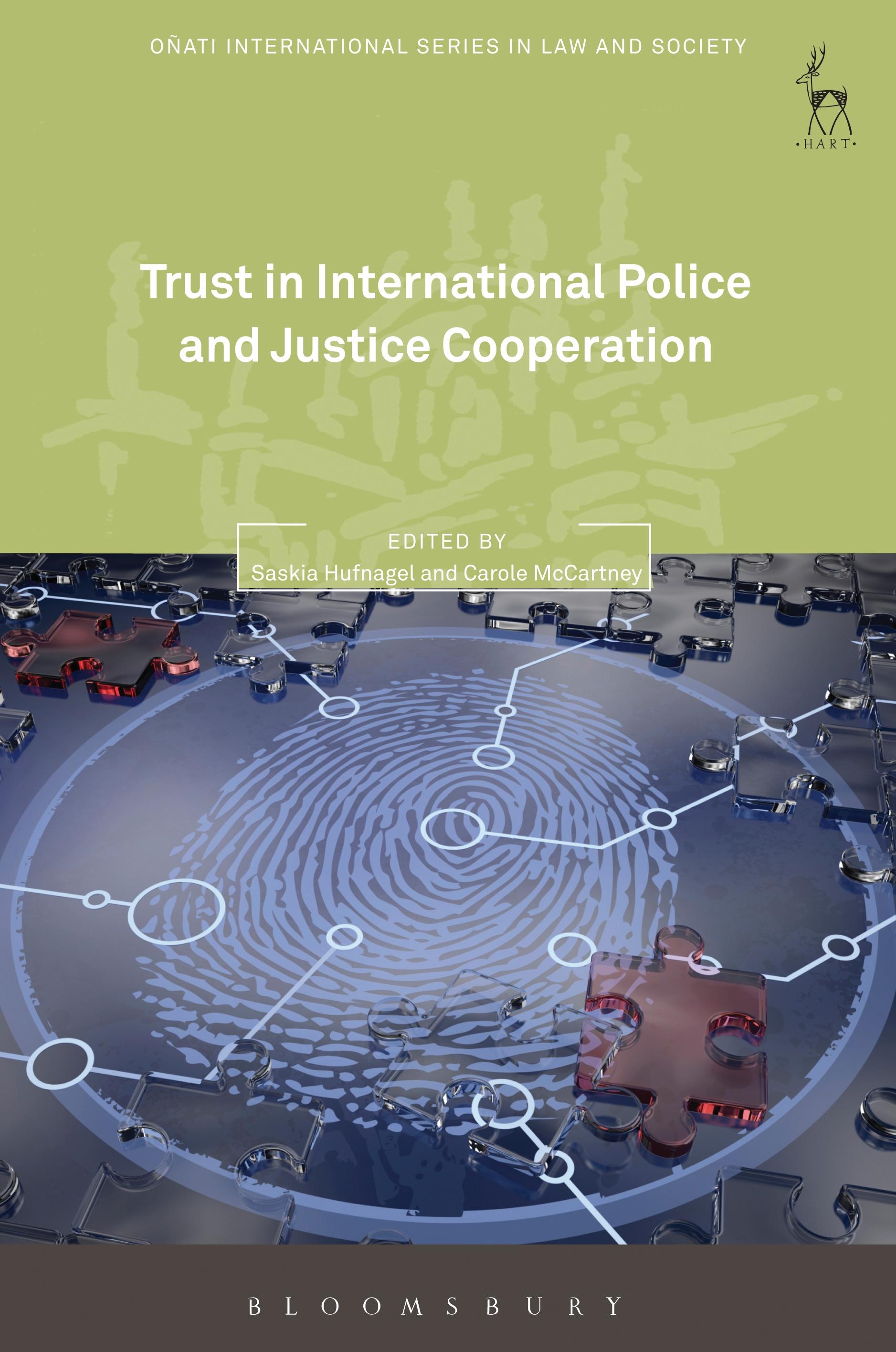
The use of extra-territorial intelligence is growing among security, border, and public agencies. Internationally, rapidly evolving efforts to tackle transnational crime entail the exchange of intelligence across jurisdictions and state borders as well as the 'linking' of law enforcement operations. This book provides a number of different perspectives from across Europe, Australasia and Canada to examine recent cooperation experiences and the challenges faced in practice.
The book brings together scholars from a range of legal and criminological fields to examine the legal imperatives and social parameters that shape international police and justice cooperation and highlights the importance of both trust and clear legal rules to ensure effective cooperation. It focuses on areas where cooperation is now mandated, but where significant issues are raised, including the international and regional methods of information and intelligence exchange and challenges to human rights protection; the coordination of international and regional exchange of evidence, such as forensic bioinformation; police cooperation in international investigations and the added value of formalising investigative strategies across jurisdictions regionally and internationally and the operation, accountability and legitimacy of organisations and institutions of 'cooperation' in law enforcement and specific international policing 'missions'.
The book brings together scholars from a range of legal and criminological fields to examine the legal imperatives and social parameters that shape international police and justice cooperation and highlights the importance of both trust and clear legal rules to ensure effective cooperation. It focuses on areas where cooperation is now mandated, but where significant issues are raised, including the international and regional methods of information and intelligence exchange and challenges to human rights protection; the coordination of international and regional exchange of evidence, such as forensic bioinformation; police cooperation in international investigations and the added value of formalising investigative strategies across jurisdictions regionally and internationally and the operation, accountability and legitimacy of organisations and institutions of 'cooperation' in law enforcement and specific international policing 'missions'.
Pay easily by card, Klarna, Apple Pay or Google Pay. Not happy? You always have a 14-day money-back guarantee. Read more in our terms. If you have any questions, email us at hello@memmo.org.
Memmo makes studying easier – wherever you are in the world. We bring your course books and smart study tools together in one place: summaries, quizzes, podcasts and flashcards. Plus Ted, your study buddy who answers anything you wonder. Over 50,000 students already study here – built to help you learn faster and stress less.