
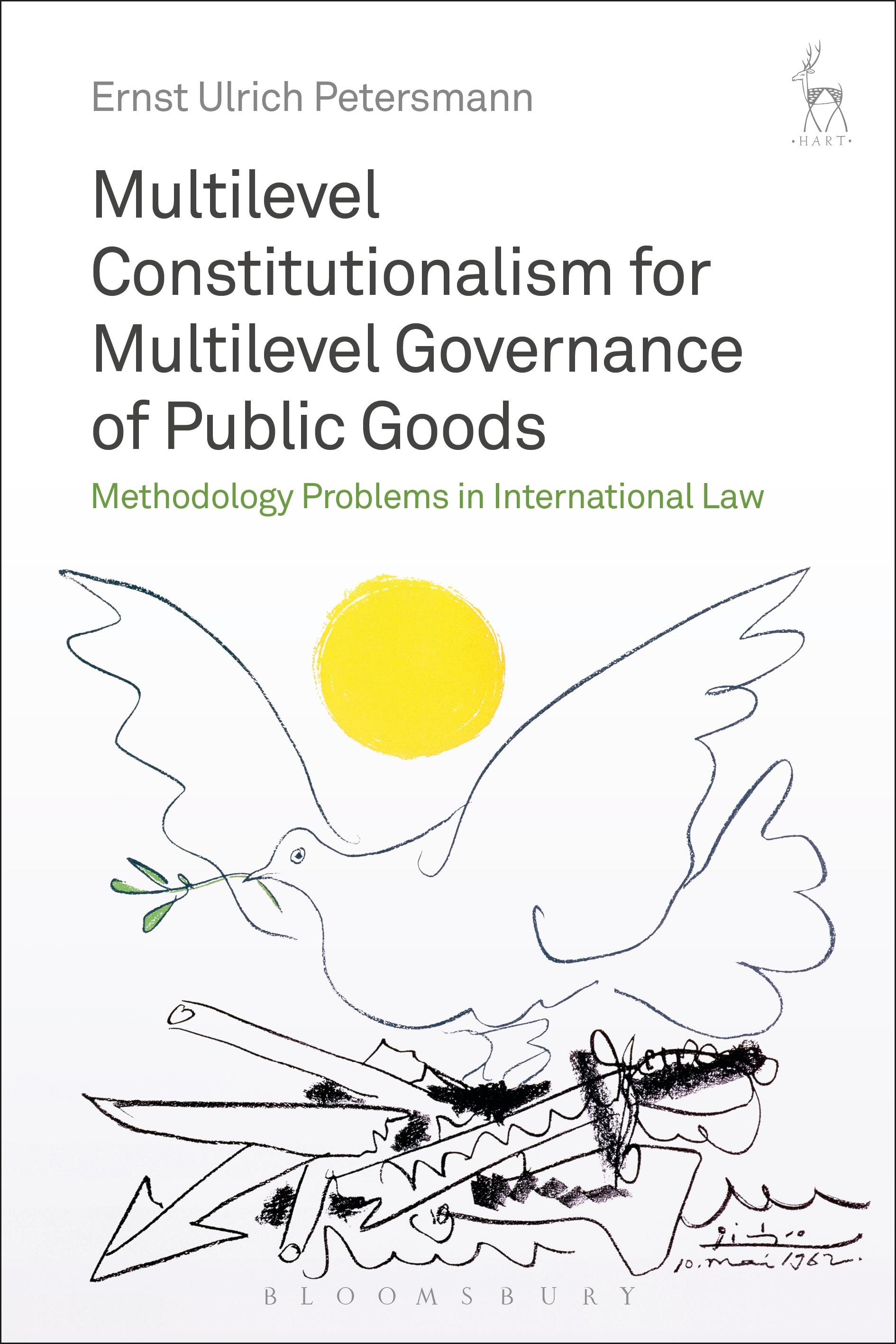
This is the first legal monograph analysing multilevel governance of global 'aggregate public goods' (PGs) from the perspective of democractic, republican and cosmopolitan constitutionalism by using historical, legal, political and economic methods. It explains the need for a 'new philosophy of international law' in order to protect human rights and PGs more effectively and more legitimately. 'Constitutional approaches' are justified by the universal recognition of human rights and by the need to protect 'human rights', 'rule of law', 'democracy' and other 'principles of justice' that are used in national, regional and UN legal systems as indeterminate legal concepts. The study describes and criticizes the legal methodology problems of 'disconnected' governance in UN, GATT and WTO institutions as well as in certain areas of the external relations of the EU (like transatlantic free trade agreements). Based on 40 years of practical experiences of the author in German, European, UN, GATT and WTO governance institutions and of simultaneous academic teaching, this study develops five propositions for constituting, limiting, regulating and justifying multilevel governance for the benefit of citizens and their constitutional rights as 'constituent powers', 'democratic principals' and main 'republican actors', who must hold multilevel governance institutions and their limited 'constituted powers' legally, democratically and judicially more accountable.
Pay easily by card, Klarna, Apple Pay or Google Pay. Not happy? You always have a 14-day money-back guarantee. Read more in our terms. If you have any questions, email us at hello@memmo.org.
Memmo makes studying easier – wherever you are in the world. We bring your course books and smart study tools together in one place: summaries, quizzes, podcasts and flashcards. Plus Ted, your study buddy who answers anything you wonder. Over 50,000 students already study here – built to help you learn faster and stress less.