
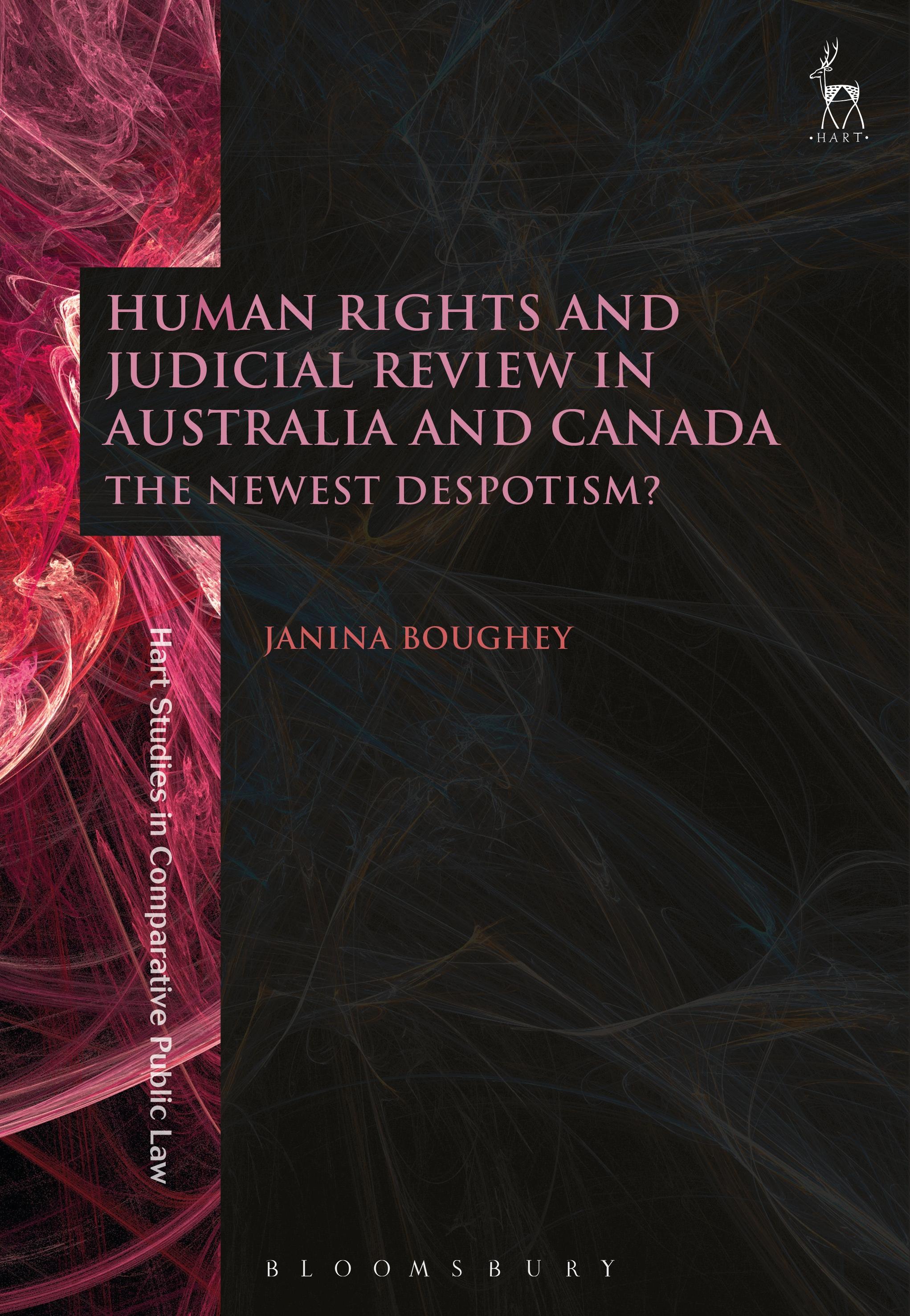
It is commonly asserted that bills of rights have had a 'righting' effect on the principles of judicial review of administrative action and have been a key driver of the modern expansion in judicial oversight of the executive arm of government. A number of commentators have pointed to Australian administrative law as evidence for this 'righting' hypothesis. They have suggested that the fact that Australia is an outlier among common law jurisdictions in having neither a statutory nor a constitutional framework to expressly protect human rights explains why Australia alone continues to take an apparently 'formalist', 'legalist' and 'conservative' approach to administrative law. Other commentators and judges, including a number in Canada, have argued the opposite: that bills of rights have the effect of stifling the development of the common law. However, for the most part, all these claims remain just that – there has been limited detailed analysis of the issue, and no detailed comparative analysis of the veracity of the claims. This book analyses in detail the interaction between administrative and human rights law in Australia and Canada, arguing that both jurisdictions have reached remarkably similar positions regarding the balance between judicial and executive power, and between broader fundamental principles including the rule of law, parliamentary sovereignty and the separation of powers. It will provide valuable reading for all those researching judicial review and human rights.
Pay easily by card, Klarna, Apple Pay or Google Pay. Not happy? You always have a 14-day money-back guarantee. Read more in our terms. If you have any questions, email us at hello@memmo.org.
Memmo makes studying easier – wherever you are in the world. We bring your course books and smart study tools together in one place: summaries, quizzes, podcasts and flashcards. Plus Ted, your study buddy who answers anything you wonder. Over 50,000 students already study here – built to help you learn faster and stress less.