
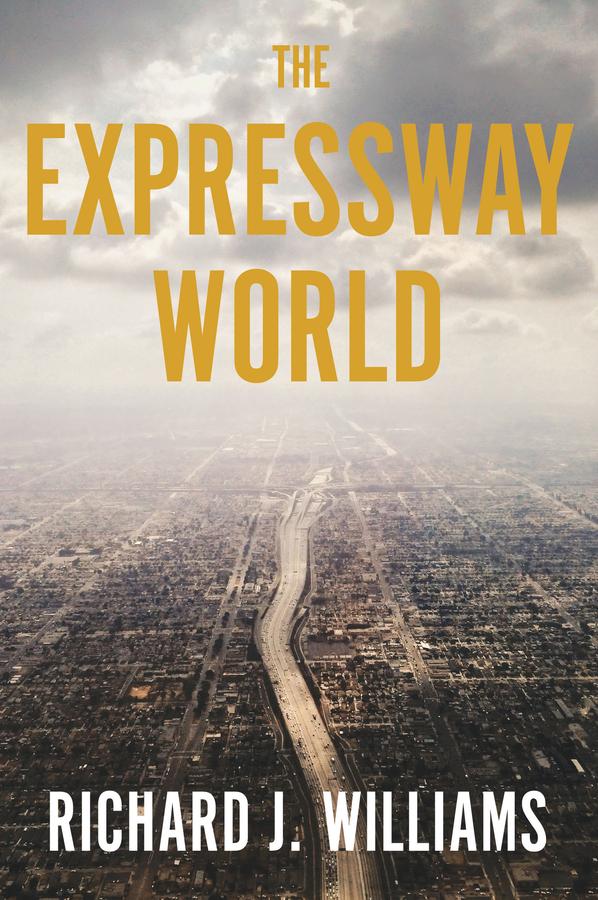
In the demonology of the contemporary city, is there anything more toxic than the expressway? Dividing neighbourhoods, depressing land values, concentrating atmospheric pollutants, the mammoth infrastructure of the expressway is now increasingly crumbling into the ground.
How did we build the expressway world in the first place? And what are we going to do now with it now?
This eye-opening book explores these questions partly through the great expressway abolitions of recent years, such as Boston’s Central Artery (buried and covered by a park) and Seoul’s Cheonggyecheon (replaced with an artificial river). But the book also uncovers the hidden stories of expressways that have become weird attractions in their own right, from London’s Westway to São Paulo’s Minhocão, celebrated in art and literature. Above all, the book proposes, counterintuitively, that we find ways to live with the expressway world and to adapt it to a different future, inspired by the many examples where people have already reinvented this challenging legacy on their own terms.
Engaging with case studies across the world and recent thinking in the environmental humanities and architectural theory, this is a thought-provoking invitation to reconsider the most maligned structures of the recent urban past.
How did we build the expressway world in the first place? And what are we going to do now with it now?
This eye-opening book explores these questions partly through the great expressway abolitions of recent years, such as Boston’s Central Artery (buried and covered by a park) and Seoul’s Cheonggyecheon (replaced with an artificial river). But the book also uncovers the hidden stories of expressways that have become weird attractions in their own right, from London’s Westway to São Paulo’s Minhocão, celebrated in art and literature. Above all, the book proposes, counterintuitively, that we find ways to live with the expressway world and to adapt it to a different future, inspired by the many examples where people have already reinvented this challenging legacy on their own terms.
Engaging with case studies across the world and recent thinking in the environmental humanities and architectural theory, this is a thought-provoking invitation to reconsider the most maligned structures of the recent urban past.
Pay easily by card, Klarna, Apple Pay or Google Pay. Not happy? You always have a 14-day money-back guarantee. Read more in our terms. If you have any questions, email us at hello@memmo.org.
Memmo makes studying easier – wherever you are in the world. We bring your course books and smart study tools together in one place: summaries, quizzes, podcasts and flashcards. Plus Ted, your study buddy who answers anything you wonder. Over 75,000 students already study here – built to help you learn faster and stress less.
You might also like
Buy the book0