
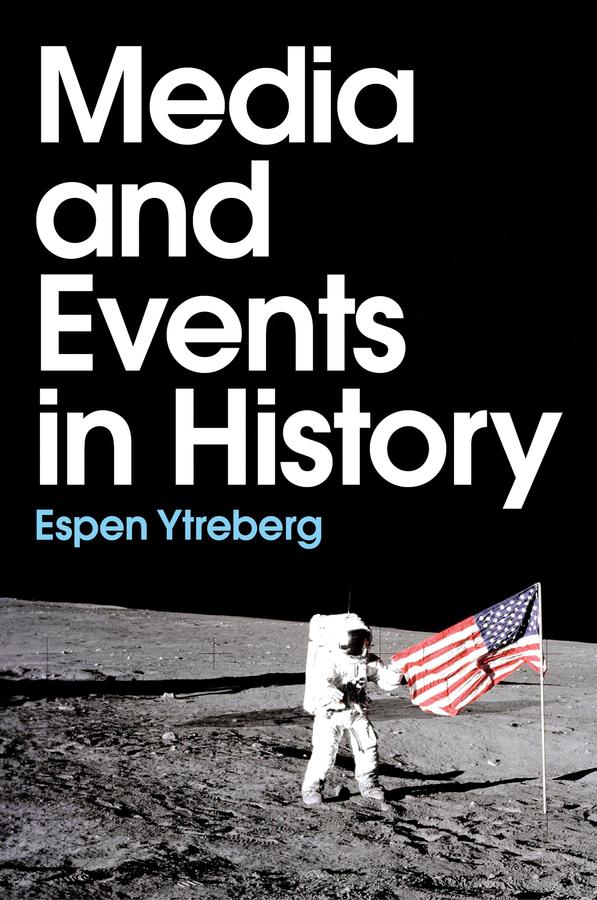
The most intense hopes and fears of our collective lives centre around large-scale events – from competitions, celebrations and festivals to environmental disasters, pandemics and terror attacks. The media are a crucial part of this process: they enable the planning, resource allocation and circulation of the vital information needed to mount major events. They are also where traces of events are stored for history. In short, large-scale and collective events have been, and still are, mediated.
Starting from nineteenth-century industrialisation, Media and Events in History explains how contemporary life has become saturated with events. It discusses how they have come to involve extensive infrastructures, forms of control and anticipation, attention and participation, contingency and transformation, and articulations of the past and the future. Synthesising and developing insights from history, media studies, philosophy and the social sciences, Ytreberg surveys the rise of event-planning via mediation, and exposes the historical driving forces behind ‘media events’, global ‘mega-events’ and ‘pseudo-events’.
Revealing the importance of events in history, this eye-opening book will be of interest to students of media studies, history, historical sociology and cultural history, as well as the general reader.
Pay easily by card, Klarna, Apple Pay or Google Pay. Not happy? You always have a 14-day money-back guarantee. Read more in our terms. If you have any questions, email us at hello@memmo.org.
Memmo makes studying easier – wherever you are in the world. We bring your course books and smart study tools together in one place: summaries, quizzes, podcasts and flashcards. Plus Ted, your study buddy who answers anything you wonder. Over 50,000 students already study here – built to help you learn faster and stress less.