
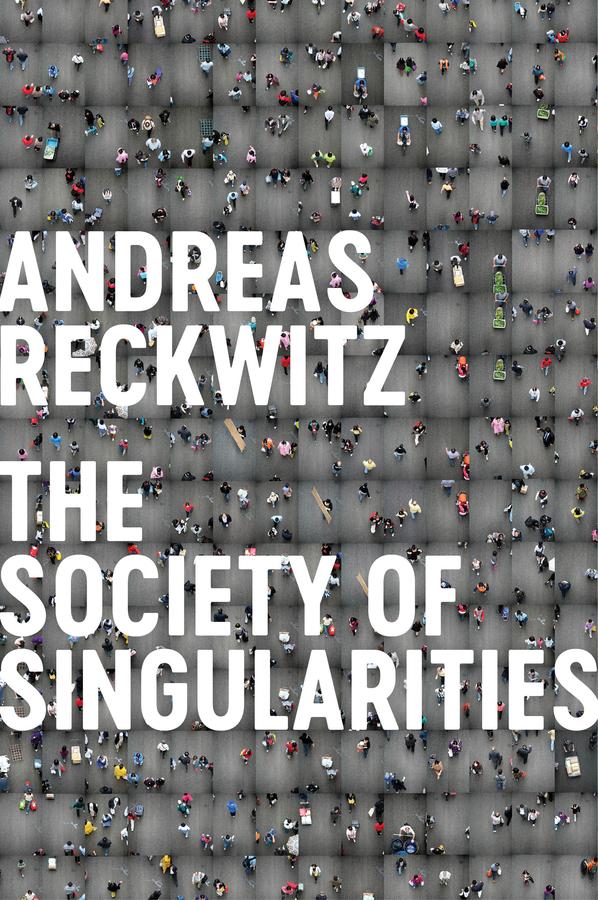
Our contemporary societies place more and more emphasis on the singular and the unique. The industrial societies of the early 20th century produced standardized products, cities, subjects and organizations which tended to look the same, but in our late-modern societies, we value the exceptional - unique objects, experiences, places, individuals, events and communities which are beyond the ordinary and which claim a certain authenticity. Industrial society’s logic of the general has been replaced by late modernity’s logic of the particular.
In this major new book, Andreas Reckwitz examines the causes, structures and consequences of the society of singularities in which we now live. The transformation from industrial to cultural capitalism, the rise of digital technologies and their ‘culture machine’ and the emergence of an educated, urban new middle class form a powerful engine for the singularization of the social. In late modernity, what is singular is valorized and stirs the emotions, while what is general has to remain in the background, and this has profound social consequences. The society of singularities systematically produces devaluation and inequality: winner-takes-all markets, job polarization, the neglect of rural regions and the alienation of the traditional middle class. The emergence of populism and the rise of aggressive forms of nationalism which emphasize the cultural authenticity of one’s own people thus turn out to be the other side of singularization.
This prize-winning book offers a new perspective on how modern societies have changed in recent decades and it will be of great value to anyone interested in the forces that are shaping our world today.
In this major new book, Andreas Reckwitz examines the causes, structures and consequences of the society of singularities in which we now live. The transformation from industrial to cultural capitalism, the rise of digital technologies and their ‘culture machine’ and the emergence of an educated, urban new middle class form a powerful engine for the singularization of the social. In late modernity, what is singular is valorized and stirs the emotions, while what is general has to remain in the background, and this has profound social consequences. The society of singularities systematically produces devaluation and inequality: winner-takes-all markets, job polarization, the neglect of rural regions and the alienation of the traditional middle class. The emergence of populism and the rise of aggressive forms of nationalism which emphasize the cultural authenticity of one’s own people thus turn out to be the other side of singularization.
This prize-winning book offers a new perspective on how modern societies have changed in recent decades and it will be of great value to anyone interested in the forces that are shaping our world today.
Pay easily by card, Klarna, Apple Pay or Google Pay. Not happy? You always have a 14-day money-back guarantee. Read more in our terms. If you have any questions, email us at hello@memmo.org.
Memmo makes studying easier – wherever you are in the world. We bring your course books and smart study tools together in one place: summaries, quizzes, podcasts and flashcards. Plus Ted, your study buddy who answers anything you wonder. Over 50,000 students already study here – built to help you learn faster and stress less.
You might also like
Buy the book0