
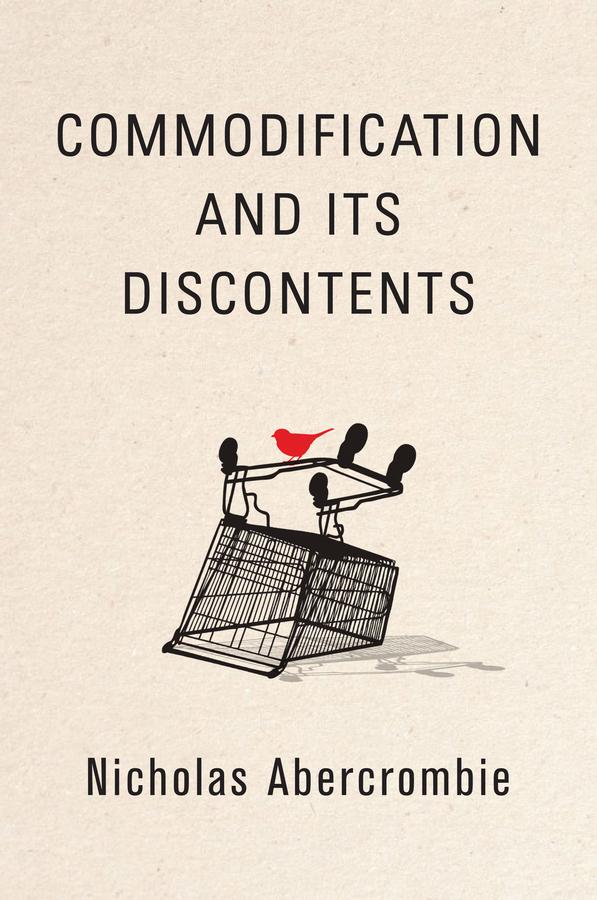
Should human organs be bought and sold? Is it right that richer people should be able to pay poorer people to wait in a queue for them? Should objects in museums ever be sold? The assumption underlying such questions is that there are things that should not be bought and sold because it would give them a financial value that would replace some other, and dearly held, human value. Those who ask questions of this kind often fear that the replacement of human by money values – a process of commodification – is sweeping all before it.
However, as Nicholas Abercrombie argues, commodification can be, and has been, resisted by the development of a moral climate that defines certain things as outside a market. That resistance, however, is never complete because the two regimes of value – human and money – are both necessary for the sustainability of society. His analysis of these processes offers a thought-provoking read that will appeal to students and scholars interested in market capitalism and culture.
However, as Nicholas Abercrombie argues, commodification can be, and has been, resisted by the development of a moral climate that defines certain things as outside a market. That resistance, however, is never complete because the two regimes of value – human and money – are both necessary for the sustainability of society. His analysis of these processes offers a thought-provoking read that will appeal to students and scholars interested in market capitalism and culture.
Pay easily by card, Klarna, Apple Pay or Google Pay. Not happy? You always have a 14-day money-back guarantee. Read more in our terms. If you have any questions, email us at hello@memmo.org.
Memmo makes studying easier – wherever you are in the world. We bring your course books and smart study tools together in one place: summaries, quizzes, podcasts and flashcards. Plus Ted, your study buddy who answers anything you wonder. Over 50,000 students already study here – built to help you learn faster and stress less.
You might also like
Buy the book0