
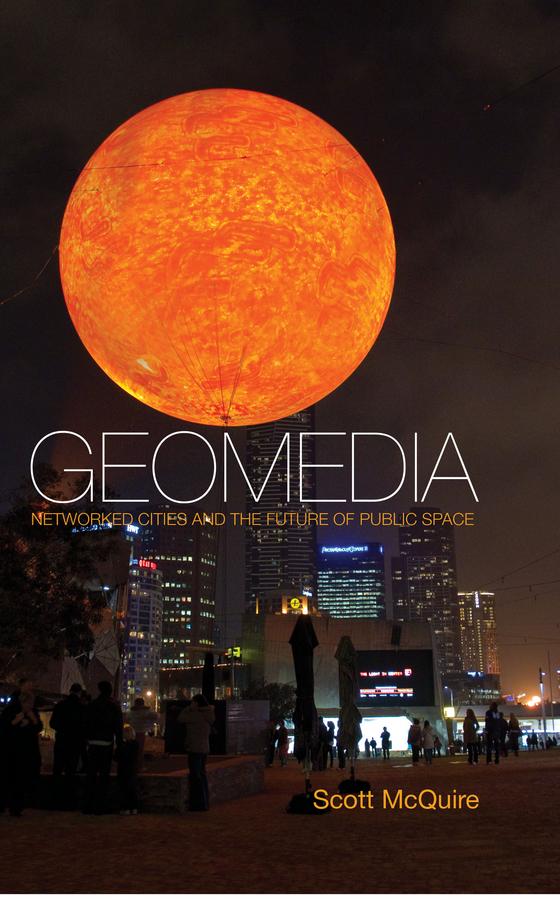
Geomedia offers critical analysis of the new possibilities and power relations emerging in the public space of contemporary cities. As ubiquitous digital networks enable embedded and mobile devices to integrate place-specific data with real-time feedback circuits, everyday experience of public space has become subject to new demands. Looking beyond debates framed by the dominance of surveillance and spectacle, McQuire asks: how might the kind of collaborative practices that have flourished in art and online cultures be translated into urban space?
In the urban crisis of the 1960s, Henri Lefebvre argued that the capacity for a city’s inhabitants to actively appropriate the time and space of their surroundings was a critical dimension of modern democracy. What does it mean to speak of ‘the right to the city’ in the context of the networked city? Addressing this question through a series of case studies, this cutting-edge text highlights the tensions between citizen and consumer, communication and surveillance, participation and control, which define contemporary struggles over public space.
Pay easily by card, Klarna, Apple Pay or Google Pay. Not happy? You always have a 14-day money-back guarantee. Read more in our terms. If you have any questions, email us at hello@memmo.org.
Memmo makes studying easier – wherever you are in the world. We bring your course books and smart study tools together in one place: summaries, quizzes, podcasts and flashcards. Plus Ted, your study buddy who answers anything you wonder. Over 50,000 students already study here – built to help you learn faster and stress less.