
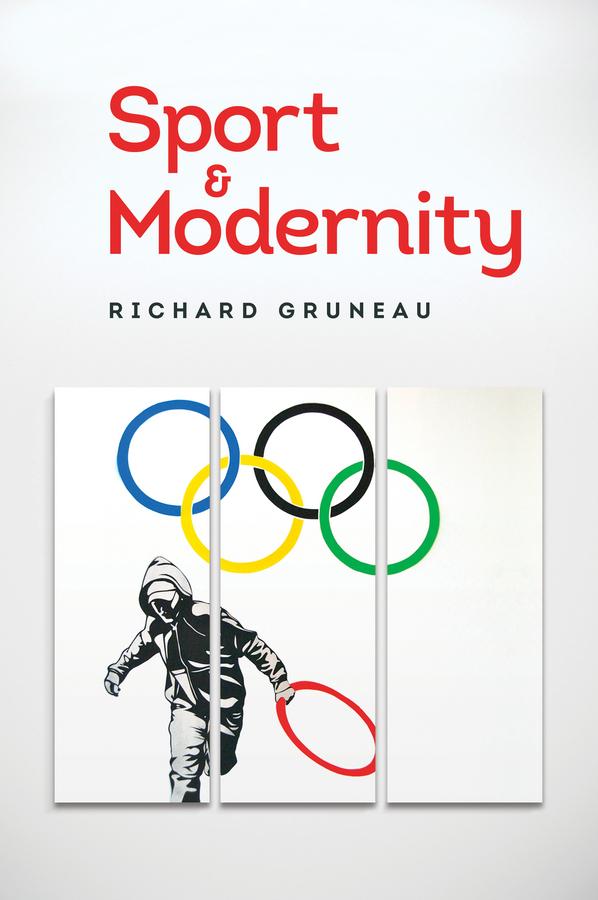
This important new book from one of the world's leading sociologists of sport weaves together social theory, history and political economy to provide a highly original analysis of the complex relationship between sport and modernity.
Incorporating a powerful set of theoretical insights from traditions and thinkers ranging from classical Marxism and the Frankfurt School to Foucault and Bourdieu, Gruneau analyzes the emergence of "sport" as a distinctive field of practice in western societies. Examining subjects including the legacy of Greek and Roman antiquity, representations of sport in nineteenth-century England, Nazism, and modern "mega-events" such as the Olympics and the World Cup, he seeks to show how sport developed into an arena which articulated competing understandings of the kinds of people, bodies and practices best suited to the modern western world.
This book thereby explores with brio and sophistication how the ever-changing economic, social, and political relations of modernity have been produced and reproduced, and sometimes also opposed and escaped, through sport, from the Enlightenment to the rise of neoliberalism, as well as examining how the study of exercise, athletics, the body, and the spectacle of sport can deepen our understanding of the nature of modernity. It will be essential reading for students and scholars of the sociology and history of sport, sociology of culture, cultural history, and cultural studies.Pay easily by card, Klarna, Apple Pay or Google Pay. Not happy? You always have a 14-day money-back guarantee. Read more in our terms. If you have any questions, email us at hello@memmo.org.
Memmo makes studying easier – wherever you are in the world. We bring your course books and smart study tools together in one place: summaries, quizzes, podcasts and flashcards. Plus Ted, your study buddy who answers anything you wonder. Over 50,000 students already study here – built to help you learn faster and stress less.