
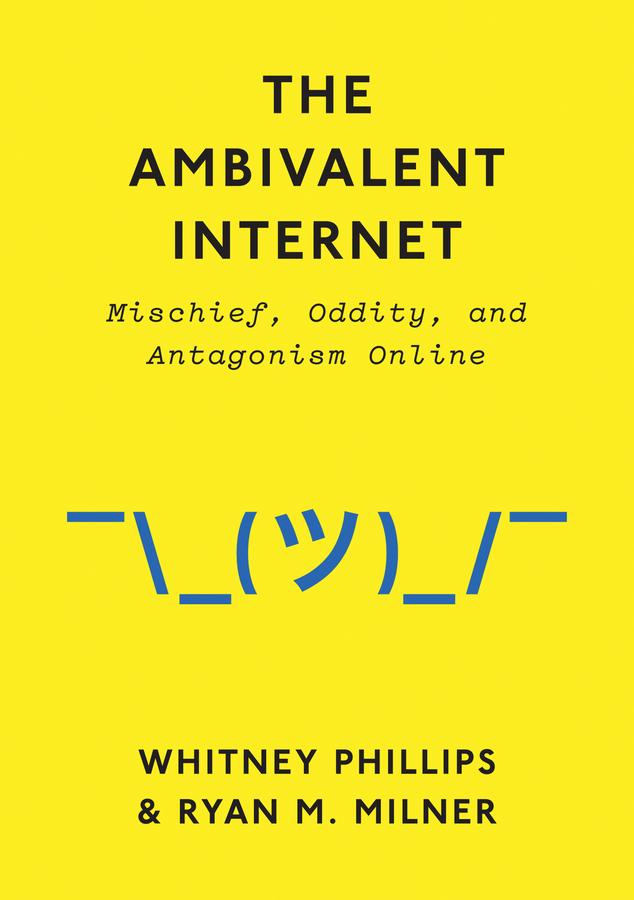
Whitney Phillips and Ryan M. Milner focus especially on the ambivalence of this expression: the fact that it is too unwieldy, too variable across cases, to be essentialized as old or new, vernacular or institutional, generative or destructive. Online expression is, instead, all of the above. This ambivalence, the authors argue, hinges on available digital tools. That said, there is nothing unexpected or surprising about even the strangest online behavior. Ours is a brave new world, and there is nothing new under the sun – a point necessary to understanding not just that online spaces are rife with oddity, mischief, and antagonism, but why these behaviors matter.
The Ambivalent Internet is essential reading for students and scholars of digital media and related fields across the humanities, as well as anyone interested in mediated culture and expression.
Pay easily by card, Klarna, Apple Pay or Google Pay. Not happy? You always have a 14-day money-back guarantee. Read more in our terms. If you have any questions, email us at hello@memmo.org.
Memmo makes studying easier – wherever you are in the world. We bring your course books and smart study tools together in one place: summaries, quizzes, podcasts and flashcards. Plus Ted, your study buddy who answers anything you wonder. Over 50,000 students already study here – built to help you learn faster and stress less.