
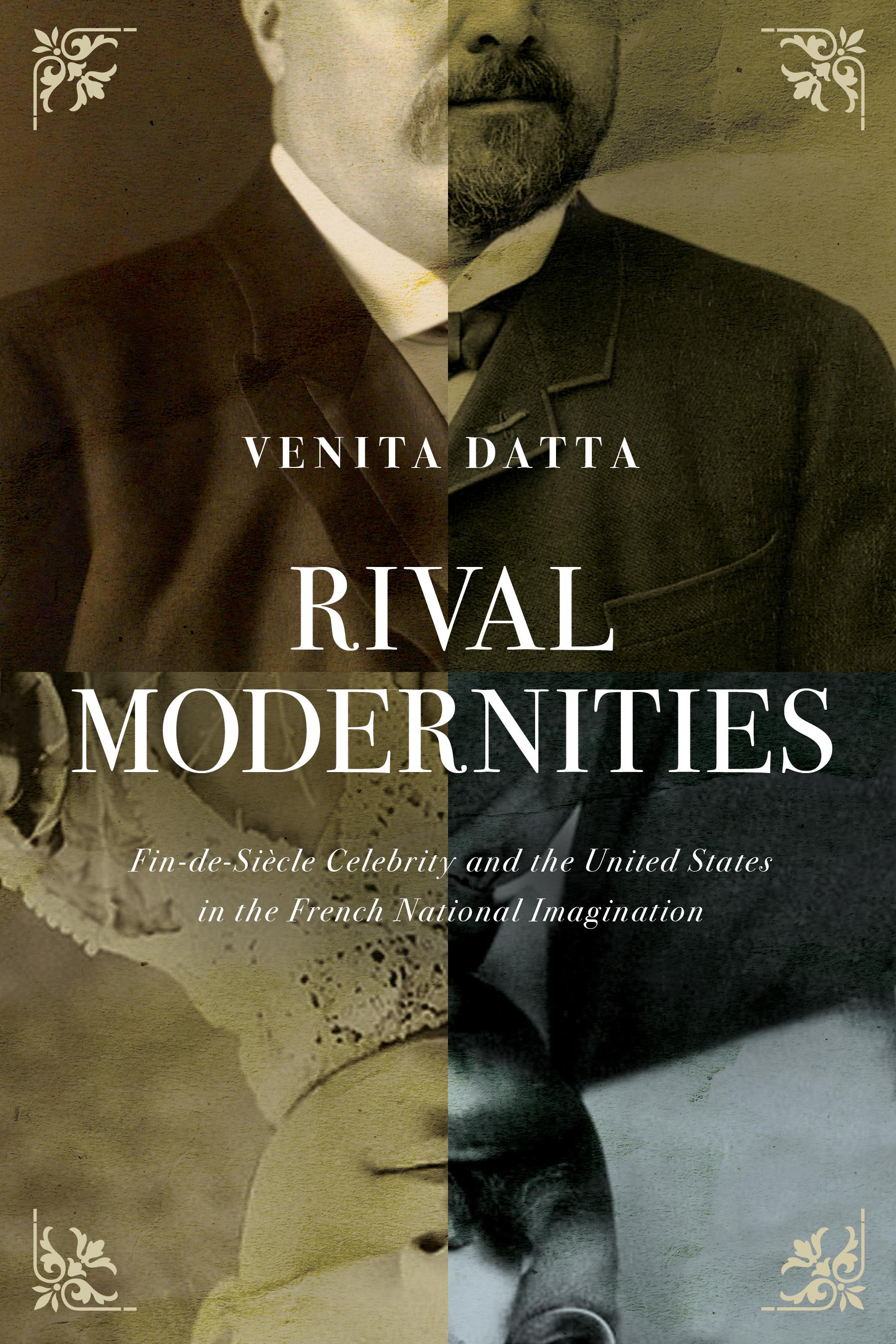
What do Buffalo Bill and Gustave Eiffel have in common? These celebrities are both part of Venita Datta's analysis of competing notions of modernity and French-American relations at the turn of the twentieth century. Fin-de-siècle France saw itself as the premier modern country. A pioneer in the aviation and cinema industries, its capital Paris was home to the cultural avant-garde. Nonetheless, the French harbored ambivalent feelings toward modernity and expressed their critiques of a certain type of modernity by denigrating it as "American."
To understand this ambivalence, Datta effectively contrasts four pairs of exemplary French and American figures: inventor-entrepreneurs Gustave Eiffel and Thomas Edison, reporters Nellie Bly and Gaston Leroux, celebrity politicians Georges Boulanger and Theodore Roosevelt, and adventurers Buffalo Bill and the Marquis de Morès. Through an examination of the differences in French perceptions of these famous pairs, Datta illustrates that they highlight competing values rooted in national identity, and reflect each nation's struggles with democracy. Filled with fascinating characters and detail, Datta's book illuminates both the rivalries between France and the United States and their deep connections at an important yet understudied moment in history. The legacy of these complex Franco-American cultural relations is profoundly relevant to the challenges contemporary democracies face today.
Pay easily by card, Klarna, Apple Pay or Google Pay. Not happy? You always have a 14-day money-back guarantee. Read more in our terms. If you have any questions, email us at hello@memmo.org.
Memmo makes studying easier – wherever you are in the world. We bring your course books and smart study tools together in one place: summaries, quizzes, podcasts and flashcards. Plus Ted, your study buddy who answers anything you wonder. Over 50,000 students already study here – built to help you learn faster and stress less.