
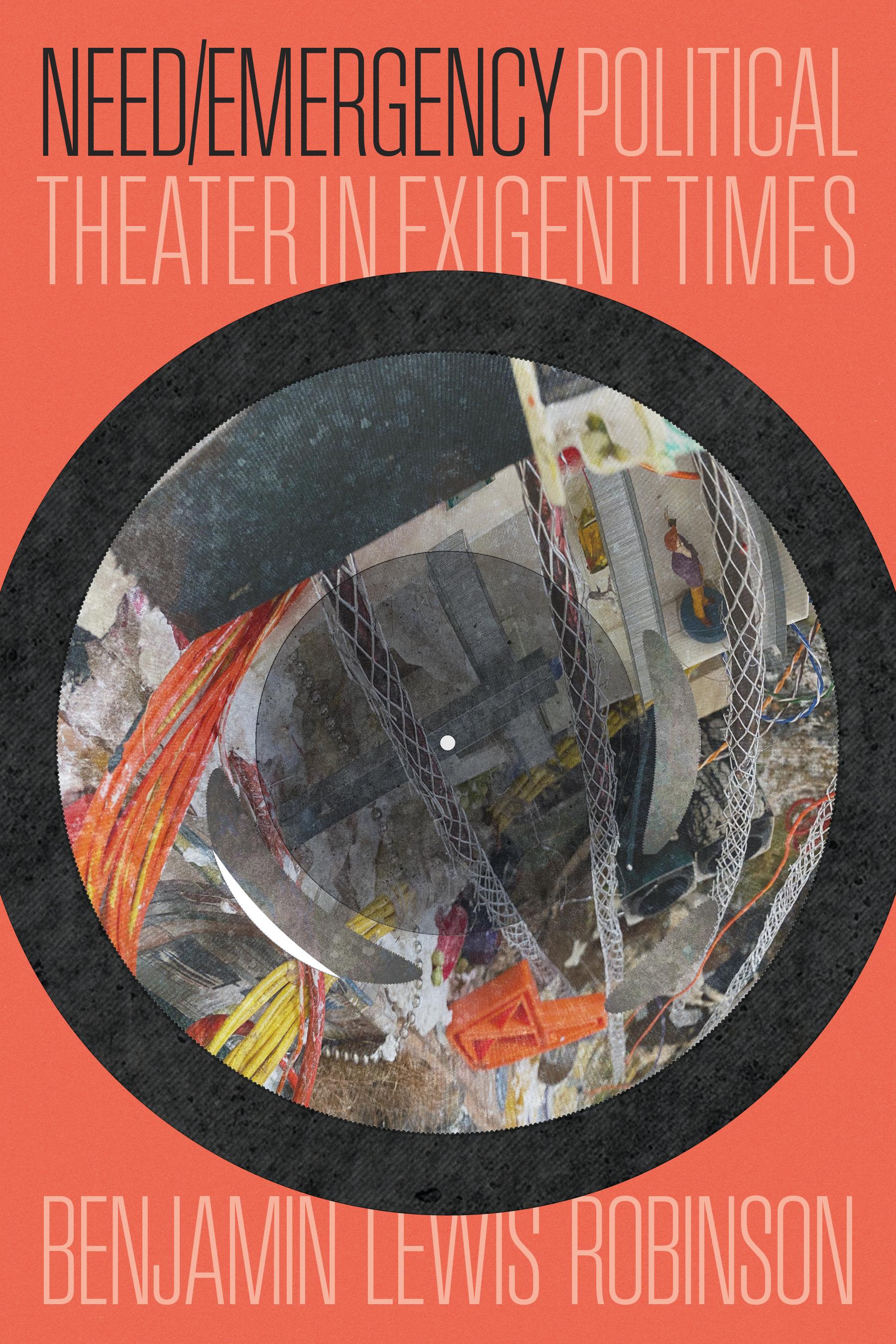
Modern politics is preoccupied with states of emergency. Yet emergency politics obscures underlying socioeconomic, infrastructural, and ecological conditions of need. Prompted by Hannah Arendt's claim that theater is "the political art par excellence," Benjamin Lewis Robinson treats this political perplexity as a theatrical problem. In the company of political thinkers including Carl Schmitt and Giorgio Agamben, Karl Marx and the Frankfurt School, Rosa Luxemburg and Martin Heidegger, Robinson revisits the entwined histories of politics and theater, analyzing plays that stage the political scene as an always asymmetrical coupling of need and emergency.
In Arendt's view, the defining tendency in modern politics is for need to emerge where it has no right to appear, posing a threat to politics as such. In contrast, the works of theater addressed in Need/Emergency concern moments when, whether it ought to or not, need does appear—demanding justice. Writing in exigent times, Elfriede Jelinek, Heinrich von Kleist, Georg Büchner, Bertolt Brecht, and Friedrich Hölderlin produced formally innovative political theater. Not reducible to the drama of emergency, these plays bring into focus the very need for politics. Moving fluently between theory and theater, Robinson offers a critical study of biopolitics and emergency politics in times of poverty, plague, infrastructural predation, and forced displacement, from the French Revolution to the climate crisis.
Pay easily by card, Klarna, Apple Pay or Google Pay. Not happy? You always have a 14-day money-back guarantee. Read more in our terms. If you have any questions, email us at hello@memmo.org.
Memmo makes studying easier – wherever you are in the world. We bring your course books and smart study tools together in one place: summaries, quizzes, podcasts and flashcards. Plus Ted, your study buddy who answers anything you wonder. Over 75,000 students already study here – built to help you learn faster and stress less.