
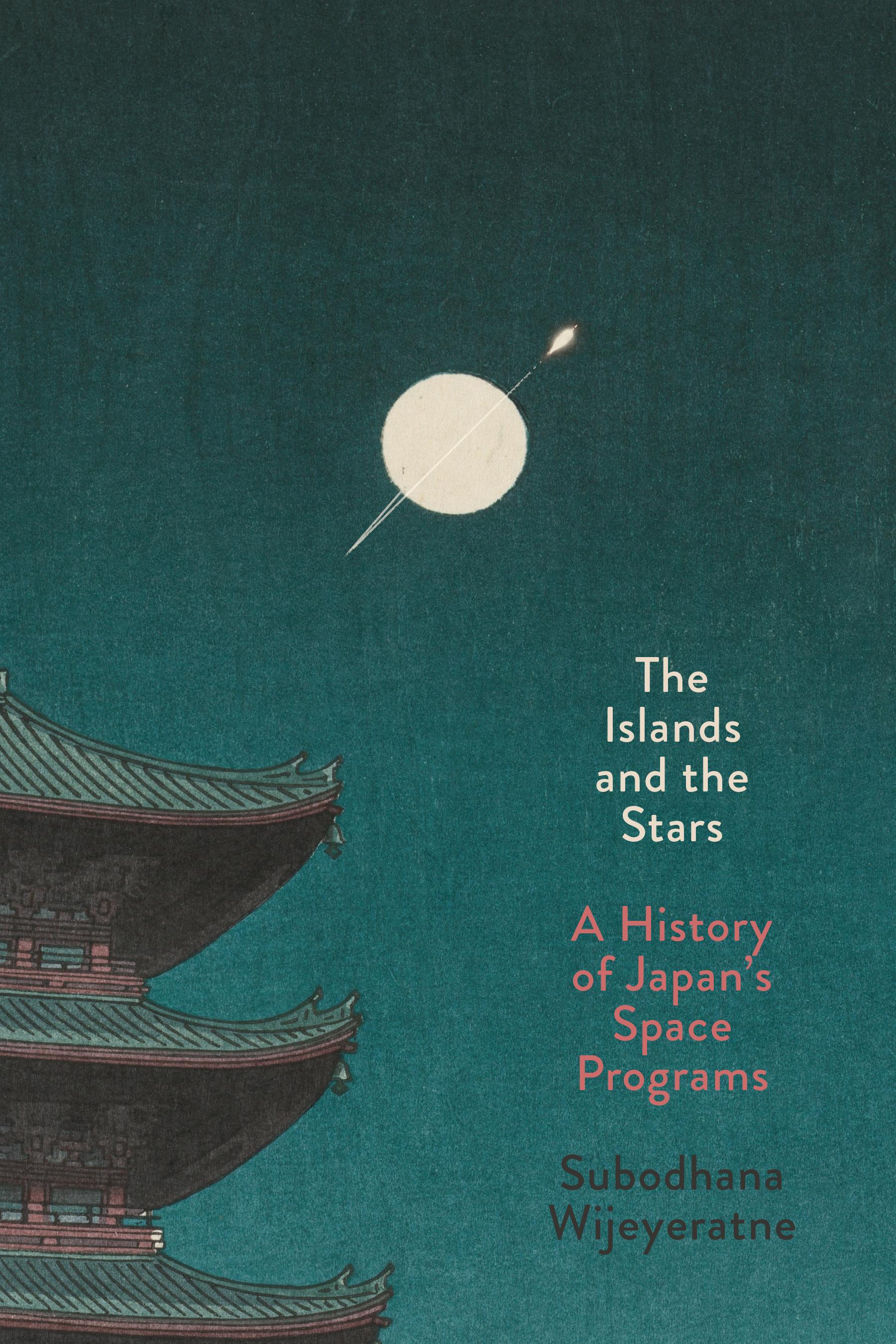
The Japan Aerospace Exploration Agency (JAXA) is among the six largest national space agencies in the world, along with China's CNSA, US's NASA, and Russia's Roscosmos. JAXA's budget is more than $1 billion USD—bigger than France or Germany individually, and more than that of Italy, India, Canada, and the UK combined. And yet, Japan's significant contributions have largely been absent in the history of space exploration, and space exploration largely absent in the history of technology in Japan. The Islands and the Stars corrects this conspicuous oversight. Through meticulous archival research in Japanese and anglophone archives, Subodhana Wijeyeratne examines the history of Japan's space exploration efforts over nearly a century.
Wijeyeratne traces the evolution of Japan's space program from its early origins in the 1920s, through the postwar period of rapid technological innovation, to the consolidation of its various institutional elements into JAXA in 2003. He situates Japan's space programs within the broader history of the country's postwar recovery, economic growth, and cultural identity, while also considering their place within global trends in space exploration. Through this narrative, Wijeyeratne not only illuminates Japan's centrality to the global history of science and technology, but also offers insights into the future of global space exploration, emphasizing the importance of diverse voices and perspectives in the quest to understand our place in the cosmos.
Pay easily by card, Klarna, Apple Pay or Google Pay. Not happy? You always have a 14-day money-back guarantee. Read more in our terms. If you have any questions, email us at hello@memmo.org.
Memmo makes studying easier – wherever you are in the world. We bring your course books and smart study tools together in one place: summaries, quizzes, podcasts and flashcards. Plus Ted, your study buddy who answers anything you wonder. Over 50,000 students already study here – built to help you learn faster and stress less.