
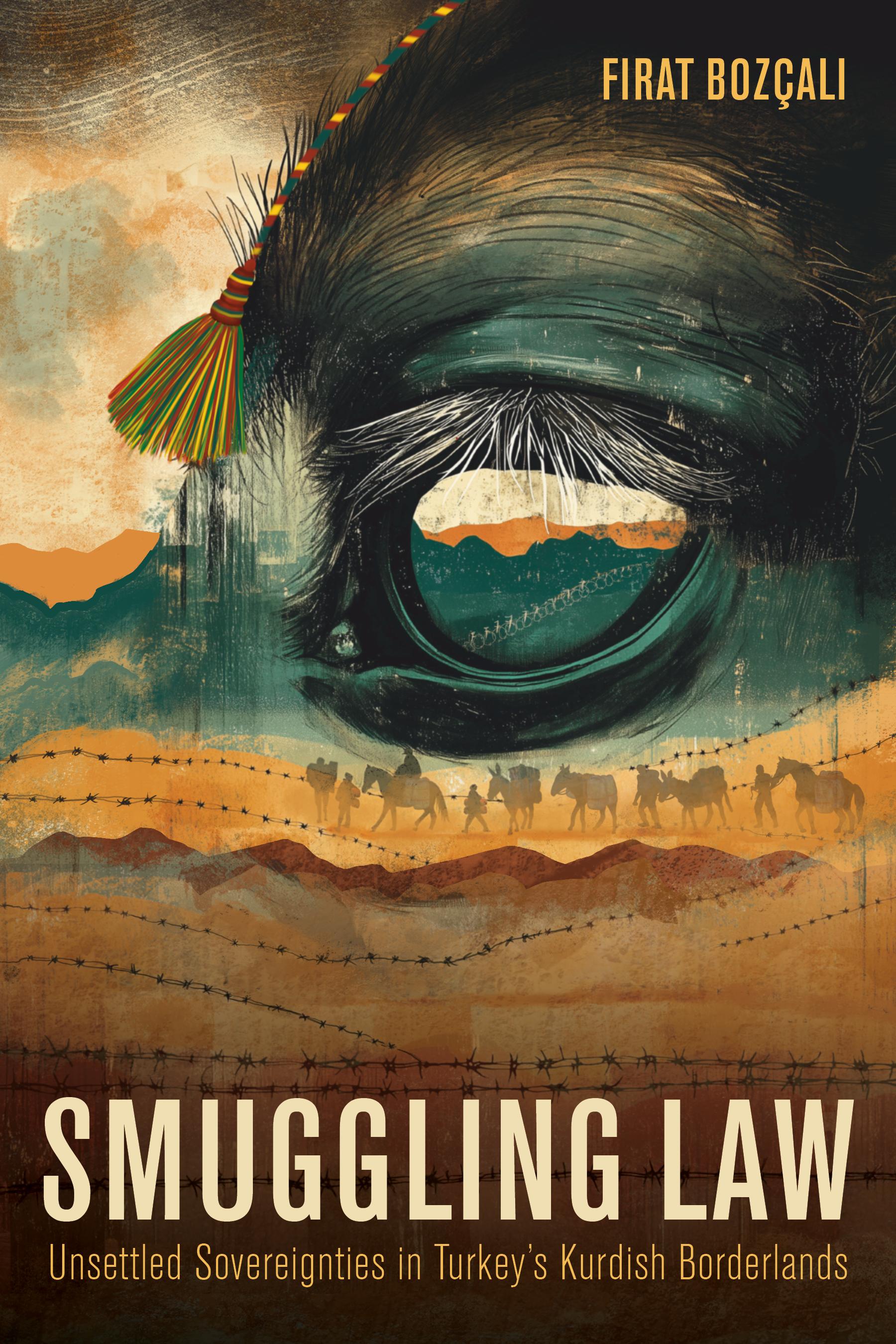
The Kurdish-populated Wan/Van Province is a major smuggling hub between Turkey and Iran. Kurdish smugglers cross this 180-mile-long land border, transporting everyday consumer goods—fuel, tobacco, sugar, and tea—as well as more illicit goods, and the province supports the financial, technical, and labor capacities that sustain these smuggling economies. As the Turkish state has enacted increasingly punitive anti-smuggling laws, smuggling has also become a site of contentious politics. This book explores anti-smuggling law enforcement and criminal prosecutions to reveal a key site—the criminal court—where borders and claims of sovereignty are simultaneously remade and disrupted.
Taking readers from border villages, mountain passes, and road checkpoints to courtrooms, law offices, and forensic laboratories, Fırat Bozçalı examines how Kurdish smugglers, with the help of their lawyers, legally disrupt state sovereignty in criminal courts. Kurdish smugglers and lawyers adopt and rework procedures, rules, and reasonings in ways that interrupt the courts' capacity to coopt, discipline, and oppress. Bozçalı theorizes this evasive engagement with the legal system as a strategy of techno-legal politics among marginalized and persecuted groups, one that extends beyond the Kurdish case. Smuggling Law holds profound relevance in today's world, where ever-expanding regimes of surveillance, oppression, and dispossession unfold in the broader contexts of the global war on terror and data-driven capitalism.
Pay easily by card, Klarna, Apple Pay or Google Pay. Not happy? You always have a 14-day money-back guarantee. Read more in our terms. If you have any questions, email us at hello@memmo.org.
Memmo makes studying easier – wherever you are in the world. We bring your course books and smart study tools together in one place: summaries, quizzes, podcasts and flashcards. Plus Ted, your study buddy who answers anything you wonder. Over 50,000 students already study here – built to help you learn faster and stress less.