
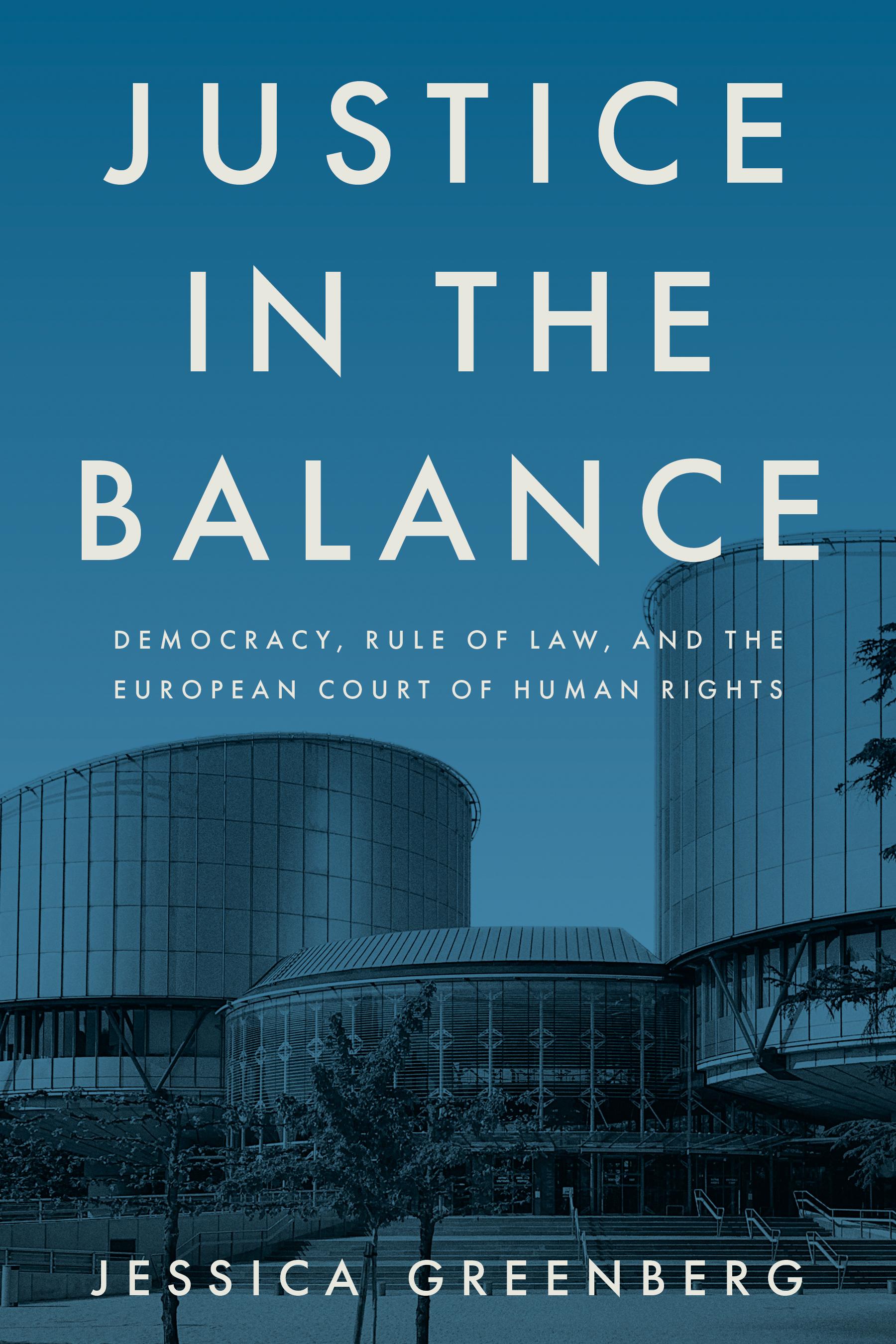
Established as a post–World War II response to conflict and fascism, the European Court of Human Rights is routinely characterized as the most successful human rights institution in the world. Based in Strasbourg, France, its jurisdiction extends to over 700 million people on European soil across the 46 Council of Europe member countries. The Court is the crown jewel of the Council, an international organization dedicated to human rights, democracy, and the rule of law. And yet, for years, European institutions have been haunted by the specter of failure. In the shadow of rising populism, inequality, and war, faith in democracy and the rule of law has been shaken to its core. Drawing on extensive fieldwork conducted over eight years with human rights advocates, lawyers, and judges at the European Court of Human Rights, this book asks: What kind of justice is possible through law?
Drawing on participant observation, in-depth interviews, and archival research, Jessica Greenberg tracks two paradoxical experiences of the European human rights system and the Court: on the one hand, the Court as a bureaucratic "machine;" on the other, the Court as the "conscience of Europe." She argues that human rights frameworks fuel imaginative approaches to social change, and compel legal actors to creatively navigate institutions through advocacy, persuasion, and innovative interpretation of what the law is and what it should be.
Pay easily by card, Klarna, Apple Pay or Google Pay. Not happy? You always have a 14-day money-back guarantee. Read more in our terms. If you have any questions, email us at hello@memmo.org.
Memmo makes studying easier – wherever you are in the world. We bring your course books and smart study tools together in one place: summaries, quizzes, podcasts and flashcards. Plus Ted, your study buddy who answers anything you wonder. Over 50,000 students already study here – built to help you learn faster and stress less.