
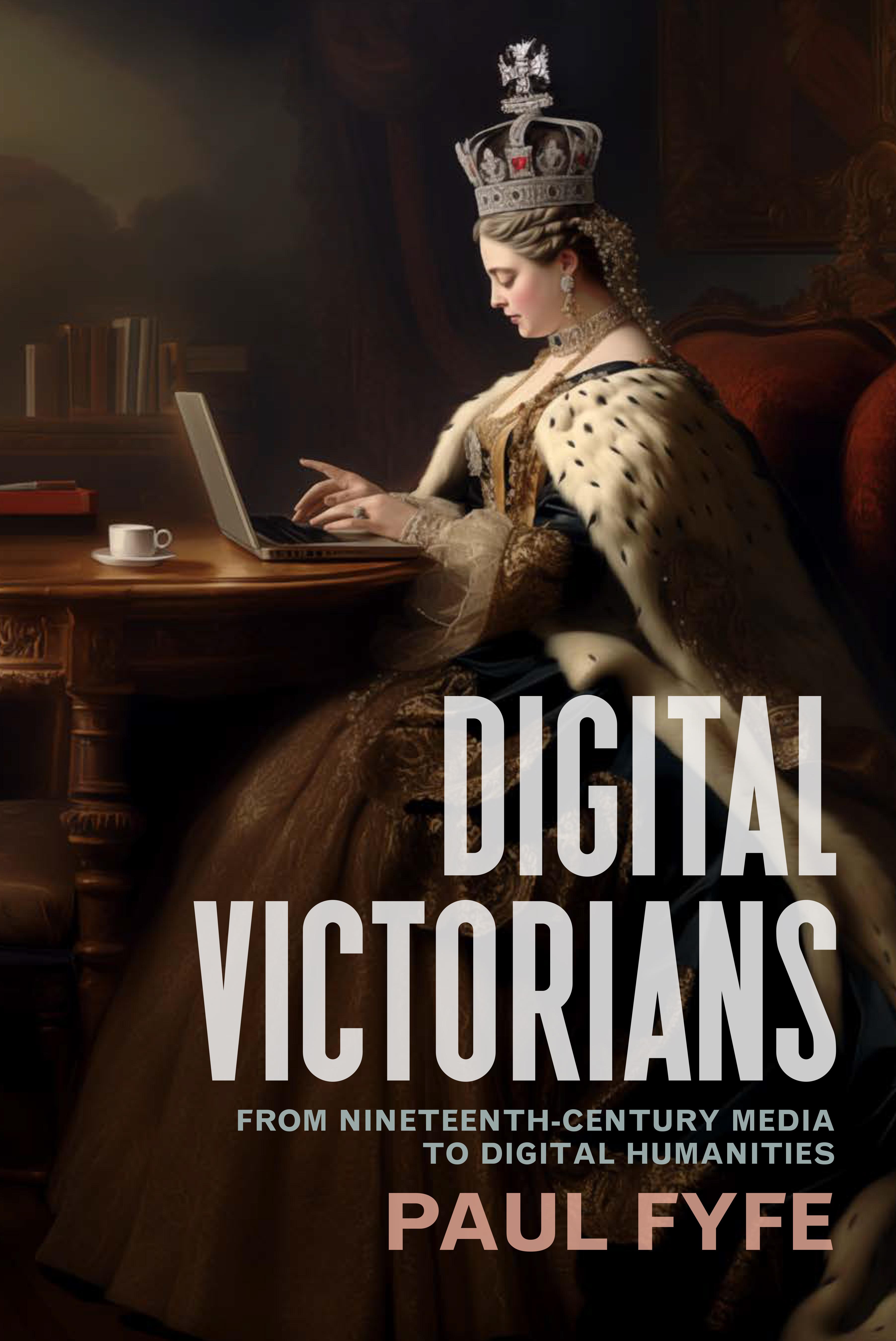
Perhaps no period better clarifies our current crisis of digital information than the nineteenth century. Self-aware about its own epochal telecommunications changes and awash in a flood of print, the nineteenth century confronted the consequences of its media shifts in ways that still define contemporary responses. In this authoritative new work, Paul Fyfe argues that writing about Victorian new media continues to shape reactions to digital change. Among its unexpected legacies are what we call digital humanities, characterized by the self-reflexiveness, disciplinary reconfigurations, and debates that have made us digital Victorians, so to speak, struggling again to resituate humanities practices amid another technological revolution.
Engaging with writers such as Thomas De Quincey, George Eliot, George du Maurier, Henry James, and Robert Louis Stevenson who confronted the new media of their day, Fyfe shows how we have inherited Victorian anxieties about quantitative and machine-driven reading, professional obsolescence in the face of new technology, and more—telling a longer history of how writers, readers, and scholars adapt to dramatically changing media ecologies, then and now. The result is a predigital history for the digital humanities through nineteenth-century encounters with telecommunication networks, privacy intrusions, quantitative reading methods, remediation, and their effects on literary professionals. As Fyfe demonstrates, well before computers, the Victorians were already digital.
Pay easily by card, Klarna, Apple Pay or Google Pay. Not happy? You always have a 14-day money-back guarantee. Read more in our terms. If you have any questions, email us at hello@memmo.org.
Memmo makes studying easier – wherever you are in the world. We bring your course books and smart study tools together in one place: summaries, quizzes, podcasts and flashcards. Plus Ted, your study buddy who answers anything you wonder. Over 50,000 students already study here – built to help you learn faster and stress less.