
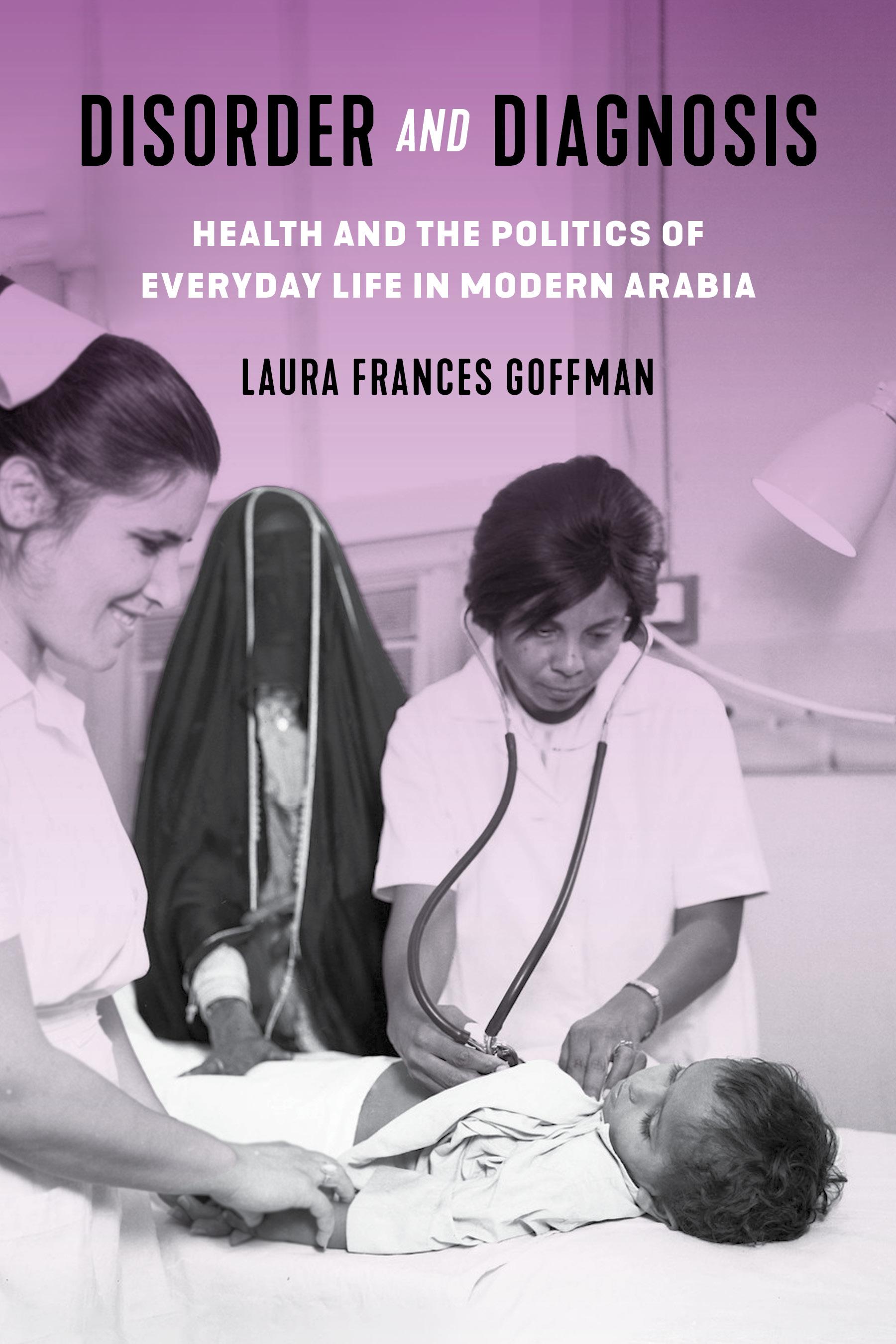
Disorder and Diagnosis offers a social and political history of medicine, disease, and public health in the Persian Gulf from the late nineteenth century until the 1973 oil boom. Foregrounding the everyday practices of Gulf residents—hospital patients, quarantined passengers, women migrant nurses, and others too often excluded from histories of this region—Laura Frances Goffman demonstrates how the Gulf and its Arabian hinterland served as a buffer zone between "diseased" India and white Europe, as a space of scientific translation, and, ultimately, as an object of development.
In placing health at the center of political and social change, this book weaves the Gulf and Arabian Peninsula into global circulations of commodities and movements of people. As a collection of institutions and infrastructures, pursuits of health created shifting boundaries of rule between imperial officials, indigenous elites, and local populations. As a set of practices seeking to manipulate the natural world, health policies compelled scientists and administrators to categorize fluid populations and ambiguous territorialities. And, as a discourse, health facilitated notions of racial difference, opposing native uncleanliness to white purity and hygiene, and indigenous medicine to modern science. Disorder and Diagnosis examines how Gulf residents, through their engagements with health, fiercely contested and actively shaped state and societal interactions.
Pay easily by card, Klarna, Apple Pay or Google Pay. Not happy? You always have a 14-day money-back guarantee. Read more in our terms. If you have any questions, email us at hello@memmo.org.
Memmo makes studying easier – wherever you are in the world. We bring your course books and smart study tools together in one place: summaries, quizzes, podcasts and flashcards. Plus Ted, your study buddy who answers anything you wonder. Over 50,000 students already study here – built to help you learn faster and stress less.