
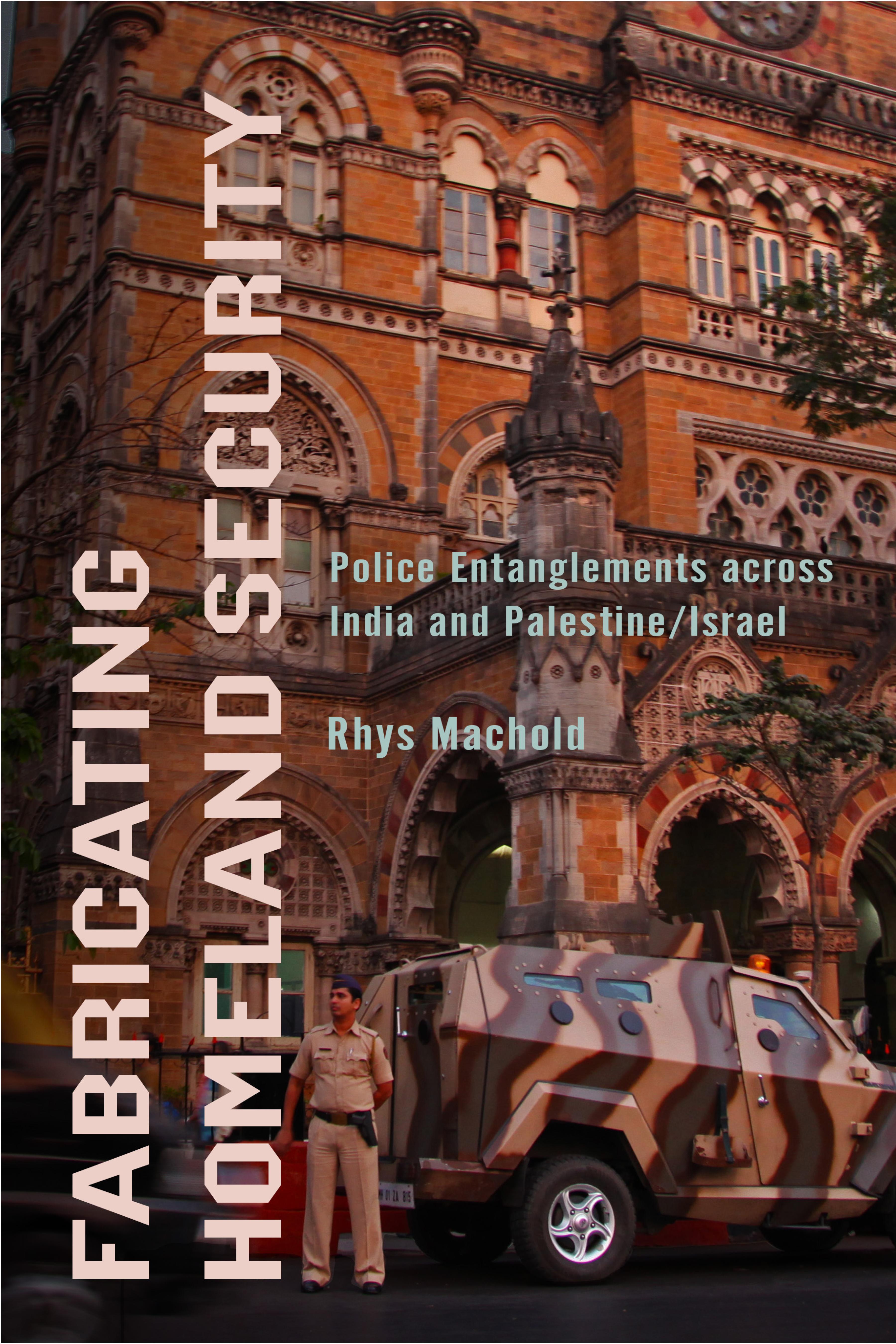
Homeland security is rarely just a matter of the homeland; it involves the circulation and multiplication of policing practices across borders. Though the term "homeland security" is closely associated with the United States, Israel is credited with first developing this all-encompassing approach to domestic surveillance and territorial control. Today, it is a central node in the sprawling global homeland security industry worth hundreds of billions of dollars. And in the wake of the 2008 Mumbai terrorist attacks, India emerged as a major growth market. Known as "India's 9/11" or simply "26/11," the attacks sparked significant public pressure to adopt "modern" homeland security approaches. Since 2008, India has become not only the single largest buyer of Israeli conventional weapons, but also a range of other surveillance technology, police training, and security expertise.
Pairing insights from science and technology studies with those from decolonial and postcolonial theory, Fabricating Homeland Security traces 26/11's political and policy fallout, concentrating on the efforts of Israel's homeland security industry to advise and equip Indian city and state governments. Through a focus on the often unseen and overlooked political struggles at work in the making of homeland security, Rhys Machold details how homeland security is a universalizing project, which seeks to remake the world in its image, and tells the story of how claims to global authority are fabricated and put to work.
Pay easily by card, Klarna, Apple Pay or Google Pay. Not happy? You always have a 14-day money-back guarantee. Read more in our terms. If you have any questions, email us at hello@memmo.org.
Memmo makes studying easier – wherever you are in the world. We bring your course books and smart study tools together in one place: summaries, quizzes, podcasts and flashcards. Plus Ted, your study buddy who answers anything you wonder. Over 50,000 students already study here – built to help you learn faster and stress less.