
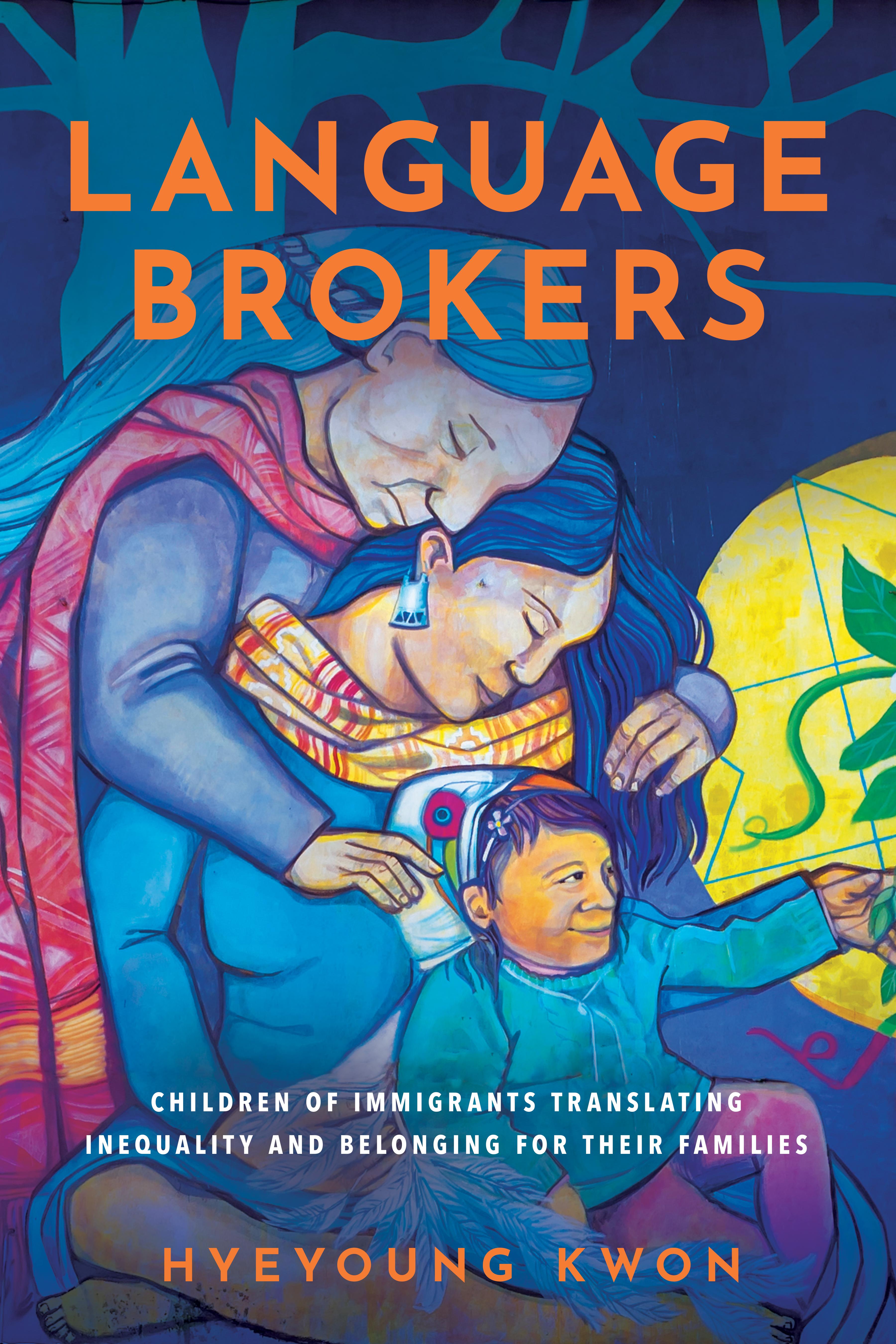
In a nation lacking a comprehensive social safety net, people often scramble to find private solutions to structural problems. While existing scholarship primarily focuses on how adults, particularly mothers, navigate systematic gaps in social support, Language Brokers shifts our attention to bilingual children securing crucial resources for their families. Drawing upon interviews with working-class Mexican and Korean American language brokers, as well as healthcare providers, and months of participant observation in a Southern California police station, Hyeyoung Kwon reveals how children of immigrants translate more than simple verbal exchanges.
Living at the intersection of multiple forms of inequality, these youth creatively use their in-between status to resolve structural problems to ensure their families' basic citizenship rights are upheld in interactions with teachers, social workers, landlords, doctors, and police officers. In an era of widespread racialized nativism, Language Brokers provides a critical examination of American culture, laying bare the contradictions between the ideals of equality and the exclusion of immigrants. Kwon underscores that dichotomous and racialized understandings of "deserving" and "undeserving" immigrants—which are embedded in everyday interactions and institutional practices—inform the routine ways in which immigrant youth attempt to cultivate belonging for their families.
Pay easily by card, Klarna, Apple Pay or Google Pay. Not happy? You always have a 14-day money-back guarantee. Read more in our terms. If you have any questions, email us at hello@memmo.org.
Memmo makes studying easier – wherever you are in the world. We bring your course books and smart study tools together in one place: summaries, quizzes, podcasts and flashcards. Plus Ted, your study buddy who answers anything you wonder. Over 50,000 students already study here – built to help you learn faster and stress less.