
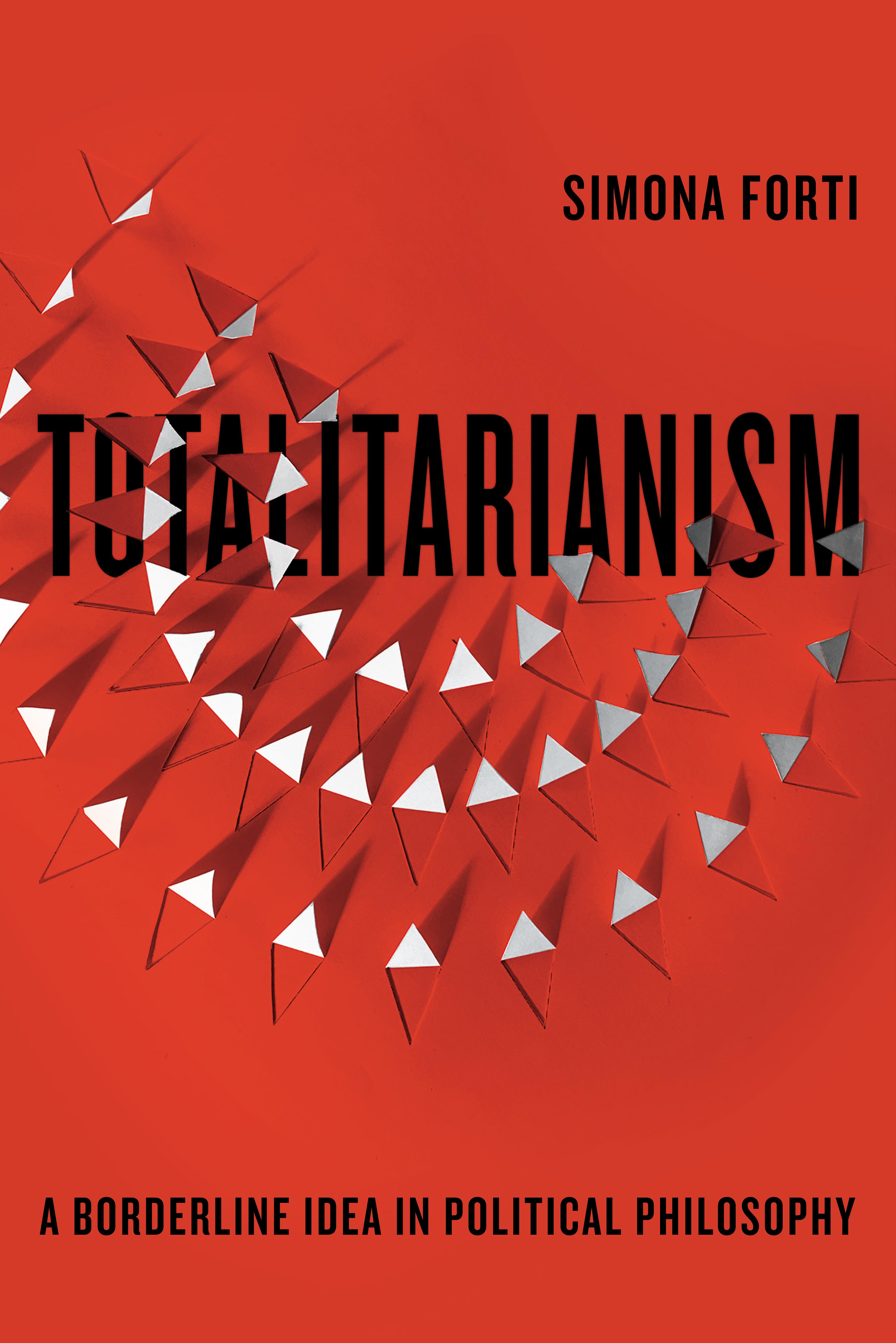
In the last decade, we have witnessed the return of one of the most controversial terms in the political lexicon: totalitarianism. What are we talking about when we define a totalitarian political and social situation? When did we start using the word as both adjective and noun? And, what totalitarian ghosts haunt the present?
Philosopher Simona Forti seeks to answer these questions by reconstructing not only the genealogy of the concept, but also by clarifying its motives, misunderstandings, and the controversies that have animated its current resurgence. Taking into account political theories and historical discussions, Totalitarianism especially focuses on philosophical reflections, from the question of totalitarian biopolitics to the alleged totalitarian drifts of neoliberalism. The work invites the relentless formulation of a radical question about the democratic age: the possibilities it has opened up, the voids it leaves behind, the mechanisms it activates, and the "voluntary servitude" it produces. Forti argues that totalitarianism cannot be considered an external threat to democracy, but rather as one of the possible answers to those questions posed by modernity which democracies have not been able to solve. Her investigation of the uses and abuses of totalitarianism as one of the fundamental categories of the twentieth and twenty-first centuries promises to provoke much-needed discussion and debate among those in philosophy, politics, ethics, and beyond.
Pay easily by card, Klarna, Apple Pay or Google Pay. Not happy? You always have a 14-day money-back guarantee. Read more in our terms. If you have any questions, email us at hello@memmo.org.
Memmo makes studying easier – wherever you are in the world. We bring your course books and smart study tools together in one place: summaries, quizzes, podcasts and flashcards. Plus Ted, your study buddy who answers anything you wonder. Over 50,000 students already study here – built to help you learn faster and stress less.