
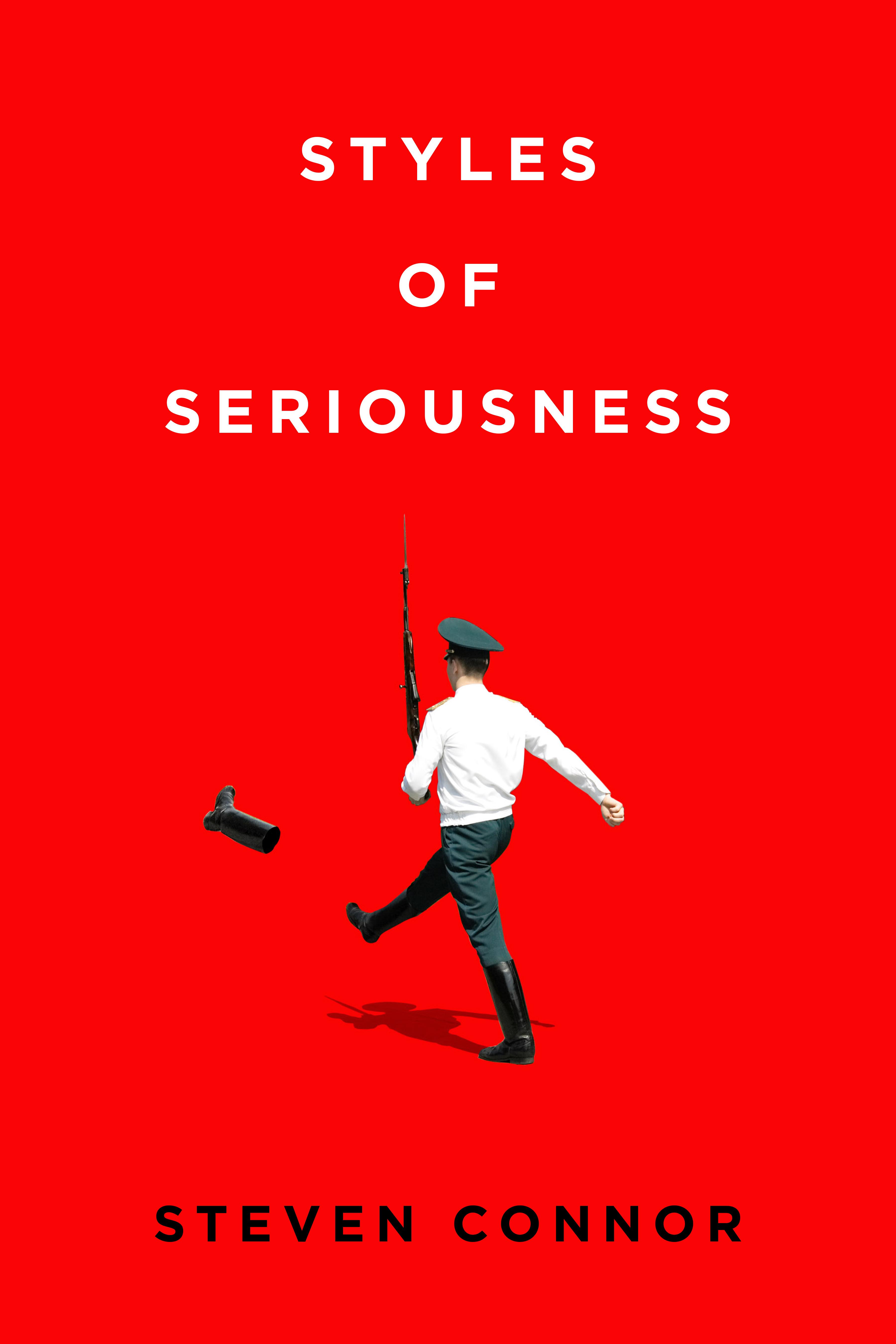
Being serious demands serious kinds of work. In Styles of Seriousness, Steven Connor reflects on the surprisingly various ways in which a sense of the serious is made and maintained, revealing that while seriousness is the most powerful feeling, it is also the most poignantly indeterminate, perhaps because of the impossibility of being completely serious.
In colloquy with philosophers such as Aristotle, Nietzsche, James, Sartre, Austin, Agamben and Sloterdijk, and writers like Shakespeare, Byron, Auden and Orwell, Connor considers the linguistic and ritual behaviors associated with different modes of seriousness: importance; intention, or ways of really "meaning things;" sincerity; solemnity; urgency; regret; warning; and ordeal. The central claim of the book is human beings are capable of taking things seriously in a way that nonhuman animals are not, for the unexpected reason that human beings are so much more versatile than most animals at not being completely serious. One always, in fact, has a choice about whether or not to take seriously something that is supposed to be so. As a consequence, seriousness depends on different kinds of formalization or stylized practice. Styles of seriousness matter, Connor shows, because human beings are incapable of simply and spontaneously existing. Being a human means having to take seriously one's style of being.
Pay easily by card, Klarna, Apple Pay or Google Pay. Not happy? You always have a 14-day money-back guarantee. Read more in our terms. If you have any questions, email us at hello@memmo.org.
Memmo makes studying easier – wherever you are in the world. We bring your course books and smart study tools together in one place: summaries, quizzes, podcasts and flashcards. Plus Ted, your study buddy who answers anything you wonder. Over 50,000 students already study here – built to help you learn faster and stress less.