
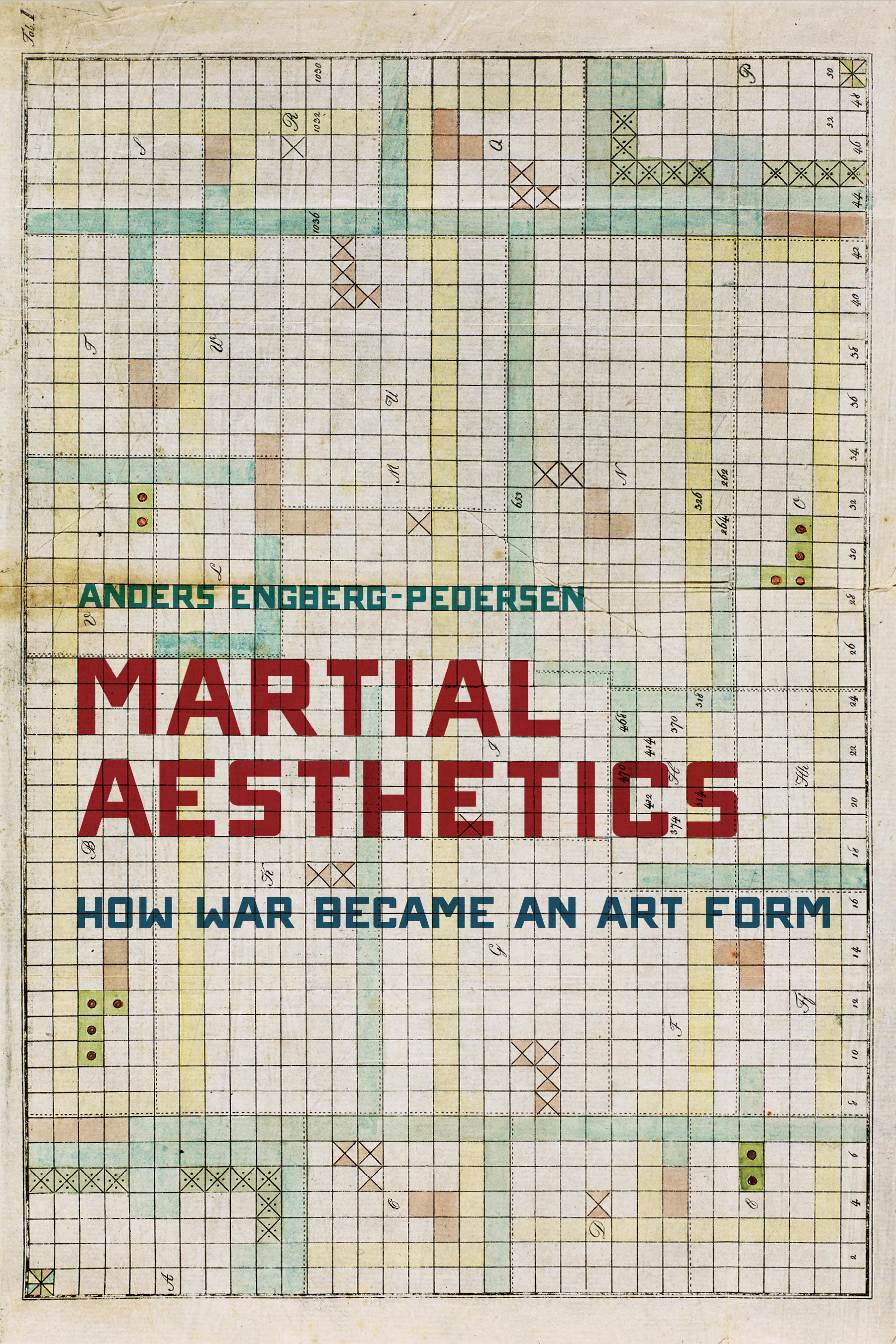
The twenty-first century has witnessed a pervasive militarization of aesthetics with Western military institutions co-opting the creative worldmaking of art and merging it with the destructive forces of warfare.
In Martial Aesthetics, Anders Engberg-Pedersen examines the origins of this unlikely merger, showing that today's creative warfare is merely the extension of a historical development that began long ago. Indeed, the emergence of martial aesthetics harkens back to a series of inventions, ideas, and debates in the eighteenth and early nineteenth century. Already then, military thinkers and inventors adopted ideas from the field of aesthetics about the nature, purpose, and force of art and retooled them into innovative military technologies and a new theory that conceptualized war not merely as a practical art, but as an aesthetic art form. This book shows how military discourses and early war media such as star charts, horoscopes, and the Prussian wargame were entangled with ideas of creativity, genius, and possible worlds in philosophy and aesthetic theory (by thinkers such as Leibniz, Baumgarten, Kant, and Schiller) in order to trace the emergence of martial aesthetics. Adopting an approach that is simultaneously historical and theoretical, Engberg-Pedersen presents a new frame for understanding war in the twenty-first century.
Pay easily by card, Klarna, Apple Pay or Google Pay. Not happy? You always have a 14-day money-back guarantee. Read more in our terms. If you have any questions, email us at hello@memmo.org.
Memmo makes studying easier – wherever you are in the world. We bring your course books and smart study tools together in one place: summaries, quizzes, podcasts and flashcards. Plus Ted, your study buddy who answers anything you wonder. Over 50,000 students already study here – built to help you learn faster and stress less.