
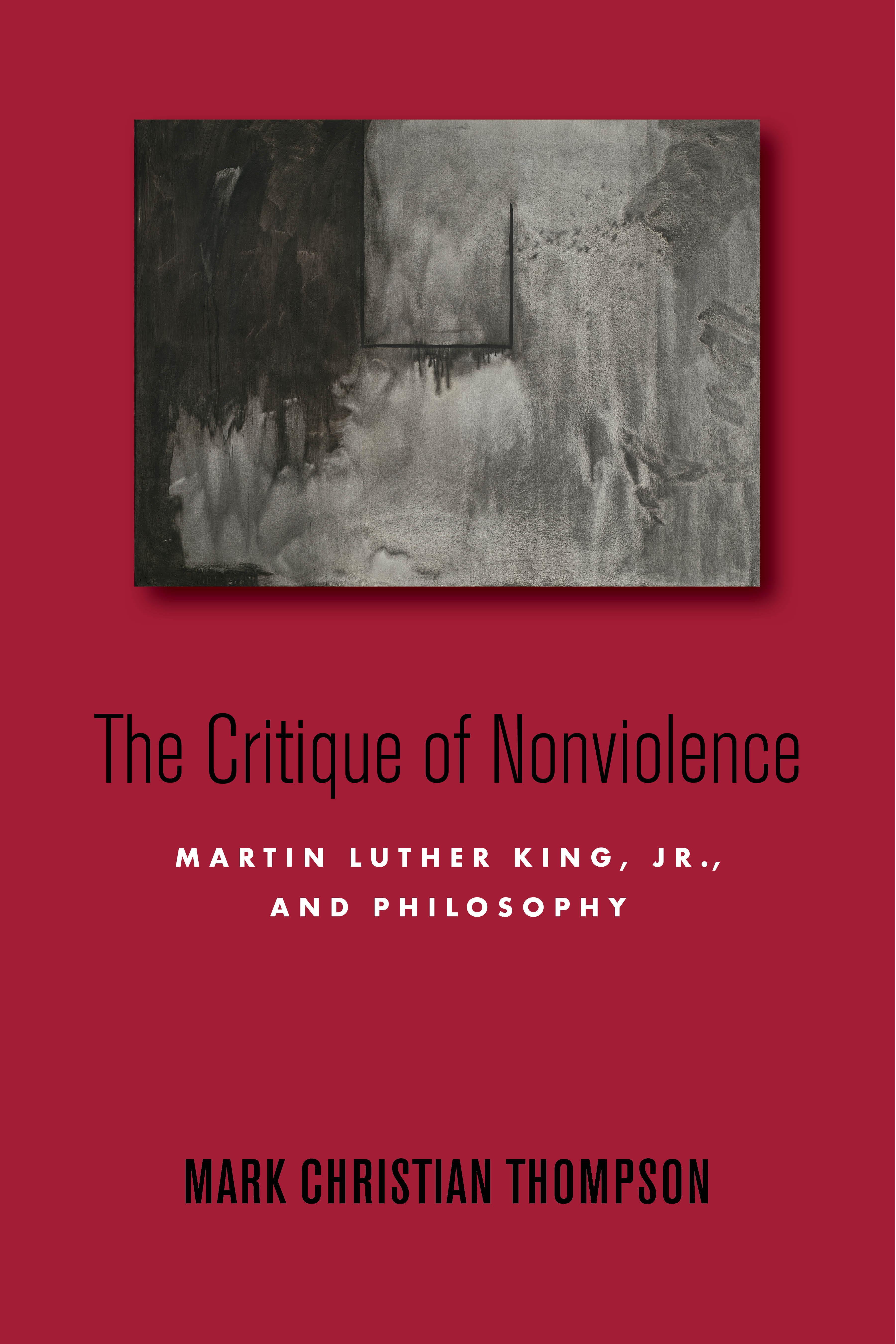
How does Martin Luther King, Jr., understand race philosophically and how did this understanding lead him to develop an ontological conception of racist police violence?
In this important new work, Mark Christian Thompson attempts to answer these questions, examining ontology in Martin Luther King, Jr.'s philosophy. Specifically, the book reads King through 1920s German academic debates between Martin Heidegger, Rudolf Bultmann, Hans Jonas, Carl Schmitt, Eric Voegelin, Hannah Arendt, and others on Being, gnosticism, existentialism, political theology, and sovereignty. It further examines King's dissertation about Tillich, as well other key texts from his speculative writings, sermons, and speeches, positing King's understanding of divine love as a form of Heideggerian ontology articulated in beloved community.
Tracking the presence of twentieth-century German philosophy and theology in his thought, the book situates King's ontology conceptually and socially in nonviolent protest. In so doing, The Critique of Nonviolence reads King's "Letter from a Birmingham Jail" (1963) with Walter Benjamin's "Critique of Violence" (1921) to reveal the depth of King's political-theological critique of police violence as the illegitimate appropriation of the racialized state of exception. As Thompson argues, it is in part through its appropriation of German philosophy and theology that King's ontology condemns the perpetual American state of racial exception that permits unlimited police violence against Black lives.
Pay easily by card, Klarna, Apple Pay or Google Pay. Not happy? You always have a 14-day money-back guarantee. Read more in our terms. If you have any questions, email us at hello@memmo.org.
Memmo makes studying easier – wherever you are in the world. We bring your course books and smart study tools together in one place: summaries, quizzes, podcasts and flashcards. Plus Ted, your study buddy who answers anything you wonder. Over 50,000 students already study here – built to help you learn faster and stress less.