
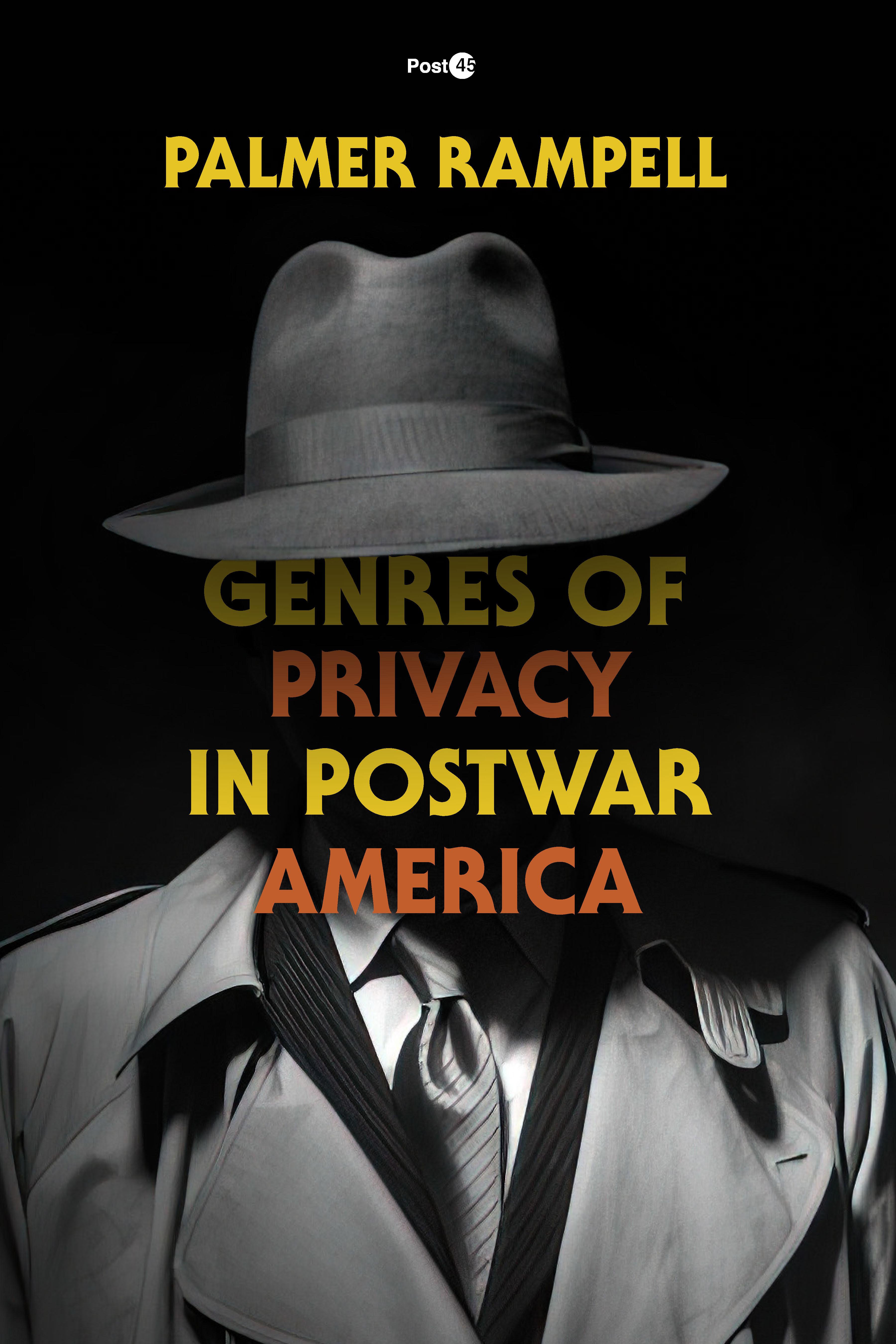
With this incisive work, Palmer Rampell reveals the surprising role genre fiction played in redefining the category of the private person in the postwar period. Especially after the Supreme Court established a constitutional right to privacy in 1965, legal scholars, judges, and the public scrambled to understand the scope of that right. Before and after the Court's ruling, authors of genre fiction and film reformulated their aliens, androids, and monsters to engage in debates about personal privacy as it pertained to issues like abortion, police surveillance, and euthanasia.
Triangulating novels and films with original archival discoveries and historical and legal research, Rampell provides new readings of Patricia Highsmith, Dorothy B. Hughes, Philip K. Dick, Octavia Butler, Chester Himes, Stephen King, Cormac McCarthy, and others. The book pairs the right of privacy for heterosexual sex with queer and proto-feminist crime fiction; racialized police surveillance at midcentury with Black crime fiction; Roe v. Wade (1973) with 1960s and 1970s science fiction; the Child Abuse Prevention and Treatment Act (1974) with horror; and the right to die with westerns. While we are accustomed to defenses of fiction for its capacity to represent fully rendered private life, Rampell suggests that we might value a certain strand of genre fiction for its capacity to theorize the meaning of the protean concept of privacy.
Pay easily by card, Klarna, Apple Pay or Google Pay. Not happy? You always have a 14-day money-back guarantee. Read more in our terms. If you have any questions, email us at hello@memmo.org.
Memmo makes studying easier – wherever you are in the world. We bring your course books and smart study tools together in one place: summaries, quizzes, podcasts and flashcards. Plus Ted, your study buddy who answers anything you wonder. Over 50,000 students already study here – built to help you learn faster and stress less.