
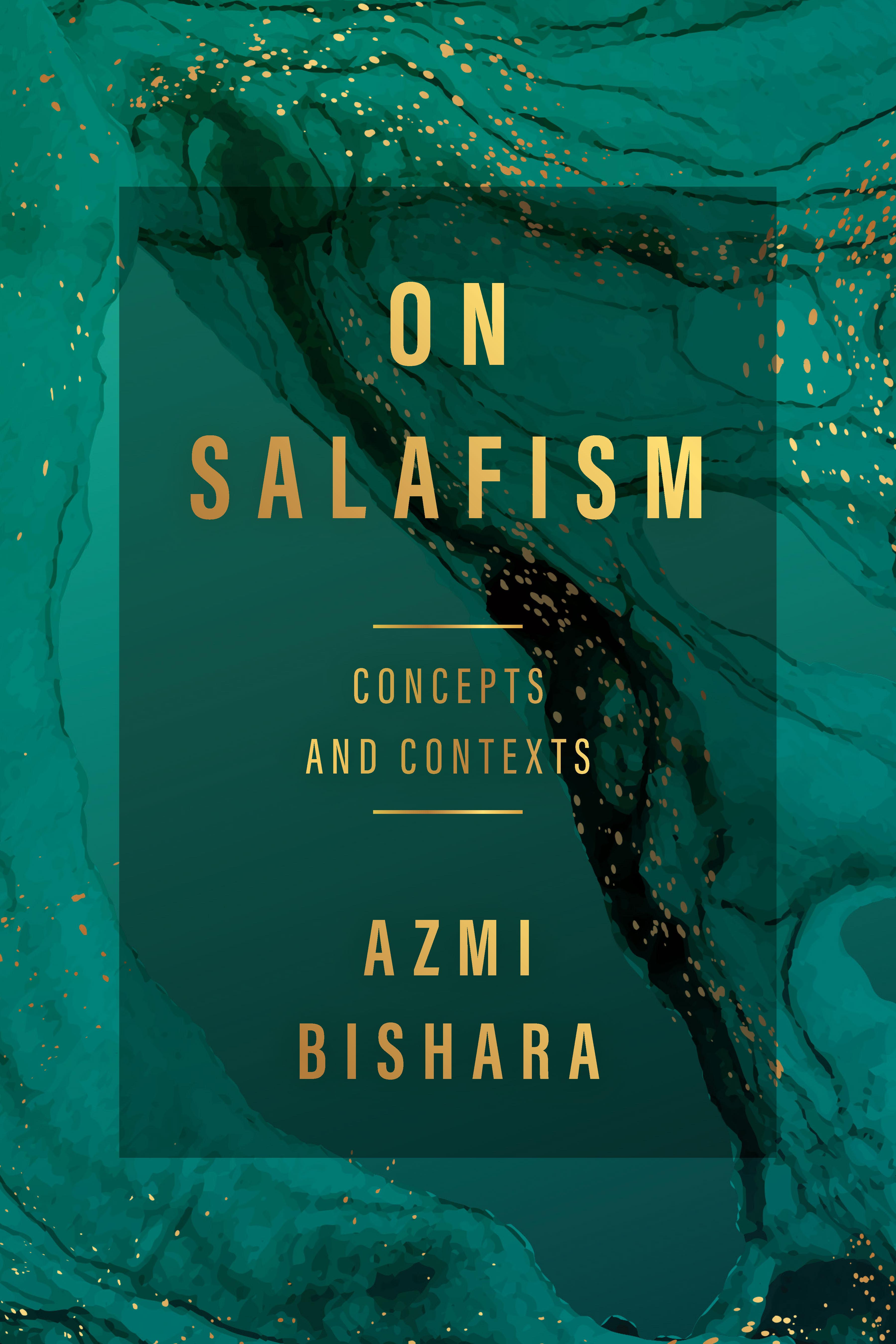
On Salafism offers a compelling new understanding of this phenomenon, both its development and contemporary manifestations. Salafism became associated with fundamentalism when the 9/11 Commission used it to explain the terror attacks and has since been connected with the violence of the so-called Islamic State. With this book, Azmi Bishara critically deconstructs claims of continuity between early Islam and modern militancy and makes a counterargument: Salafism is a wholly modern construct informed by specific sociopolitical contexts.
Bishara offers a sophisticated account of various movements—such as Wahabbism and Hanbalism—frequently collapsed into simplistic understandings of Salafism. He distinguishes reformist from regressive Salafism, and examines patterns of modernization in the development of contemporary Islamic political movements and associations. In deconstructing the assumptions of linear continuity between traditional and contemporary movements, Bishara details various divergences in both doctrine and context of modern Salafisms, plural. On Salafism is a crucial read for those interested in Islamism, jihadism, and Middle East politics and history.
Pay easily by card, Klarna, Apple Pay or Google Pay. Not happy? You always have a 14-day money-back guarantee. Read more in our terms. If you have any questions, email us at hello@memmo.org.
Memmo makes studying easier – wherever you are in the world. We bring your course books and smart study tools together in one place: summaries, quizzes, podcasts and flashcards. Plus Ted, your study buddy who answers anything you wonder. Over 50,000 students already study here – built to help you learn faster and stress less.