
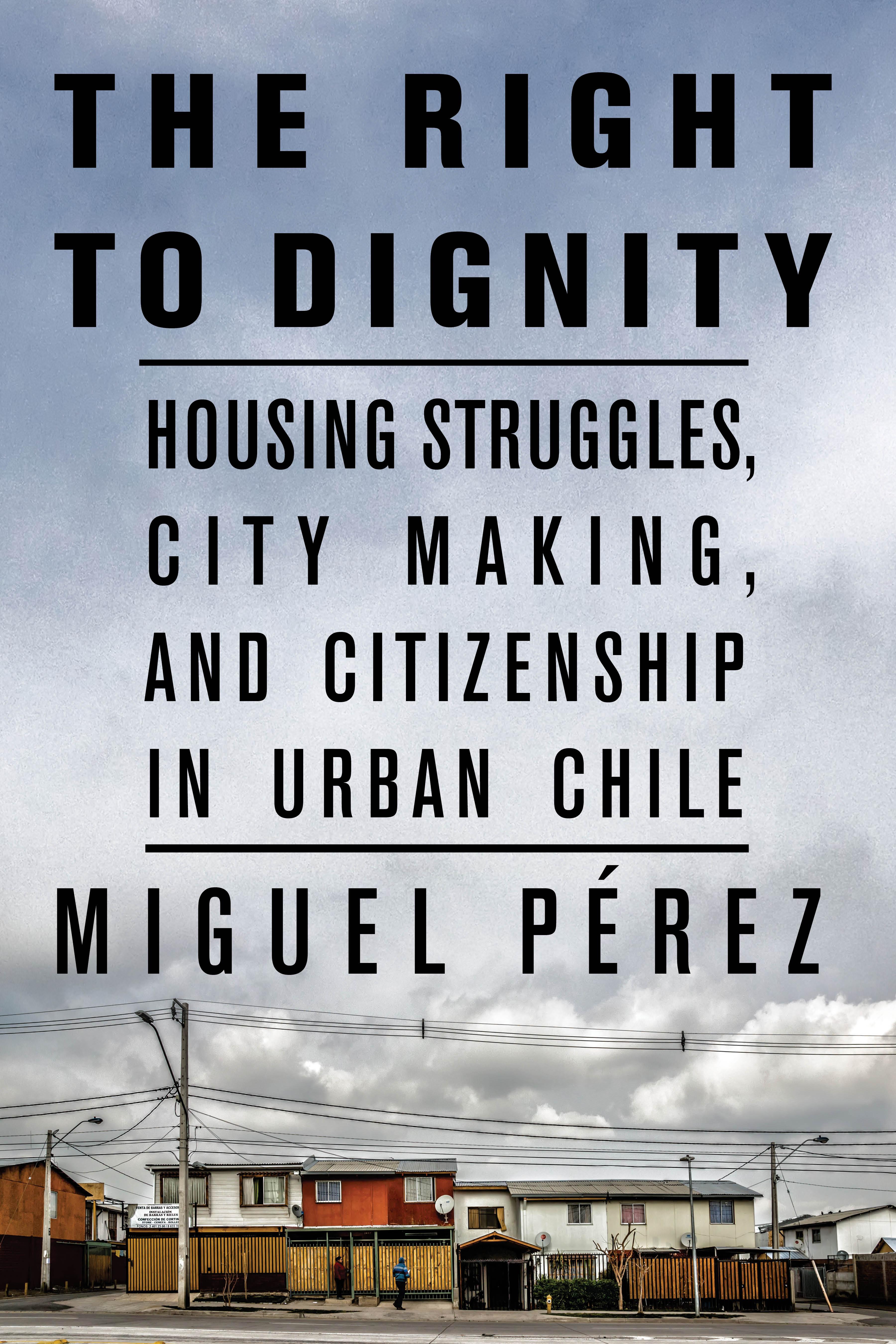
In the poorest neighborhoods of Santiago, Chile, low-income residents known as pobladores have long lived at the margins—and have long advocated for the right to housing as part of la vida digna (a life with dignity). From 2011 to 2015, anthropologist Miguel Pérez conducted fieldwork among the pobladores of Santiago, where the urban dwellers and activists he met were part of an emerging social movement that demanded dignified living conditions, the right to remain in their neighborhoods of origin, and, more broadly, recognition as citizens entitled to basic rights. This ethnographic account raises questions about state policies that conceptualize housing as a commodity rather than a right, and how poor urban dwellers seek recognition and articulate political agency against the backdrop of neoliberal policies.
By scrutinizing how Chilean pobladores constitute themselves as political subjects, this book reveals the mechanisms through which housing activists develop new imaginaries of citizenship in a country where the market has been the dominant force organizing social life for almost forty years. Pérez considers the limits and potentialities of urban movements, framed by poor people's involvement in subsidy-based programs, as well as the capacity of low-income residents to struggle against the commodification of rights by claiming the right to dignity: a demand based on a moral category that would ultimately become the driving force behind Chile's 2019 social uprising.
Pay easily by card, Klarna, Apple Pay or Google Pay. Not happy? You always have a 14-day money-back guarantee. Read more in our terms. If you have any questions, email us at hello@memmo.org.
Memmo makes studying easier – wherever you are in the world. We bring your course books and smart study tools together in one place: summaries, quizzes, podcasts and flashcards. Plus Ted, your study buddy who answers anything you wonder. Over 50,000 students already study here – built to help you learn faster and stress less.