
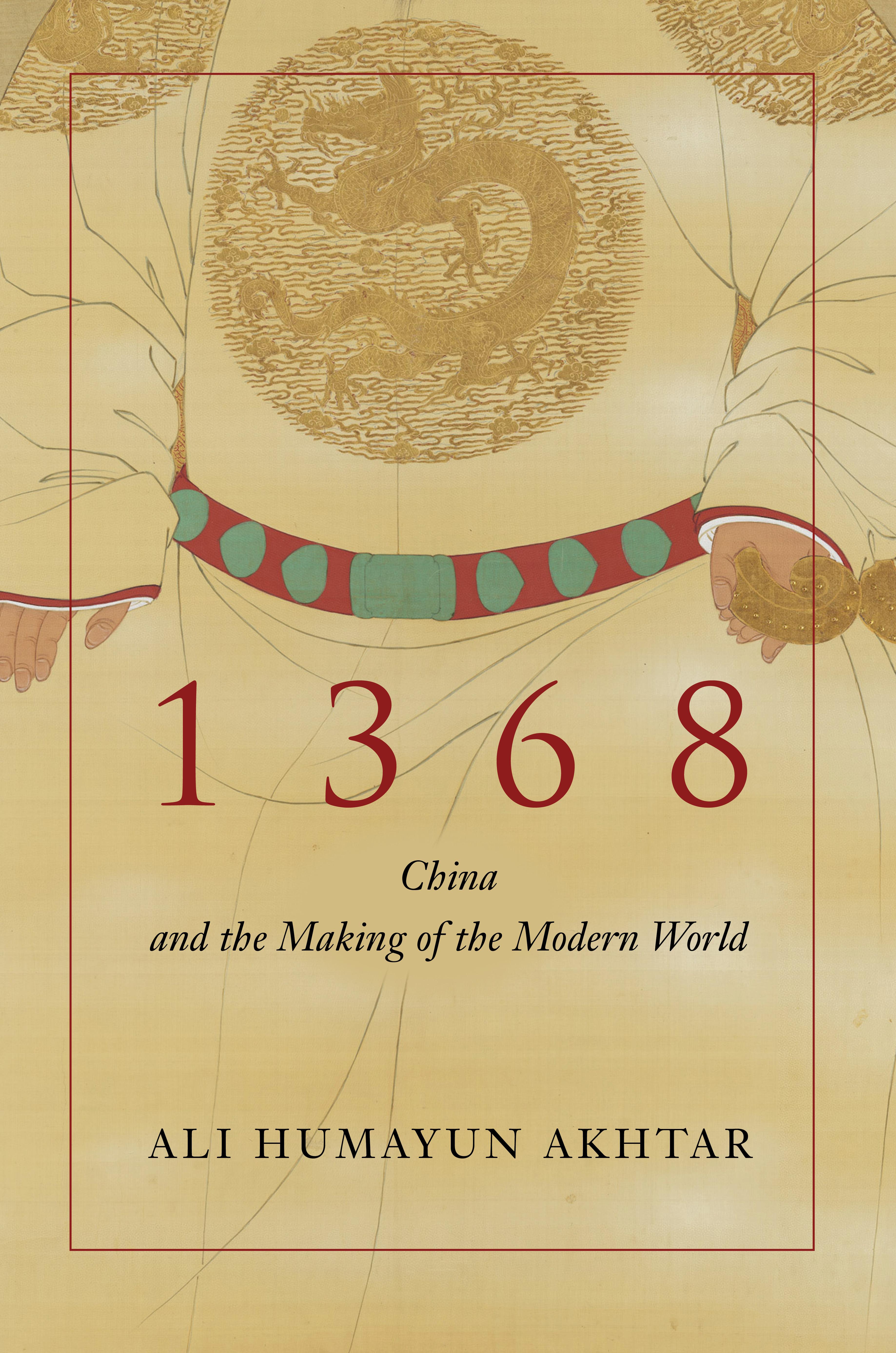
A new picture of China's rise since the Age of Exploration and its historical impact on the modern world.
The establishment of the Great Ming dynasty in 1368 was a monumental event in world history. A century before Columbus, Beijing sent a series of diplomatic missions across the South China Sea and Indian Ocean that paved the way for China's first modern global era. 1368 maps China's ascendance from the embassies of Admiral Zheng He to the arrival of European mariners and the shock of the Opium Wars. In Ali Humayun Akhtar's new picture of world history, China's current rise evokes an earlier epoch, one that sheds light on where Beijing is heading today.
Spectacular accounts in Persian and Ottoman Turkish describe palaces of silk and jade in Beijing's Forbidden City. Malay legends recount stories of Chinese princesses arriving in Melaka with gifts of porcelain and gold. During Europe's Age of Exploration, Iberian mariners charted new passages to China, which the Dutch and British East India Companies transformed into lucrative tea routes.
But during the British Industrial Revolution, the rise of steam engines and factories allowed the export of the very commodities once imported from China. By the end of the Opium Wars and the arrival of Commodore Perry in Japan, Chinese and Japanese reformers called for their own industrial revolutions to propel them into the twentieth century.
What has the world learned from China since the Ming, and how did China reemerge in the 1970s as a manufacturing superpower? Akhtar's book provides much-needed context for understanding China's rise today and the future of its connections with both the West and a resurgent Asia.
Pay easily by card, Klarna, Apple Pay or Google Pay. Not happy? You always have a 14-day money-back guarantee. Read more in our terms. If you have any questions, email us at hello@memmo.org.
Memmo makes studying easier – wherever you are in the world. We bring your course books and smart study tools together in one place: summaries, quizzes, podcasts and flashcards. Plus Ted, your study buddy who answers anything you wonder. Over 50,000 students already study here – built to help you learn faster and stress less.