
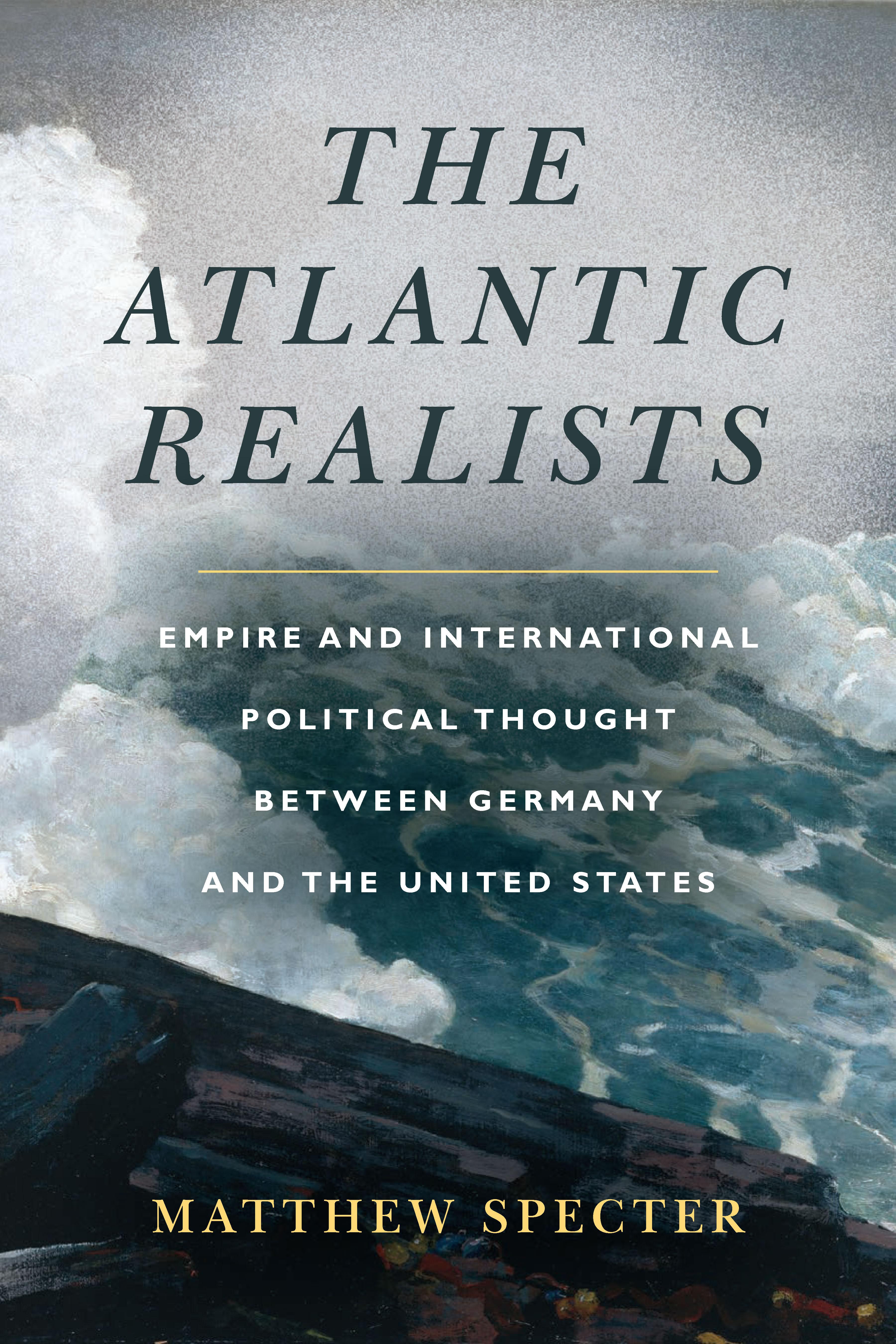
In The Atlantic Realists, intellectual historian Matthew Specter offers a boldly revisionist interpretation of "realism," a prevalent stance in post-WWII US foreign policy and public discourse and the dominant international relations theory during the Cold War. Challenging the common view of realism as a set of universally binding truths about international affairs, Specter argues that its major features emerged from a century-long dialogue between American and German intellectuals beginning in the late nineteenth century. Specter uncovers an "Atlantic realist" tradition of reflection on the prerogatives of empire and the nature of power politics conditioned by fin de siècle imperial competition, two world wars, the Holocaust, and the Cold War. Focusing on key figures in the evolution of realist thought, including Carl Schmitt, Hans Morgenthau, and Wilhelm Grewe, this book traces the development of the realist worldview over a century, dismantling myths about the national interest, Realpolitik, and the "art" of statesmanship.
Pay easily by card, Klarna, Apple Pay or Google Pay. Not happy? You always have a 14-day money-back guarantee. Read more in our terms. If you have any questions, email us at hello@memmo.org.
Memmo makes studying easier – wherever you are in the world. We bring your course books and smart study tools together in one place: summaries, quizzes, podcasts and flashcards. Plus Ted, your study buddy who answers anything you wonder. Over 50,000 students already study here – built to help you learn faster and stress less.