
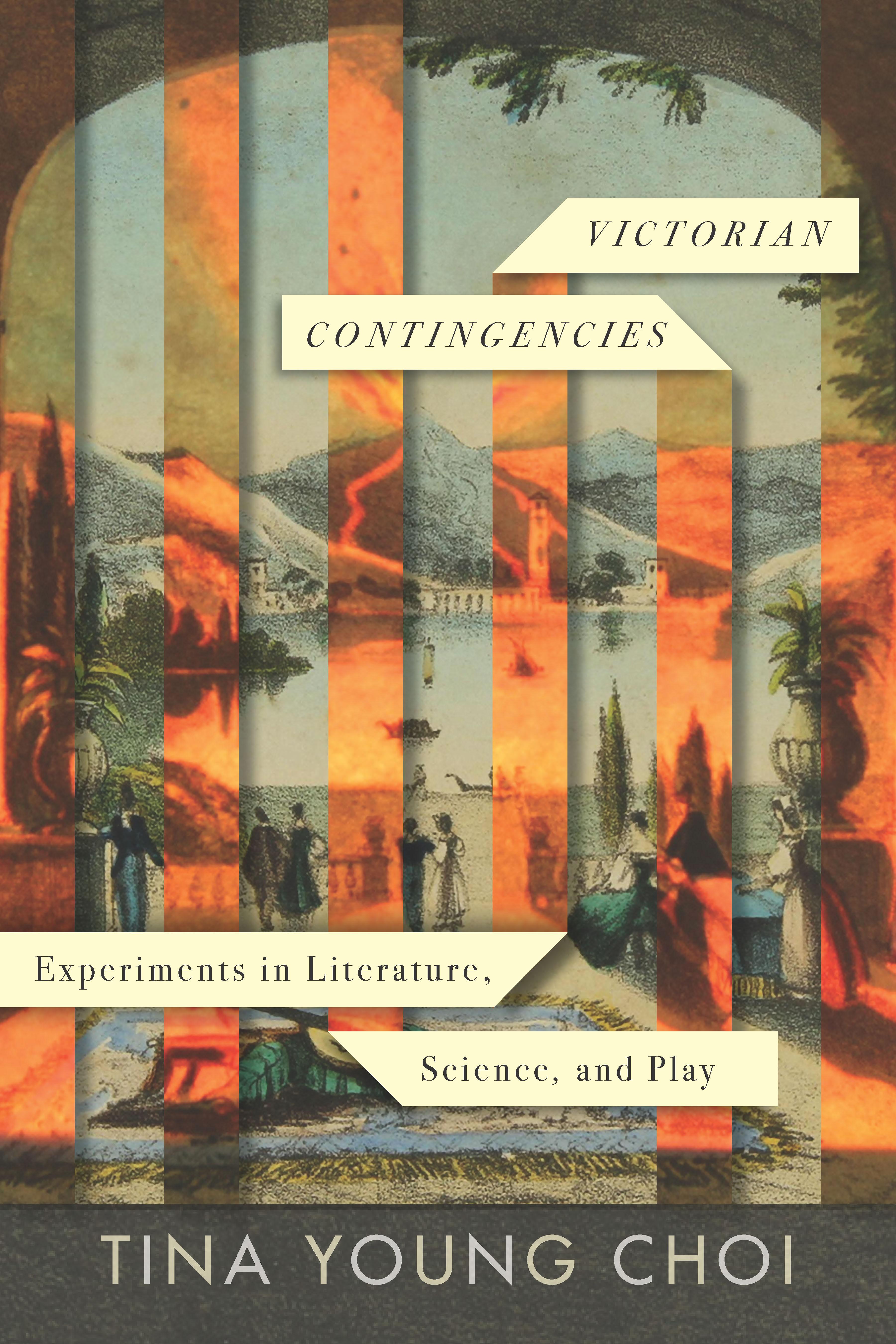
Contingency is not just a feature of modern politics, finance, and culture—by thinking contingently, nineteenth-century Britons rewrote familiar narratives and upended forgone conclusions. Victorian Contingencies shows how scientists, novelists, and consumers engaged in new formal and material experiments with cause and effect, past and present, that actively undermined routine certainties.
Tina Young Choi traces contingency across a wide range of materials and media, from newspaper advertisements and children's stories to well-known novels, scientific discoveries, technological innovations. She shows how Charles Lyell and Charles Darwin reinvented geological and natural histories as spaces for temporal and causal experimentation, while the nascent insurance industry influenced Charles Babbage's computational designs for a machine capable of responding to a contingent future. Choi pairs novelists George Eliot and Lewis Carroll with physicist James Clerk Maxwell, demonstrating how they introduced possibility and probability into once-assured literary and scientific narratives. And she explores the popular board games and pre-cinematic visual entertainments that encouraged Victorians to navigate a world made newly uncertain.
By locating contingency within these cultural contexts, this book invites a deep and multidisciplinary reassessment of the longer histories of causality, closure, and chance.
Pay easily by card, Klarna, Apple Pay or Google Pay. Not happy? You always have a 14-day money-back guarantee. Read more in our terms. If you have any questions, email us at hello@memmo.org.
Memmo makes studying easier – wherever you are in the world. We bring your course books and smart study tools together in one place: summaries, quizzes, podcasts and flashcards. Plus Ted, your study buddy who answers anything you wonder. Over 50,000 students already study here – built to help you learn faster and stress less.