
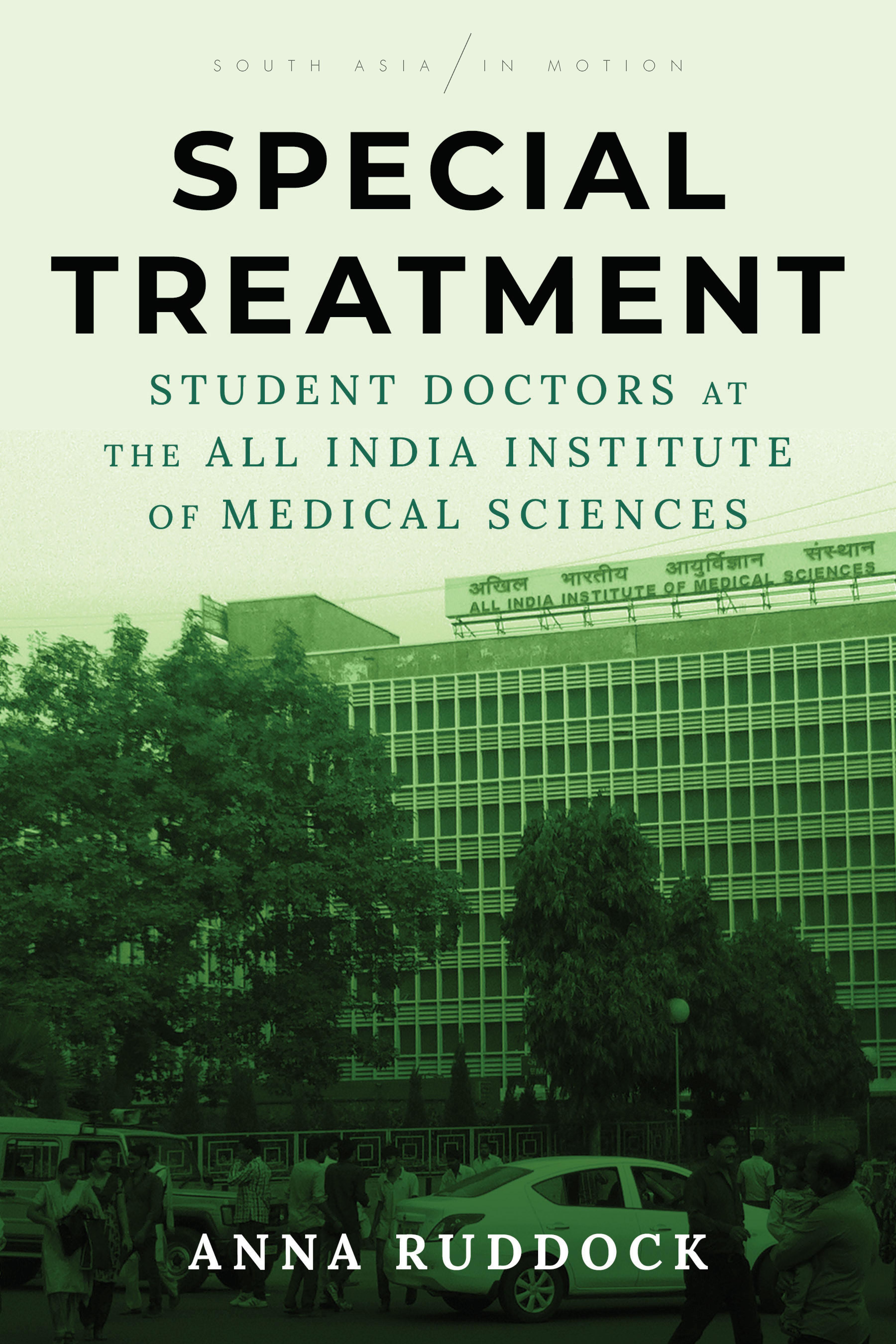
The All India Institute of Medical Sciences (AIIMS) is iconic in the landscape of Indian healthcare. Established in the early years of independence, this enormous public teaching hospital rapidly gained fame for the high-quality treatment it offered at a nominal cost; at present, an average of ten thousand patients pass through the outpatient department each day. With its notorious medical program acceptance rate of less than 0.01%, AIIMS also sits at the apex of Indian medical education. To be trained as a doctor here is to be considered the best.
In what way does this enduring reputation of excellence shape the institution's ethos? How does elite medical education sustain India's social hierarchies and the health inequalities entrenched within? In the first-ever ethnography of AIIMS, Anna Ruddock considers prestige as a byproduct of norms attached to ambition, aspiration, caste, and class in modern India, and illustrates how the institution's reputation affects its students' present experiences and future career choices. Ruddock untangles the threads of intellectual exceptionalism, social and power stratification, and health inequality that are woven into the health care taught and provided at AIIMS, asking what is lost when medicine is used not as a social equalizer but as a means to cultivate and maintain prestige.
Pay easily by card, Klarna, Apple Pay or Google Pay. Not happy? You always have a 14-day money-back guarantee. Read more in our terms. If you have any questions, email us at hello@memmo.org.
Memmo makes studying easier – wherever you are in the world. We bring your course books and smart study tools together in one place: summaries, quizzes, podcasts and flashcards. Plus Ted, your study buddy who answers anything you wonder. Over 50,000 students already study here – built to help you learn faster and stress less.